
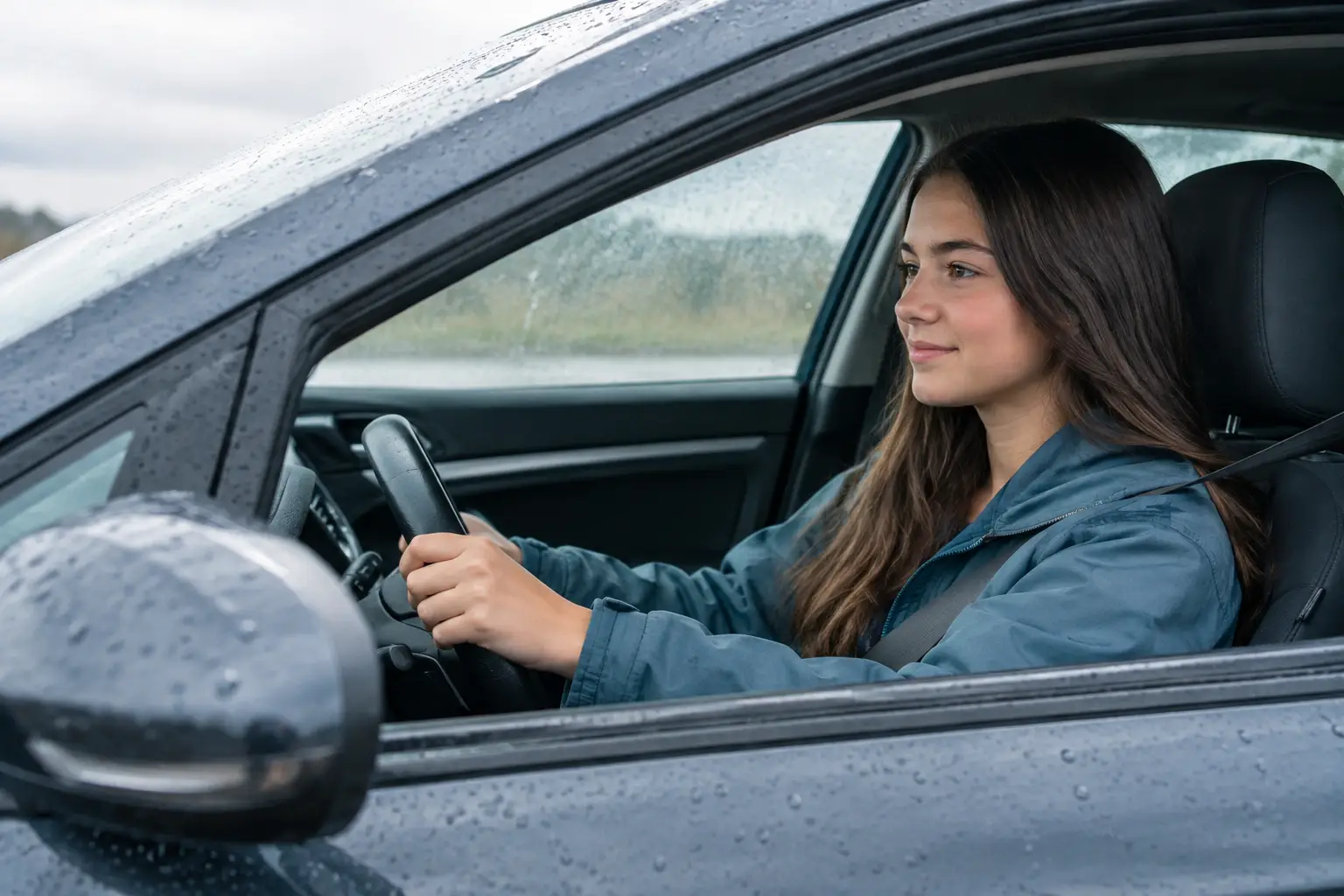
A teen rain driving example is most useful when it feels like a decision a new driver may actually face: the pavement is wet after a long dry spell, traffic is moving quickly, and a light turns yellow ahead. The safe response is not to prove confidence by continuing at the same speed. It is to ease off the accelerator early, check mirrors, leave room, and make the next choice without rushing.
For teen drivers, rain changes more than visibility. It changes stopping distance, tire grip, the behavior of other drivers, and the amount of time available to react. A calm plan helps a new driver avoid the two errors that cause many wet-road problems: driving too fast for conditions and making sudden inputs with the steering wheel, brakes, or accelerator.
A Teen Rain Driving Example in Real Traffic
Imagine a newly licensed teen driving home on a rainy afternoon in Torrance. The roadway is shiny, water is gathering near the curb, and cars ahead are creating spray. The posted speed limit is 40 mph, but traffic and visibility make 40 feel too fast.
The teen sees brake lights several car lengths ahead. Instead of waiting until the last moment, they gently release the accelerator, increase following distance, and begin slowing smoothly. Their headlights are on, windshield wipers are clearing the glass, and both hands stay steady on the wheel. When the car in front brakes harder than expected, the teen has enough space to brake progressively without swerving.
That is the point of the example. Safe driving is not simply knowing that roads get slippery. It is recognizing the clues early and creating time and space before a problem becomes urgent.
A teen who follows too closely may feel pressured to brake sharply. Sharp braking can trigger a skid, especially when rain mixes with oil and dust that have built up on dry pavement. A driver who slows earlier is more likely to stay in control and less likely to surprise the driver behind them.
Why the First Rain Can Be Especially Slippery
Light rain after a dry period can be deceptively hazardous. Oil, tire residue, and dirt rise to the surface before heavier rain has a chance to wash them away. The road may look only damp, yet tires can lose grip more easily than a new driver expects.
This does not mean teens should be afraid to drive in rain. It means they should adjust their driving. The correct speed is not always the number on the sign. A posted limit is intended for favorable conditions. Rain, reduced sight distance, standing water, heavy traffic, and worn pavement may all call for a lower speed.
Local streets can also create changing conditions within a short drive. A road may be relatively clear on a flat stretch, then collect water near an intersection, freeway entrance, or curb lane. A teen should scan well ahead rather than focusing only on the vehicle directly in front.
Give Yourself a Larger Following Cushion
In dry conditions, a driver needs adequate space to see, react, and stop. In rain, that cushion should grow. There is no benefit to matching the close following distance of an impatient driver ahead. The goal is to maintain enough room to brake gradually.
A practical habit is to choose a fixed object the vehicle ahead passes, then count the seconds until your own vehicle reaches it. If the gap shrinks because traffic slows or rain becomes heavier, ease back. This also improves visibility because spray from the vehicle ahead is less likely to cover the windshield all at once.
Brake Early, Not Hard
New drivers often wait to brake because they do not want to appear hesitant. On wet roads, early braking is a sign of good judgment. Start gently, keep the steering wheel straight when possible, and avoid sudden pedal pressure.
If a vehicle has anti-lock brakes, firm pressure during an emergency stop may cause pedal vibration or pulsing. That sensation can be surprising, but the driver should continue looking where they want the car to go and steer as needed. The best outcome, however, is avoiding the emergency through good space management.
Visibility Is a Driving Skill, Not Just a Wiper Setting
Rain limits what a teen can see and what other drivers can see of them. Headlights should be used when rain reduces visibility, even during the day. They help illuminate the road and make the vehicle more noticeable to others.
Before leaving, drivers should clear fog, condensation, and moisture from the windows. A clean windshield matters as well. Smears on the inside or outside of the glass can turn headlights and streetlights into glare. If defroster settings, wipers, or headlight controls are unfamiliar, practice using them while parked before driving in changing weather.
At night, rain adds another layer of difficulty. Reflections from signs, lane markings, headlights, and wet pavement can make it harder to judge distance. A teen who is still building confidence may be better served by waiting for conditions to improve when the trip is optional. That is not avoidance. It is a responsible risk decision.
How to Handle Standing Water and a Possible Skid
Standing water deserves respect. Driving through a deep puddle can reduce tire contact with the road, a condition known as hydroplaning. The steering may feel light, and the vehicle may not respond normally to steering or braking.
If this happens, the driver should remain calm. Ease off the accelerator, keep the wheel steady, and avoid abrupt braking or sharp turns. As the tires regain contact with the road, steering control should return. Trying to force the vehicle back into line with sudden movements can make a loss of control worse.
Whenever possible, avoid large puddles rather than testing their depth. Water can hide potholes, debris, damaged pavement, and deeper areas near the curb. It can also splash onto the windshield and briefly remove visibility. If water is covering the roadway or moving across it, turning around or choosing another route is often the safer choice.
Tire condition is part of this decision. Tires with poor tread, improper pressure, or visible damage provide less protection in rain. Teens should learn how to recognize when a vehicle needs attention and tell a parent or responsible adult before driving it. Safe wet-weather driving begins before the key is turned.
Common Teen Mistakes in Rainy Conditions
The most common wet-weather mistake is treating a rainy day like a dry one. That can look like following closely, rushing a yellow light, accelerating hard from a stop, or changing lanes quickly without checking for pooled water and nearby vehicles.
Another mistake is concentrating so hard on the rain that the driver stops scanning. Keep checking mirrors, intersections, crosswalks, cyclists, and the path ahead. Pedestrians may use umbrellas that limit their view, and other drivers may make poor decisions because they are late or anxious.
Cruise control is generally not a good choice on wet roads. A new driver needs direct control of speed and should be ready to reduce it immediately. Distractions matter even more in rain, so phones should remain out of reach and passengers should understand that the driver needs a quieter environment when conditions are difficult.
Practice Rain Driving With a Plan
The first wet-weather practice drive should not be a freeway trip during a downpour. Start in light rain during daylight on familiar streets with an experienced instructor or qualified supervising adult. Practice smooth starts, gentle stops, turns at reduced speed, lane changes, and maintaining extra following space.
It also helps to talk through decisions out loud: “I see water near the intersection, so I am slowing early,” or “The brake lights are coming on, so I am creating more room.” Verbalizing the reason behind an action builds habits that carry over when the teen later drives alone.
Professional behind-the-wheel instruction can be particularly helpful for students who have practiced only in clear weather. A patient instructor can help a teen judge speed, braking distance, sight lines, and road conditions without adding pressure. South Bay Driving School teaches these real-world decisions as part of building steady, responsible driving habits.
Rain does not require perfect driving. It requires a driver who is willing to slow down, leave room, and choose caution before conditions force the issue. That mindset will serve a new driver long after the pavement dries.