
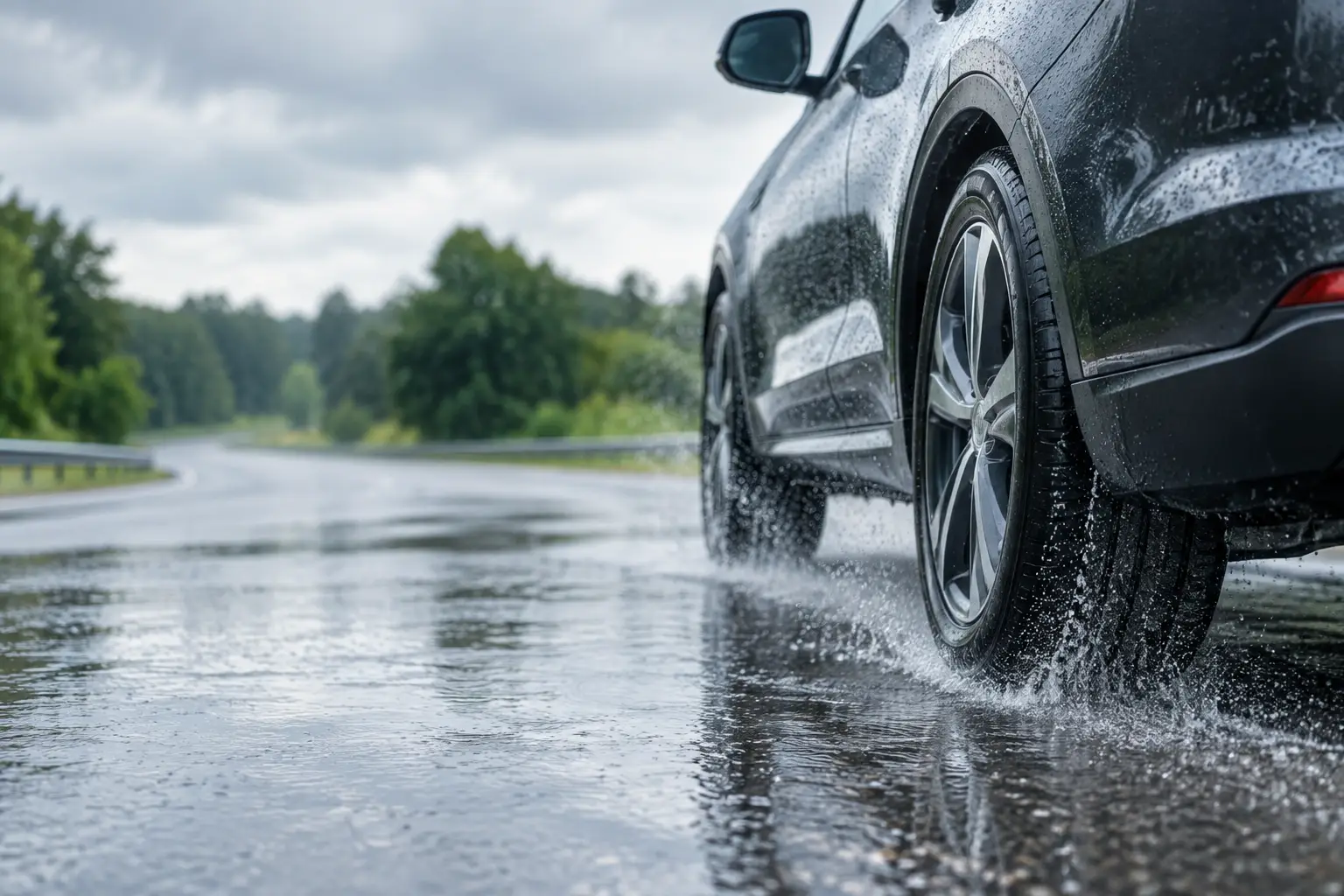
A Southern California rainstorm can make familiar streets feel very different. After long dry stretches, oil and dust rise to the surface, crosswalk paint becomes slick, and water can collect quickly near curbs and freeway lanes. The best ways to prevent hydroplaning start before a driver turns the key, then continue with calm, deliberate choices once the road is wet.
Hydroplaning happens when a layer of water prevents the tires from maintaining contact with the pavement. Instead of gripping the road, the tires ride on top of the water. Steering may suddenly feel light, the vehicle may not respond as expected, and braking can become much less effective. It can happen at highway speeds, but a deep puddle or worn tires can create a problem at lower speeds too.
For new drivers, the goal is not to be afraid of rain. It is to recognize changing conditions early, leave more room for decisions, and practice habits that keep the tires connected to the road.
Best Ways to Prevent Hydroplaning Before Driving
Wet-weather safety begins with the vehicle. Even a careful driver has less margin for error if the tires are underinflated, worn out, or mismatched.
Check tire tread and tire pressure
Tire tread is designed to move water away from the contact area between the tire and pavement. As tread wears down, the tire has a harder time channeling water, especially at speed. Tires may still be legal at 2/32 of an inch of tread, but wet-road performance declines well before they are completely worn out. If tires are approaching replacement, drivers who regularly travel in rain should not wait for the first serious storm to think about it.
Check the tire pressure when the tires are cold and use the pressure listed on the vehicle's driver-side door placard, not the maximum pressure printed on the tire itself. Proper inflation helps the tire keep its intended shape and contact patch. It also improves handling and can reduce uneven tire wear.
Look for uneven tread wear, cracks, bulges, or objects lodged in the tire. If the steering wheel vibrates, the car pulls to one side, or a tire repeatedly loses air, have the vehicle inspected before relying on it in wet conditions.
Keep the windshield and lights ready for rain
Clear visibility helps a driver spot standing water, brake lights, lane changes, and pedestrians sooner. Replace wiper blades when they streak, skip, or leave a haze across the windshield. Keep washer fluid filled, and clear the inside of the windshield if it fogs.
Use headlights whenever it is raining, even during the day. This makes the vehicle easier for other drivers to see and, in California, is required when windshield wipers are in continuous use. Headlights should be on, but high beams usually are not helpful in heavy rain because their light reflects back from the water.
Give yourself more time than usual
A rushed driver is more likely to follow too closely, brake late, or enter a puddle too fast. Check the forecast before leaving for school, work, or a DMV appointment. If rain is expected, leave early enough that slowing down feels like the obvious choice rather than an inconvenience.
This matters especially during the first rainfall after dry weather. Roads around Torrance and the South Bay can become slippery before they look especially wet. Treat the first part of a storm with extra caution.
Adjust Speed for Water, Not Just the Speed Limit
Speed is the biggest factor a driver can control once water is on the roadway. A posted speed limit is based on favorable conditions. It is not a promise that the same speed is safe in heavy rain, pooled water, or reduced visibility.
Slow down gradually before entering areas where water has collected. Avoid sudden steering, sharp braking, and quick lane changes. The faster a tire rolls through water, the less time its tread has to move that water aside. Reducing speed gives the tire a better chance to maintain contact with the pavement.
Following distance should grow substantially in rain. On a dry road, a driver may use a three-second following gap under normal conditions. In rain, add several more seconds and increase that space further when visibility is poor or traffic is moving quickly. The extra distance lets you brake smoothly instead of reacting with a hard pedal press.
Avoid using cruise control in wet conditions. A driver needs immediate, precise control of speed when traction changes, and cruise control can delay that response. Keeping your foot ready on the accelerator also encourages the attention that wet roads require.
Choose the Safest Path Through Wet Roads
Water does not spread evenly across a road. Low spots, worn wheel tracks, freeway ramps, gutters, and lanes beside concrete barriers often hold deeper water. Watch the vehicles ahead. Their tire spray can reveal puddles before your own tires reach them.
When possible, do not drive through standing water. A puddle may be deeper than it appears, may hide a pothole, or may extend farther across the lane than expected. Driving around it safely is better than testing its depth at speed. Never drive into moving or flooded water.
Be especially cautious around painted lane lines, crosswalks, metal utility covers, railroad tracks, and bridge surfaces. These areas can be more slippery when wet. Do not swerve to avoid every slick surface; instead, reduce speed and cross it with smooth steering and gentle inputs.
If you must change lanes in rain, signal early, check mirrors and blind spots, and make one controlled movement. Abrupt lane changes are difficult for other drivers to predict and can upset the vehicle when traction is limited.
What to Do If Your Car Starts Hydroplaning
Hydroplaning often feels alarming because it happens without warning. The vehicle may drift, the steering can feel loose, or the engine may rev slightly as the tires lose resistance. The right response is quiet and controlled, not aggressive.
If you believe the vehicle is hydroplaning:
- Ease off the accelerator slowly. Do not abruptly lift your foot or stomp on the brake.
- Keep both hands on the steering wheel and look toward the open path you want the vehicle to follow.
- Hold the steering wheel steady or make only small, smooth corrections. Avoid jerking the wheel.
- Do not accelerate until you can feel the tires regain traction and the steering response returns.
- If braking is necessary and your vehicle has anti-lock brakes, apply steady, firm pressure rather than pumping the brake pedal.
Many modern vehicles have traction control and stability control, which can help in some loss-of-control situations. They are useful safety systems, but they cannot create traction when the tires are riding on water. All-wheel drive can help a vehicle move forward in some conditions, but it does not eliminate hydroplaning or shorten stopping distance on a wet road.
After passing through deep water, gently test the brakes when it is safe to do so. Light pressure can help dry the brake components and confirm that the pedal feels normal. If the brakes feel weak, the steering pulls, or a warning light appears, stop in a safe place and seek help.
Build Wet-Weather Skills Before You Need Them
The safest time to learn rain-driving habits is during a light shower, with an experienced instructor or supervising adult beside you, not during a downpour on a busy freeway. Practice leaving a larger following distance, identifying puddles early, using defrosters, and braking smoothly. These are simple skills, but they become dependable only through repetition.
For teen drivers, a few focused wet-weather practice sessions can also help reduce the pressure of an unexpected rainy-day drive. Parents can support that learning by modeling patience behind the wheel: slower turns, earlier braking, no phone use, and no pressure to keep up with drivers who are moving too fast for conditions.
South Bay Driving School teaches students to adjust to real traffic and changing road conditions, not simply memorize steps for a road test. The confidence that matters most is the kind built on repeatable habits: check the vehicle, slow down early, create space, and stay calm when the road changes beneath you.
Rain will always reduce the margin for error, but it does not have to take away a driver's sense of control. A prepared vehicle and a patient driver make every wet-weather trip safer.