
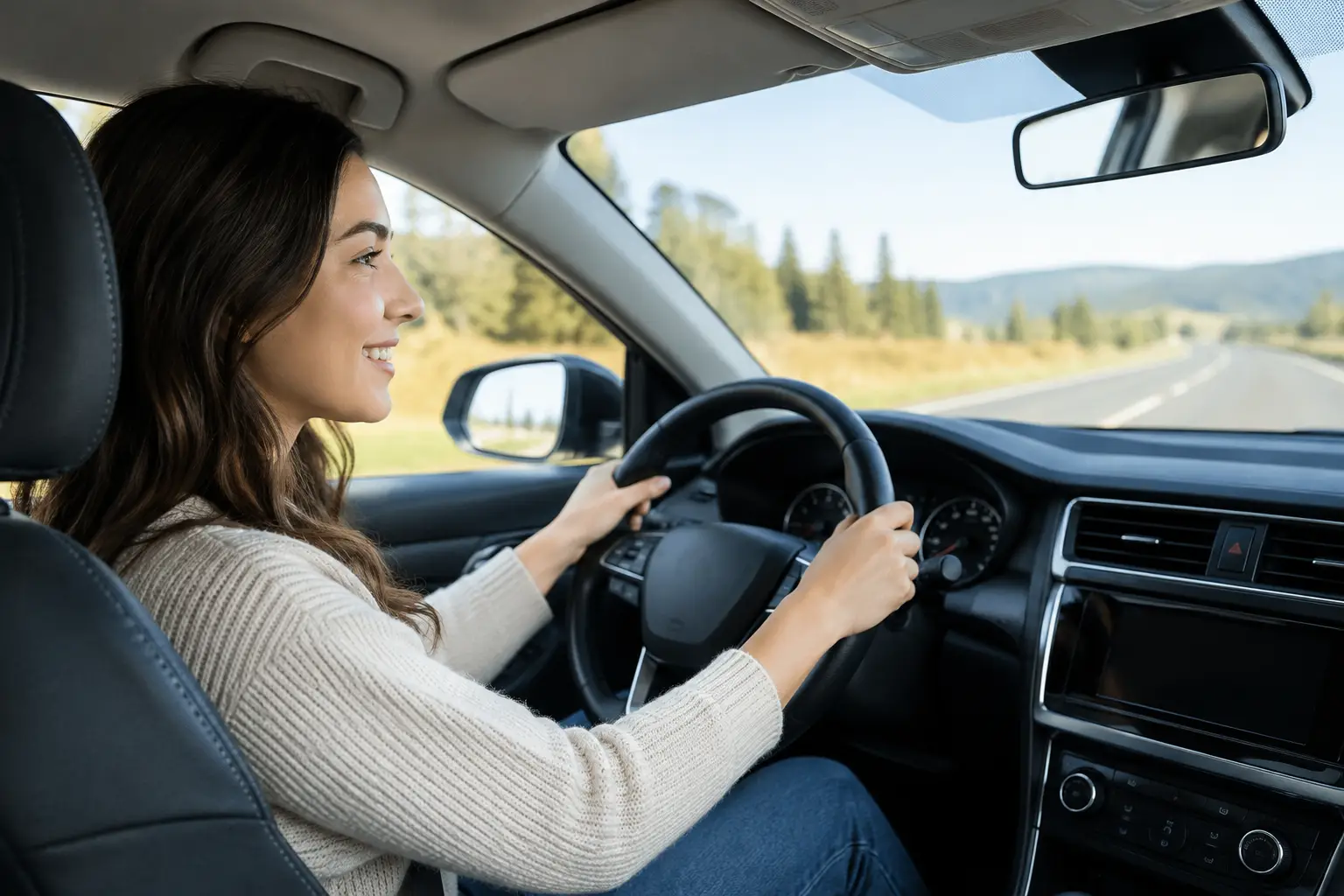
The best driving practice routes are not necessarily the fastest way across town or the streets with the fewest cars. For a new driver, the right route creates enough space to think, practice one or two skills at a time, and recover calmly from small mistakes. A route that feels manageable today can become the foundation for confident driving in traffic tomorrow.
For teens, adult beginners, returning drivers, and concerned parents, the goal is not to collect miles. It is to build repeatable habits: checking mirrors, controlling speed, scanning intersections, making safe lane changes, and responding to other road users without panic. In the South Bay, a thoughtful progression from quiet residential streets to busier commercial roads gives learners the real-world experience they need without pushing them too far too soon.
What Makes a Driving Practice Route Effective?
A useful practice route has a clear purpose. Before leaving the driveway, decide what the learner will work on that day. A 20-minute drive focused on smooth stops and right turns can be more productive than an hour of unfocused driving.
The best routes include safe places to pull over, low-pressure intersections, and options to shorten the drive if the learner becomes overwhelmed. They should also match the driver's current ability. A first-time driver needs predictable streets and light traffic. Someone preparing for a DMV road test needs exposure to normal traffic flow, lane changes, controlled intersections, and residential driving decisions.
Time of day matters as much as location. A road that is comfortable on a Sunday morning may be crowded and demanding during the school commute or afternoon rush. Early weekend mornings are often a good starting point, while a more experienced learner can gradually practice during busier periods with a qualified instructor or experienced supervising driver.
Best Driving Practice Routes by Skill Level
Start on quiet residential streets
Residential neighborhoods with low posted speeds, wide lanes, and limited traffic are the best first setting for vehicle control. The learner can practice starting smoothly, steering through gentle curves, braking without jerking, signaling before turns, and maintaining a steady position in the lane.
Choose streets with clear sight lines and avoid areas with frequent construction, steep hills, dense street parking, or heavy pedestrian activity at first. In Torrance and nearby South Bay communities, many residential areas can work well when traffic is light. The specific street matters less than the conditions: low speed, good visibility, and room to pull over safely if a coaching break is needed.
At this stage, do not make the route too complicated. Repeating a short loop helps new drivers recognize how the car responds and reduces the pressure of constant navigation. Once those basic controls feel natural, add stop signs and simple intersections.
Add stop signs and neighborhood intersections
The next step is a route with frequent four-way stops, T-intersections, and clearly marked crosswalks. These streets teach one of the most important driving habits: slowing down early and looking in the correct sequence.
A learner should practice stopping fully behind the limit line, scanning left, right, and left again, yielding when required, and entering the intersection only when it is safe. They should also learn that a turn signal does not give them the right-of-way. This is where patient coaching makes a difference, especially for drivers who hesitate too long or feel rushed by cars behind them.
If the learner is practicing with a parent or guardian, give directions early and keep them simple. Instead of calling out several instructions at once, say, “At the next stop sign, we’ll make a right turn.” After the maneuver, discuss one thing that went well and one habit to improve.
Practice on calm collector streets
Once the driver can handle neighborhood intersections consistently, move to streets that connect residential areas with shopping centers, schools, or local parks. These roads usually have somewhat higher speeds, more traffic entering from side streets, bus stops, cyclists, and occasional lane changes.
This type of route teaches speed management. New drivers often focus so hard on steering that they miss a changing speed limit or drift below the flow of traffic. A good practice session on a collector street includes checking speed regularly, leaving space behind the vehicle ahead, and watching farther down the road instead of staring at the bumper in front of the car.
It is also a good place to introduce safe lane changes. Start where there is enough room and limited traffic. Teach the full routine every time: signal, check mirrors, look over the shoulder for the blind spot, move smoothly when clear, then cancel the signal. Skipping the shoulder check is one of the habits that needs correction early.
Build confidence on commercial roads
Commercial streets are valuable because they require a learner to manage more information. There may be multiple lanes, traffic lights, turning vehicles, driveways, delivery trucks, pedestrians, and changing traffic patterns. They are appropriate only after a driver has shown consistent control on quieter roads.
Plan a route that includes several traffic lights and opportunities to turn both right and left. Left turns are especially useful because they require the driver to judge gaps, yield appropriately, and remain patient. The goal is not to force a turn through a small opening. A safe driver waits for a clear, comfortable opportunity.
Avoid beginning with the busiest corridors at peak hours. More traffic is not automatically better practice. If a driver is white-knuckling the steering wheel or unable to process directions, the route is too challenging for that session. Step back, repeat the skill in a calmer setting, and return when the driver is ready.
Use parking lots for low-speed precision
A mostly empty parking lot can be a practical addition to a training plan, provided it is legally accessible and does not interfere with customers or pedestrians. It gives drivers room to practice slow-speed steering, backing straight, parking between lines, and judging the front and rear of the vehicle.
Parking lots are not a replacement for street driving. They have their own risks, including people walking unexpectedly, cars backing out, and unclear right-of-way expectations. Treat every aisle like a roadway: drive slowly, stay alert, and be prepared to stop.
For DMV preparation, practice pulling into a space, backing out safely, and positioning the car accurately near curbs. If parallel parking is part of the learner’s goals, begin on a quiet street with ample space and build the skill gradually rather than trying it for the first time under test-day pressure.
How to Make Routes More Like Real Driving
A learner eventually needs routes that combine skills rather than isolating them. A 30- to 45-minute practice drive might begin in a residential area, continue onto a calm collector street, include a commercial intersection and a lane change, then finish with parking. This mirrors the way everyday trips unfold while keeping the route within the driver’s ability.
Navigation should be introduced carefully. At first, the supervising adult can provide directions. Later, let the learner follow a simple destination or use spoken navigation prompts without looking down at a phone. The driver must learn that missing a turn is never a reason to make a sudden lane change, stop in traffic, or turn unsafely. There is always another route.
Weather and lighting also deserve planned practice. After basic daytime driving feels comfortable, a qualified instructor can help a learner experience light rain, glare near sunset, and nighttime visibility in controlled stages. These conditions change braking distance, visibility, and the amount of attention needed for safe driving.
Common Route-Planning Mistakes to Avoid
The biggest mistake is choosing a route based on adult convenience rather than the learner’s needs. A familiar errand route may include difficult left turns, fast traffic, complicated merges, or congested parking lots that a beginner is not ready to handle.
Another mistake is changing the route constantly. Variety is helpful after skills improve, but repetition is how a new driver learns to make safe actions automatic. Practice the same type of turn or intersection until the learner can complete it calmly and consistently.
Finally, do not turn every drive into a test. Correct unsafe behavior immediately, but avoid filling the car with nonstop criticism. Nervous drivers need specific, timely feedback and enough quiet to observe the road. A patient lesson allows them to process what happened and try again.
When Professional Instruction Helps
Parents and guardians provide valuable supervised practice, but professional lessons can add structure, objective feedback, and experience with the situations that commonly challenge new drivers. This can be particularly helpful before the DMV road test, after a long break from driving, or when family practice is creating stress instead of progress.
South Bay Driving School builds lessons around the driver’s current skill level, from first turns on quiet streets to traffic, parking, and DMV test preparation. For many learners, alternating professional instruction with regular family practice creates the best balance: clear coaching during lessons and repetition between appointments.
The right practice route should leave a new driver feeling challenged but capable. Start where they can succeed, add one new demand at a time, and let safe habits grow through calm, consistent repetition.