
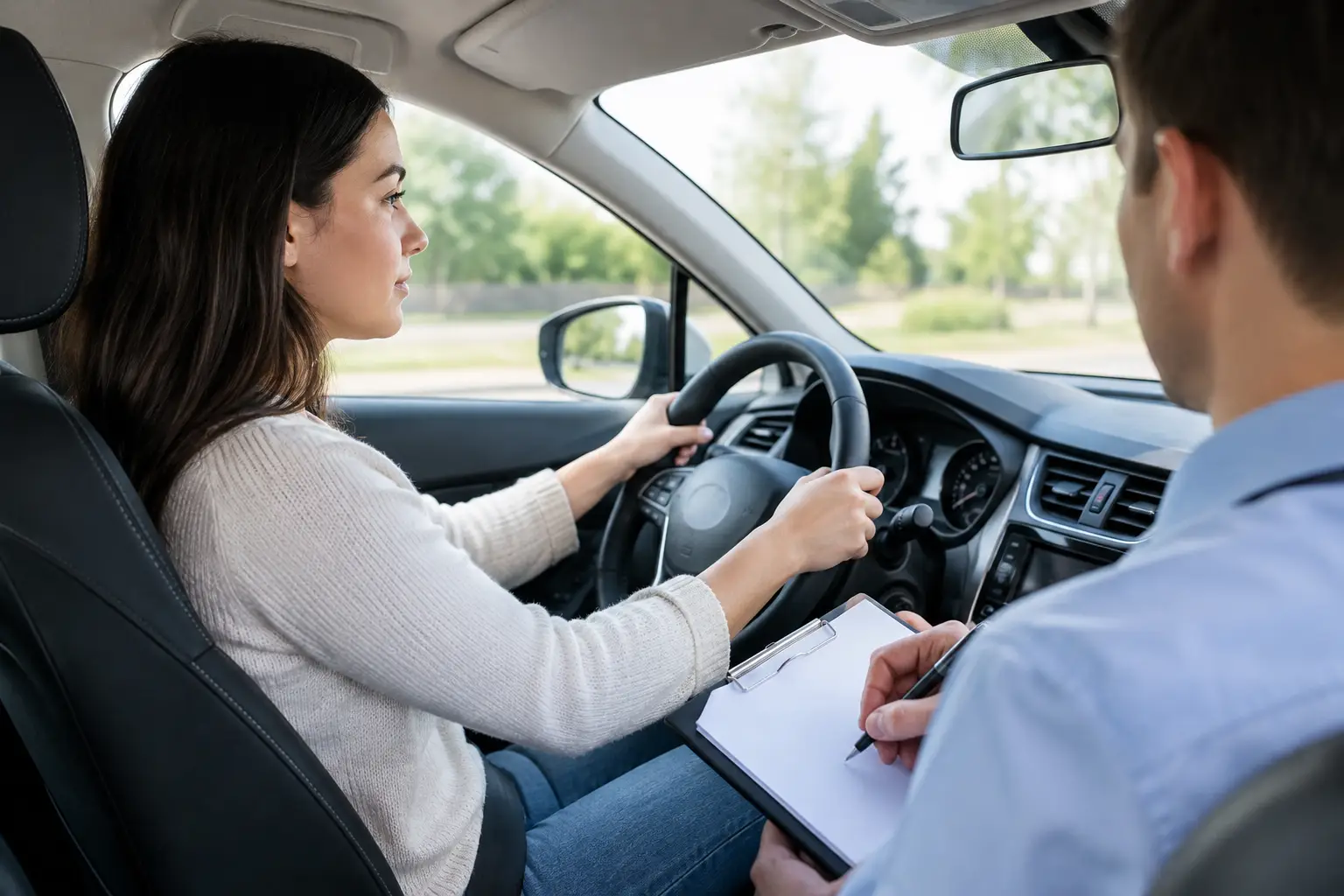
A driving evaluation can feel like every small move is being watched - because it is. But the purpose is not to catch a new driver making one imperfect turn. It is to determine whether the driver can operate a vehicle safely, follow traffic laws, and make sound decisions around other people on the road. If you are wondering what happens during a driving evaluation, knowing the usual sequence can replace a lot of test-day anxiety with a clear plan.
For California teens, adult beginners, and returning drivers, the evaluation is the practical part of showing that classroom knowledge has become safe driving behavior. The examiner is looking for consistent habits, not flashy driving. A calm driver who checks mirrors, scans intersections, controls speed, and corrects safely will be in a much stronger position than someone who rushes to impress.
What Happens During a Driving Evaluation in California?
A California DMV driving evaluation, often called a drive test, generally begins before the vehicle moves. The examiner will check identification and paperwork, then ask you to show that the vehicle is properly equipped and that you know where key controls are located. Bring a vehicle that is safe to drive, properly registered and insured, with working lights, signals, brakes, horn, mirrors, seat belts, and windshield wipers.
Before leaving the parking area, the examiner may ask you to identify or demonstrate controls such as the turn signals, brake lights, headlights, defroster, emergency flashers, parking brake, windshield wipers, and horn. The exact questions can vary. This part is simple, but it matters: take a moment to learn your test vehicle rather than assuming every control is in the same place as it was in a family member’s car or a lesson vehicle.
Once the drive begins, the examiner gives directions. Your job is to follow them safely and legally. You do not need to know the route in advance. In fact, you should not try to memorize a route at the expense of watching the road. Listen for the next instruction, but keep your attention on traffic conditions, signs, pedestrians, cyclists, and your vehicle’s position.
A typical evaluation may include residential streets, busier roads, intersections, lane changes, turns, stops, backing, and parking maneuvers. The examiner may also look for your ability to enter and leave traffic smoothly. The route and maneuvers depend on the DMV office, local conditions, and safety considerations that day.
What the Examiner Is Really Evaluating
The evaluation is not only about whether you arrive at each destination. It is about how you get there. Examiners watch whether you make decisions early enough, use proper observation, and maintain control when conditions change.
Observation and awareness
Safe driving starts with seeing what is around you. The examiner will look for visible mirror checks, traffic checks before changing lanes or turning, and careful scanning at intersections. A shoulder check is especially important before moving laterally, including lane changes, pulling away from a curb, and entering a bike lane area before a right turn.
Drivers sometimes know they should check but make the movement so subtle that it is difficult for an examiner to see. Move your head naturally and deliberately. Do not stare away from the road for long, but make your checks clear and timely.
Speed control and space management
Driving too fast is an obvious concern, but driving far below the flow of traffic can create problems too. A safe driver adjusts speed for posted limits, traffic, weather, visibility, and road conditions. The goal is steady, controlled progress with enough following distance to respond if the vehicle ahead brakes suddenly.
At intersections, begin slowing early rather than braking hard at the last second. When turning, enter at an appropriate speed and stay in the correct lane. These choices show the examiner that you are planning ahead rather than reacting late.
Right-of-way decisions
Many evaluation errors happen at intersections because drivers feel pressured to go. A safe driver does not guess. Come to a complete stop when required, look carefully in all directions, yield when another road user has the right-of-way, and wait when the situation is unclear.
This matters in the South Bay, where busy corridors, pedestrians near beaches and shopping areas, and cyclists can make a routine turn more complex. Taking an extra moment to confirm that a crosswalk is clear is usually far better than forcing a decision.
Vehicle control
The examiner will also evaluate steering, braking, acceleration, lane position, and parking control. Keep both hands positioned for effective control, make smooth steering adjustments, and avoid drifting across lane markings. During a backing maneuver, look behind you through the rear window while also using mirrors as needed.
A minor adjustment while parking does not automatically mean failure. What matters is whether you remain aware, avoid hazards, and correct the vehicle safely. If a maneuver is not lining up well, slow down and make a thoughtful correction instead of panicking.
Errors That Can End an Evaluation Early
California drive tests use a scoring system, and smaller errors can add up. However, some actions may be considered critical driving errors because they create an immediate safety risk or require the examiner to intervene. The DMV’s standards and procedures can change, so drivers should review current DMV guidance before their appointment.
Examples of serious mistakes include causing another driver or pedestrian to take evasive action, running a red light or stop sign, making an unsafe lane change, speeding in a way that creates danger, or requiring the examiner to use verbal or physical intervention to prevent a hazard. A collision, even at low speed, can also end the test.
The practical lesson is not to drive overly cautiously or freeze at every decision. It is to use the same safe process every time: observe, signal when needed, position the vehicle, choose a safe gap, and complete the maneuver smoothly.
What to Do if You Make a Mistake
Almost every nervous driver worries that one error means instant failure. That is not always the case. A small mistake, such as an imperfect parking position or a late but safe adjustment, may be recorded as an error rather than ending the evaluation.
Do not argue, apologize repeatedly, or let one mistake affect the rest of the drive. Refocus on the next task. A driver who regains composure and continues using safe habits demonstrates good judgment. On the other hand, trying to correct a missed turn by making a sudden lane change or unsafe turn is much more serious than simply following the examiner’s next direction.
If you do not hear or understand an instruction, ask the examiner to repeat it. It is better to clarify than to guess. You are expected to obey traffic laws even if an instruction seems to conflict with a sign, signal, or unsafe condition. For example, if you are asked to turn but the light changes or pedestrians enter the crosswalk, wait until the turn is legal and safe.
How to Prepare Before Test Day
The strongest preparation is practice that resembles real driving, not just repeating a few turns around the block. Build experience in different settings: quiet neighborhoods, multi-lane streets, intersections with protected and unprotected turns, parking lots, and roads with normal traffic flow. Practice in the vehicle you plan to use for the test whenever possible.
A useful final lesson should focus on habits that are easy to overlook under pressure. These include complete stops, consistent speed checks, proper lane changes, smooth turns into the correct lane, scanning for pedestrians, and checking blind spots. A qualified instructor can identify patterns a parent or student may not notice, such as turning too wide, braking late, or failing to make observation checks visible.
The day before the evaluation, confirm your appointment, documents, and vehicle condition. Get enough rest. On test day, arrive early enough that you are not rushing, adjust your seat and mirrors before the examiner arrives, and silence your phone. Start with your seat belt on and your attention settled.
A Driving Evaluation Is a Safety Check, Not a Performance
The DMV evaluation is one step toward independent driving, but passing should not be the only goal. A license gives a driver more freedom, along with responsibility for passengers, pedestrians, cyclists, and everyone sharing the road.
Patient, focused practice helps make the evaluation feel less like a high-stakes performance and more like what it should be: a chance to show the safe habits you are ready to use every time you drive.