
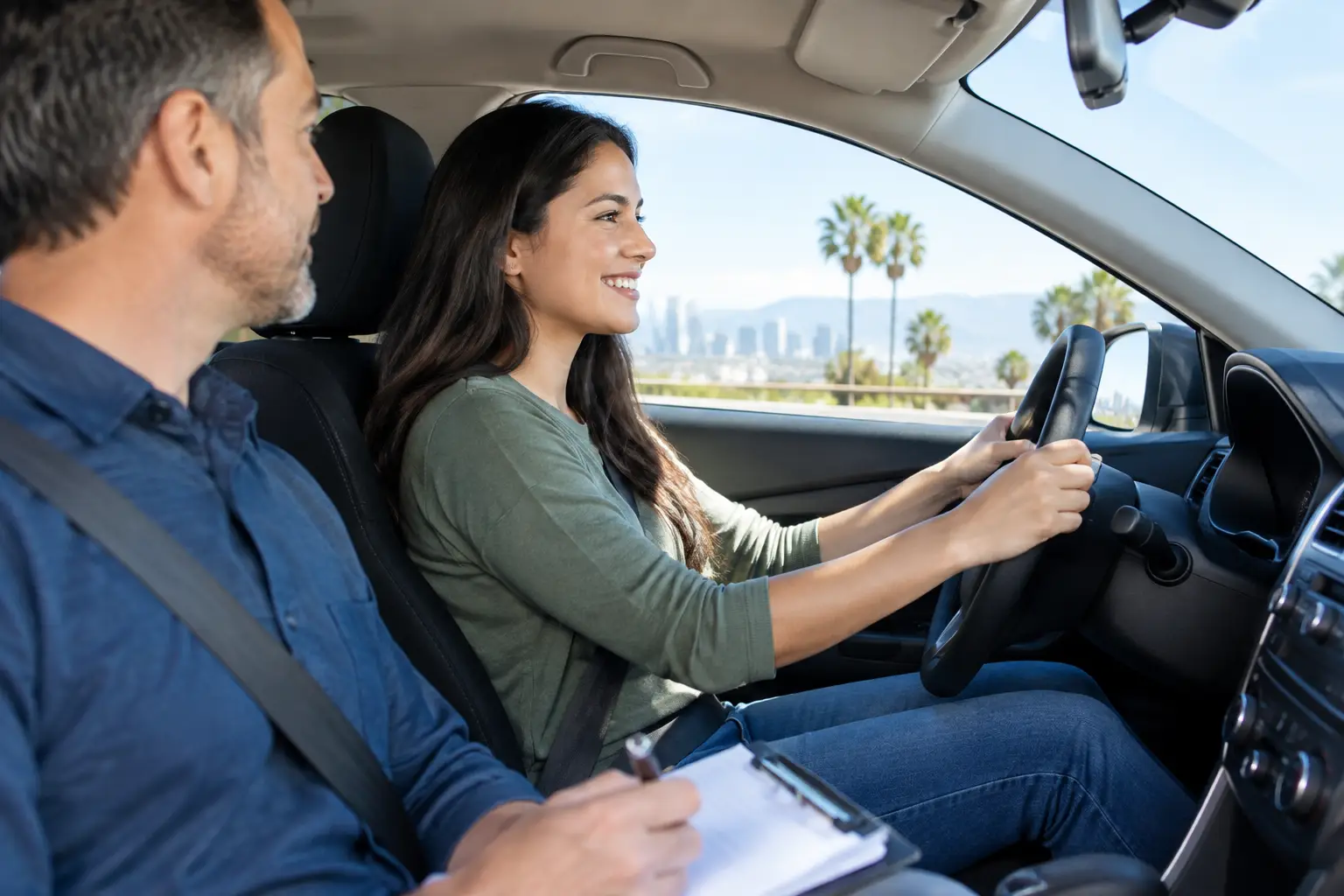
The DMV examiner is not looking for a perfect driver who never needs to correct a turn or pause before changing lanes. They are looking for someone who can make safe, controlled decisions without prompting. The best California driving test tips are less about memorizing a route and more about building visible habits that show you are ready to share the road responsibly.
For first-time drivers, the road test can feel much bigger than the short drive it actually is. A little preparation changes that. When the basic routines become automatic, you can focus on traffic, signs, pedestrians, and the examiner's directions instead of worrying about every move.
1. Make Your Safety Routine Easy to See
Examiners need to see that you are checking your surroundings. Before moving from the curb, adjust your seat and mirrors, fasten your seat belt, check that passengers are buckled, and make sure you know where the defroster, headlights, turn signals, windshield wipers, and emergency brake are located.
When you pull away, check your mirrors and look over your shoulder for traffic, cyclists, and pedestrians. Use your turn signal before leaving the curb. These actions may feel small, but they tell the examiner that you are not relying on luck or assumptions.
The same applies throughout the test. Check mirrors before braking, turning, changing lanes, or entering traffic. Do not stare at mirrors for long periods, but make brief, purposeful checks. A clear head check before a lane change is especially important because mirrors cannot show every vehicle in a blind spot.
2. Practice Smooth Control, Not Fast Control
Nervous drivers often make one of two mistakes: they drive too slowly because they are afraid to make an error, or they rush because they want a maneuver to be over. Neither approach feels safe to an examiner.
Use steady acceleration, gentle braking, and a calm grip on the wheel. Keep both hands in a controlled position unless you need one hand briefly for a vehicle control. At a stop sign, make a complete stop behind the limit line, crosswalk, or corner. Let the car settle fully before you proceed.
Aim to drive at a legal speed that fits conditions. Going well below the speed limit without a reason can disrupt traffic, while exceeding it can end a test quickly. If the street is narrow, visibility is limited, or pedestrians are nearby, ease off the accelerator and show good judgment.
3. Know What a Complete Stop Looks Like
Rolling stops are one of the most common preventable test mistakes. A complete stop means the vehicle is motionless. Feel the car stop, scan the intersection, and then go when it is safe.
At a four-way stop, follow the right-of-way rules rather than trying to be overly polite. The first vehicle to stop generally goes first. If two vehicles stop at the same time, the driver on the right usually has the right-of-way. If another driver hesitates or moves unexpectedly, give them space. Safe decisions matter more than proving you were technically entitled to go.
Also watch for stop signs that are partially hidden by trees, parked vehicles, or the angle of the street. In South Bay neighborhoods, residential intersections can be busy with walkers, school traffic, and vehicles entering from side streets. Slow down early enough to recognize what is ahead.
4. Use the Best California Driving Test Tips for Turns
Turns show an examiner several skills at once: speed control, lane position, observation, signaling, and judgment. Start slowing before the turn, signal early enough to communicate your plan, and look for pedestrians in the crosswalk before moving.
For a right turn, finish in the lane closest to the right curb unless road markings direct you otherwise. Avoid swinging wide into another lane. For a left turn, enter the correct lane and complete the turn into the lane nearest the center line or median when appropriate. Do not drift across multiple lanes after turning.
A common concern is whether you should wait for a perfectly empty intersection before turning left. You do not need to wait forever, but you do need a safe gap. Judge oncoming traffic honestly. If you are unsure whether you have enough time, wait. A patient decision is better than forcing another driver to brake.
5. Treat Every Crosswalk as Active
California drivers must yield to pedestrians in crosswalks, including unmarked crosswalks at many intersections. On the test, look deliberately for people who may be stepping off a curb, walking a dog, pushing a stroller, or approaching from behind a parked vehicle.
Do not block a crosswalk while waiting at a light or stop sign. If traffic ahead prevents you from clearing the intersection, wait behind the crosswalk. This is one of those habits that protects people every day, not just during a road test.
Be equally alert around school zones, bus stops, shopping areas, and residential streets. The examiner may not say anything when you spot a potential hazard and slow appropriately, but that awareness is part of safe driving.
6. Change Lanes With a Consistent Sequence
A safe lane change has a simple order: check mirrors, signal, check your blind spot, and move smoothly when the lane is clear. Signal before you begin the maneuver, not while you are already drifting over the line.
Keep a safe following distance so you have room to adjust your speed. If another vehicle is in the lane you need, do not squeeze into a small opening. Wait for a larger gap. On busy Torrance and greater South Bay roads, calm patience is often more useful than trying to make every light or opening.
If the examiner asks you to change lanes and doing so would be unsafe, continue safely and explain that you will change lanes when there is room. You are never expected to follow a direction that creates a hazard.
7. Prepare for Parking and Curb Maneuvers
Your test may include backing in a straight line, pulling to the curb, or parking on a hill. These skills are easier when you practice slowly and use reference points that make sense in your vehicle.
When pulling to the curb, signal, check mirrors and your blind spot, then move close to the curb without hitting it. Before backing, look over your right shoulder through the rear window. Rearview cameras can be helpful when parking in daily life, but your direct observation remains essential.
For hill parking, know which way to turn your front wheels. When parking downhill with a curb, turn the wheels toward the curb. When parking uphill with a curb, turn them away from the curb. Set the parking brake when appropriate. Practice the reason behind the rule: if the vehicle rolls, the curb should help stop it.
8. Do a Vehicle Check Before Test Day
A strong drive can be interrupted by a vehicle issue. Before heading to the DMV, confirm that the car has valid registration and insurance, the lights and turn signals work, the tires are properly inflated, and there are no warning lights that suggest a safety problem.
Make sure the windshield is clear, mirrors are usable, and the front passenger door opens from both inside and outside. The examiner will conduct a brief vehicle safety check. If the vehicle does not meet requirements, you may not be allowed to take the test.
Use the vehicle you practiced in whenever possible. Switching to a larger SUV, unfamiliar sedan, or manual-transmission vehicle at the last minute can add unnecessary stress because the braking feel, visibility, steering response, and control locations may be different.
9. Practice in Test-Like Conditions
Practice should include more than quiet streets. Work on residential driving, busier intersections, lane changes, unprotected left turns, stop signs, parking, and driving near pedestrians. Ask your supervising driver or instructor to give directions one at a time, as an examiner would.
It also helps to practice at different times of day. A route that feels easy on a calm weekend morning may feel very different with afternoon traffic, sun glare, or school pickup activity. The goal is not to memorize one DMV area. It is to become adaptable.
South Bay Driving School encourages students to repeat the skills that make them feel uneasy rather than avoiding them. A patient lesson focused on turns, lane changes, or parking can turn a weak spot into a familiar routine.
10. Manage Nerves Without Ignoring Them
Feeling nervous before a driving test is normal. The answer is not to pretend you are relaxed. Give yourself extra time, eat something light, bring the required documents, and arrive early enough that you are not rushing into the driver's seat.
During the test, listen fully to each instruction. If you do not hear or understand it, politely ask the examiner to repeat it. Keep your attention on driving, not on guessing whether a previous move was perfect. One small mistake does not automatically mean you have failed.
If you make a correction safely, continue with the same steady approach. Your next decision is more useful than replaying the last one in your head. The road test is a short opportunity to demonstrate the safe habits you have been practicing.
A passing score is worth celebrating, but the real goal is to leave the DMV ready to drive thoughtfully when no examiner is sitting beside you. Build the habits slowly, practice them consistently, and let confidence come from being prepared.