
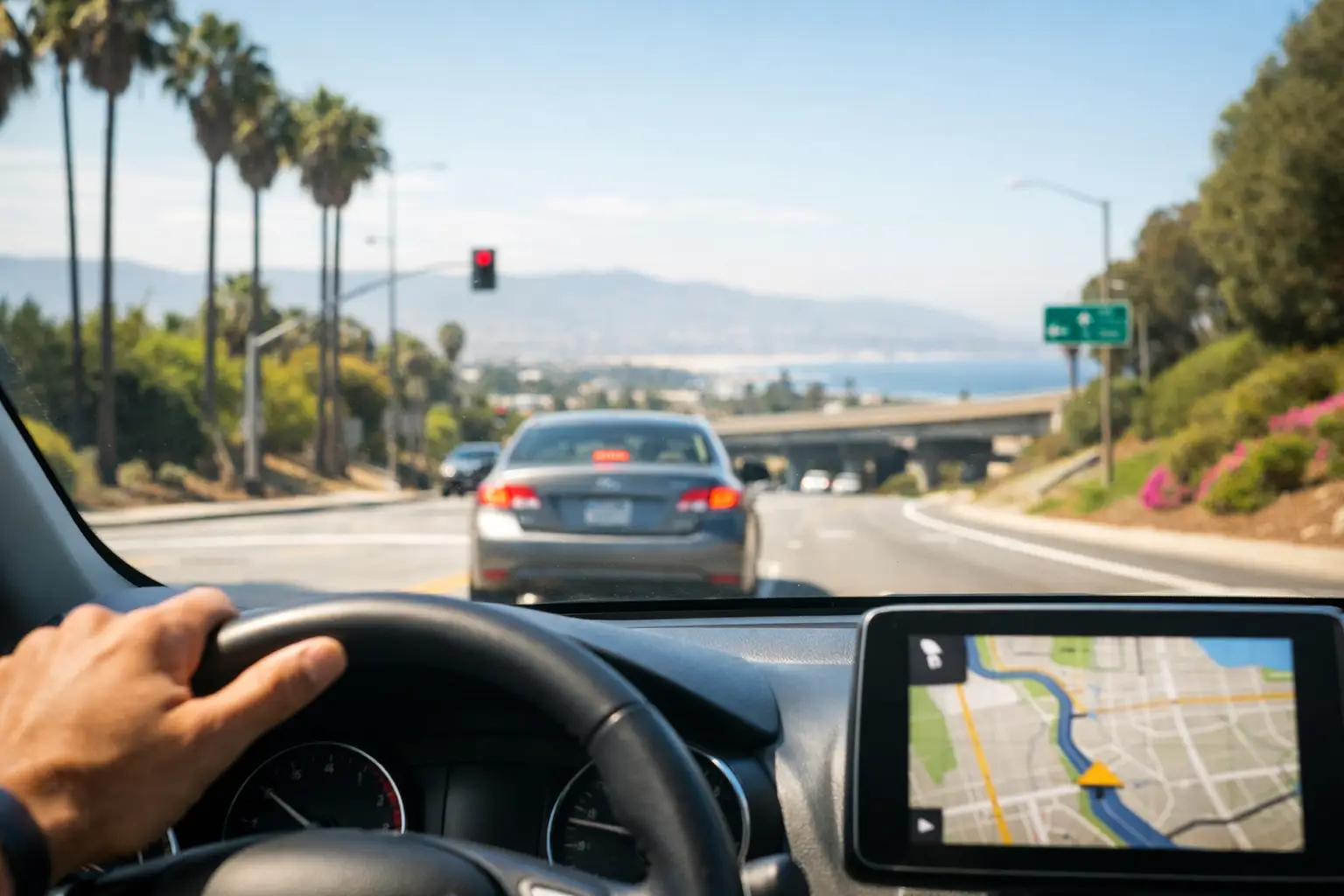
A DMV drive test can feel unpredictable when you have only practiced in empty parking lots or on the same quiet street. The best DMV test practice routes are not secret versions of a future test route. They are realistic local drives that help you repeat the skills an examiner can evaluate: observation, speed control, lane position, turning, right-of-way decisions, and safe judgment.
For South Bay students, the most useful practice is varied but purposeful. You want roads that let you build confidence gradually, then challenge yourself with the traffic patterns, intersections, and residential conditions common around a DMV office. The goal is not to memorize streets. It is to become the kind of driver who can handle an unfamiliar street safely.
What Makes a Good DMV Practice Route?
A productive route gives you enough repetition to improve without turning a lesson into a stressful endurance test. It should include residential streets for low-speed control, standard intersections for right-of-way practice, and larger streets where you can demonstrate proper lane changes and steady speed management.
A good route also has room to recover. Beginners often need a quiet block or parking area between more demanding exercises to discuss what happened and reset. If every minute involves dense traffic, difficult left turns, or rushed decisions, a nervous driver may practice anxiety instead of sound habits.
The exact roads that work best depend on your current skill level, the time of day, and local traffic. School zones, construction, parked cars, and congestion can change a familiar route quickly. That is useful preparation, as long as practice remains safe and supervised.
Best DMV Test Practice Routes for Building Skills
Start with a residential control loop
For new drivers, begin on calm residential streets near home or in a neighborhood with clear intersections, modest traffic, and legal curbside parking. In Torrance and nearby South Bay communities, residential areas can provide valuable practice with stop signs, uncontrolled intersections, pedestrians, and cars entering from driveways.
Use this type of loop to practice smooth starts and stops, scanning at every intersection, maintaining a safe following distance, and making complete stops before the limit line or crosswalk. A driver should look left, right, and left again before proceeding, while continuing to watch for people walking, cyclists, pets, and vehicles that may not yield properly.
Residential practice is also where students should work on the skills that are easy to overlook because they happen at low speeds. These include checking mirrors before braking, signaling early enough, keeping the wheels straight while waiting to turn, and looking over the shoulder before pulling away from the curb.
Add a route with parked cars and narrow streets
A route with regular street parking teaches space management. Drivers must avoid drifting too close to parked vehicles while still staying within their lane and leaving enough room for oncoming traffic. This is especially helpful before practicing the DMV-required backing maneuver and curbside stops.
When driving beside parked cars, keep your eyes moving well ahead rather than staring at the car immediately beside you. Watch for brake lights, people opening doors, and vehicles pulling out. If a street becomes too narrow for two cars to pass comfortably, slow down, assess who has the safer place to yield, and proceed only when there is adequate space.
Practice parking only where it is legal and safe. A test examiner is looking for control, observation, and good decision-making, not a fast parking maneuver. Take a moment to set up correctly, check your surroundings, and make small adjustments if needed.
Practice right turns on busier local streets
Once basic control is consistent, include streets with more traffic, multiple lanes, and frequent turns. These roads help drivers practice selecting the correct lane, reading traffic signals, responding to pedestrians, and maintaining a stable speed when other drivers are moving more quickly.
Right turns deserve focused practice because they involve several decisions at once. Check mirrors, signal, move into the correct lane when appropriate, slow smoothly, scan the crosswalk, look for bicycles near the curb, and turn into the nearest legal lane unless signs or road markings direct otherwise. Avoid swinging wide into another lane.
For students preparing near Torrance, practicing on a mix of city streets rather than only wide boulevards is useful. The DMV test may ask for ordinary driving actions in ordinary conditions, and calm lane discipline matters whether traffic is light or busy.
Include lane changes when you are ready
Lane changes are not the first skill to practice, but they are an essential one. Choose a multi-lane road with predictable traffic flow and enough distance between intersections. Start during lower-traffic hours, then build toward busier conditions as your ability improves.
A safe lane change follows a repeatable routine: check mirrors, signal, check the blind spot over your shoulder, move gradually when the lane is clear, and cancel the signal. Do not force your way into a gap or make a last-second lane change because you missed a turn. Continuing safely and rerouting is always better than making a risky correction.
This exercise is particularly valuable for drivers who tend to stare forward. The DMV examiner needs to see active observation, but more importantly, you need a real habit of checking what is around the vehicle before changing its path.
Finish with a simulated test drive
A simulated drive brings individual skills together. Begin from a legal curbside position or parking space, then drive for 20 to 30 minutes through a mix of residential and commercial streets. Include left and right turns, stop signs, traffic lights, a lane change if conditions allow, a curbside stop, and a backing exercise.
During the simulation, the supervising adult or instructor should give directions calmly and avoid coaching every move. Save most feedback for after the drive. This helps the student practice processing directions, checking surroundings, and correcting small mistakes independently.
A simulation should not be treated as pass or fail. If a driver misses a mirror check, brakes too late, or turns too wide, isolate that skill afterward and repeat it in a lower-pressure setting. Progress comes from accurate feedback and deliberate repetition.
Do Not Try to Memorize an Exact DMV Route
Many students search for a route that will match their road test exactly. That approach can create false confidence. DMV test routes can change based on traffic, road work, safety conditions, and examiner discretion. Even if you drive the same streets, the situation around you will not be identical.
Instead, learn the patterns behind the test. Practice stopping fully, checking blind spots, scanning intersections, using signals consistently, staying within the speed limit, and making safe decisions when something unexpected happens. These habits travel with you to any route.
It also helps to drive near the DMV office before test day so the area feels less unfamiliar. Notice posted speed limits, turn lanes, crosswalks, and areas where traffic tends to back up. Do not block entrances, practice illegal maneuvers, or create hazards while trying to observe the area.
How to Practice Without Reinforcing Bad Habits
More driving time is helpful only when the practice is focused. A parent or supervising driver may notice different things than a trained instructor, so agree on one or two goals before leaving. For example, one drive may focus on complete stops and scanning, while the next focuses on turns and lane changes.
Keep feedback specific. Rather than saying, “Be more careful,” identify the action: “Start braking earlier so the stop is smoother,” or “Check your blind spot before moving right.” Specific feedback gives the learner something they can repeat.
Avoid taking over verbally at the last second unless safety requires it. Constant instructions can make a student dependent on a passenger’s voice. A better approach is to discuss the route ahead, allow the student time to make decisions, and review the result afterward.
Professional road-test preparation can be especially helpful for students who have practiced often but still feel uncertain, or for returning adult and senior drivers who want a patient review of current California driving expectations. At South Bay Driving School, focused preparation lessons can identify the habits most likely to affect safety and test readiness, then give students a structured way to improve them.
A Better Standard for Test-Day Readiness
You are ready for the road test when safe driving feels repeatable, not when you can recite a particular route. You should be able to follow directions without rushing, recover from a minor mistake without panicking, and keep watching the road even when traffic feels busy.
Choose practice routes that make you think, then repeat the skills until your decisions become calm and consistent. That confidence is more valuable than knowing the next turn, because it stays with you long after the DMV test is over.