
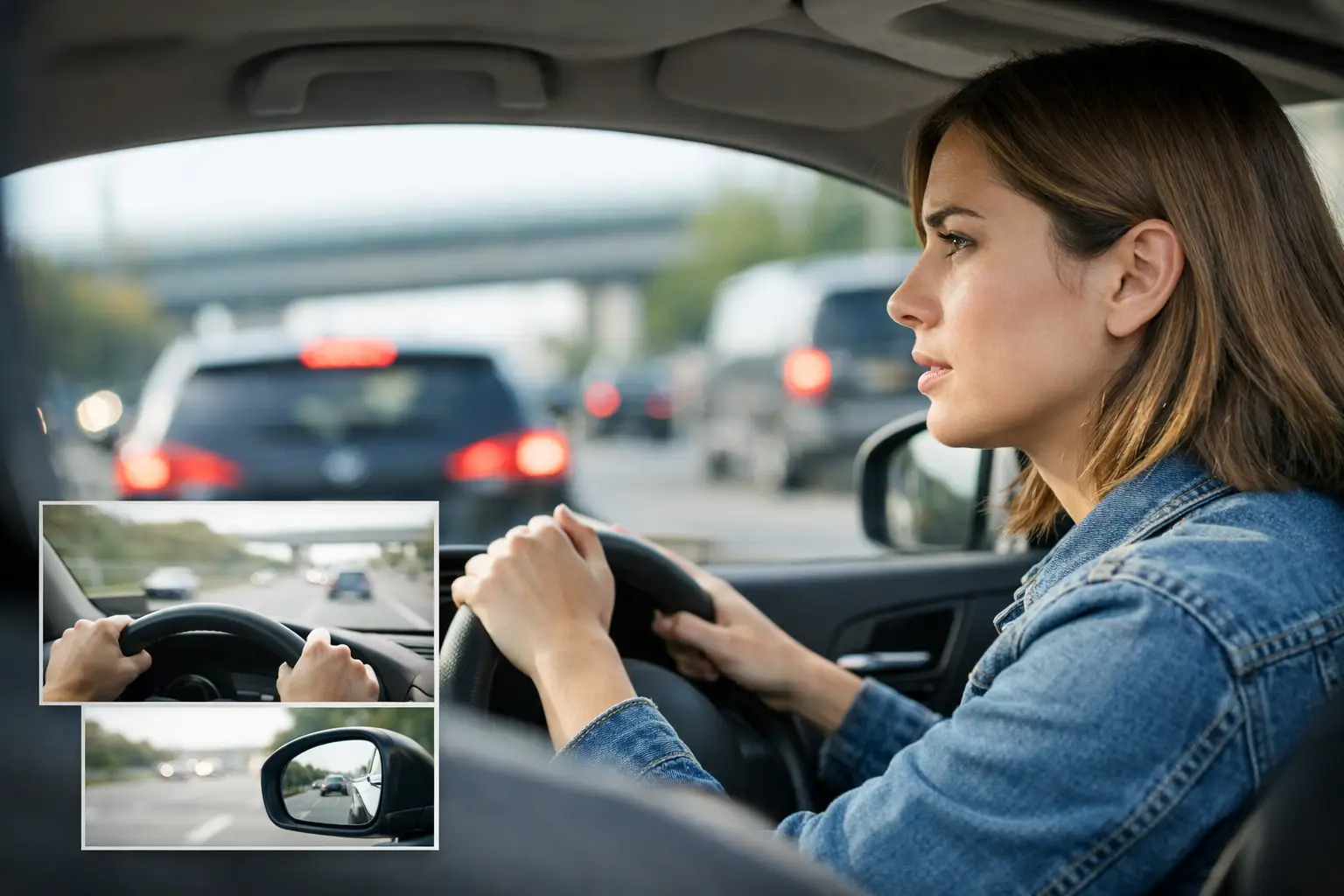
A missed turn near the Del Amo Fashion Center, a busy merge onto the 405, or a line of cars waiting at a left turn can make a new driver feel as if every decision must be perfect. This driving anxiety guide is built around a more useful goal: making one safe, manageable decision at a time. Anxiety does not mean someone is incapable of driving. It usually means they need a slower progression, clear routines, and enough practice for the unfamiliar to become predictable.
For teens, the pressure can come from wanting to pass the California DMV road test or avoid disappointing a parent. Adult beginners may feel embarrassed about starting later than friends. Returning drivers may carry memories of a collision, years without driving, or difficulty keeping up with heavier traffic. The starting point is different, but the path forward is similar: develop vehicle control first, then build confidence in gradually more demanding situations.
What Driving Anxiety Can Look Like
Driving anxiety is more than occasional nervousness before a lesson. A driver may grip the steering wheel too tightly, hold their breath, rush through turns, avoid freeways, or cancel practice sessions because they fear making a mistake. Some people know the rules well but freeze when several things happen at once, such as checking mirrors, judging a gap, and responding to another driver.
A little nervousness is normal when learning a skill with real responsibility. The concern is when fear prevents consistent practice or causes unsafe choices. For example, stopping suddenly in flowing traffic because a turn was missed creates more risk than continuing safely and rerouting. A learner needs permission to make small, recoverable mistakes without treating them as proof that they should quit.
If anxiety causes panic symptoms, fainting, severe distress, or makes it impossible to operate the vehicle safely, pause driving and speak with a qualified health professional. Driving lessons can support skill-building, but they are not a substitute for mental health care when anxiety is overwhelming.
Start With Control, Not Traffic
Many anxious drivers try to solve their fear by forcing themselves into the hardest situation first. That approach can backfire. A better plan begins in a calm, low-pressure area where the driver can focus on the basics without a long line of cars behind them.
Before driving on busier South Bay streets, practice setting the seat, mirrors, steering wheel, and head restraint correctly. Learn where the turn signals, wipers, headlights, defroster, parking brake, and hazard lights are located. Then work on smooth starts, gentle braking, steady steering, and complete stops. These actions may seem simple, but they reduce mental workload later.
A useful early routine is to say the sequence out loud: check mirrors, signal, brake smoothly, look through the turn, and accelerate gradually. Verbalizing the steps can feel awkward at first, but it helps the brain organize a task that otherwise feels like too much at once. As the routine becomes familiar, the driver can perform it quietly and naturally.
Use a Practice Ladder for Driving Anxiety
Confidence grows from repeated evidence that a driver can handle the next step. It rarely appears because someone is told to relax. Build a practice ladder that begins slightly below the driver’s current comfort level and progresses only when that level feels reasonably steady.
For a complete beginner, the sequence may move from an empty parking lot to quiet residential streets, then to neighborhood intersections, larger surface streets, moderate traffic, night driving, and eventually freeway entrances and lane changes. A returning driver might begin with familiar daytime routes before adding unfamiliar destinations, rain, or busy commute periods.
Each practice session should have one or two goals. One lesson might focus on approaching stop signs at an appropriate speed. Another might be about controlled right turns and checking for pedestrians. Trying to improve every skill in one drive creates overload and makes it difficult to see progress.
Repeating the same route is not a failure or a shortcut. Familiar roads allow a nervous driver to use less attention on navigation and more attention on traffic awareness, speed control, and decision-making. Once those habits are more automatic, changing the route becomes much easier.
Make Freeway Practice a Separate Goal
Freeways often create the strongest anxiety because traffic moves quickly and drivers have less time to decide. Do not treat freeway driving as a required first milestone. A driver should first be comfortable maintaining lane position, checking mirrors, identifying a safe gap, and changing lanes on surface streets.
When the time is right, start with a short route during lighter traffic. Review the plan before entering: accelerate on the ramp, look ahead, check mirrors and blind spot, merge into an available gap, and keep moving with traffic. If a safe merge is not available, the driver should continue on the ramp when possible rather than stopping abruptly. The first goal may simply be one entrance, a few minutes of steady driving, and one planned exit.
Replace Perfection With Safe Recovery
Anxious drivers often believe every error will lead to disaster. Good driving actually includes knowing how to recover safely. Missing a turn, taking the wrong exit, or needing an extra moment at an intersection does not automatically mean the drive has gone badly.
Practice a few calm recovery phrases before getting behind the wheel: “I can continue safely.” “I do not need to rush.” “I can go around.” These statements direct attention toward the next safe action rather than the mistake that already happened. They are especially helpful during DMV road-test preparation, when nerves can make a minor correction feel much larger than it is.
There are limits, of course. Safe recovery never means ignoring a signal, crossing multiple lanes at the last second, or making an unsafe U-turn. It means accepting the inconvenience of a longer route instead of trying to fix a navigation mistake immediately.
Prepare Before the Car Moves
A few minutes of preparation can lower anxiety significantly. Choose a route before leaving, set navigation while parked, and put the phone away before shifting into drive. Leave enough time so that a late departure does not turn into speeding, hurried lane changes, or pressure to take risks.
Use a simple pre-drive check: seat and mirrors adjusted, seat belt on, doors secured, parking brake released when appropriate, dashboard warning lights reviewed, and the route understood. For a teen practicing with a parent, agree on how directions will be given. Short, early instructions such as “we will turn right at the next light” are more helpful than sudden commands.
Parents can make practice harder without meaning to. Raised voices, constant criticism, or grabbing at the wheel can increase fear and reduce the learner’s ability to process information. Calm, specific coaching works better: point out one improvement, identify one skill to practice next, and save detailed feedback until the car is parked.
When Professional Instruction Helps
A patient instructor offers something family practice cannot always provide: a structured lesson with clear priorities and no family tension. Professional training can be particularly useful for a teen who is avoiding practice, an adult beginning from scratch, a senior driver refreshing skills, or a returning driver who wants to regain independence after years away.
The right lesson pace depends on the student. Some drivers need more time on local streets before moving into denser traffic. Others have basic control but need targeted help with parallel parking, lane changes, left turns, or California DMV test expectations. A qualified instructor can observe patterns that a nervous driver may not recognize, then turn them into specific practice goals.
South Bay Driving School has worked with learners across Torrance and nearby communities for decades, with instruction designed to build skills in a paced, supportive way. The objective is not to push a student through the hardest route quickly. It is to help them develop repeatable habits they can use long after a test is over.
The next drive does not have to prove everything. It only needs to give the driver one more safe experience to build on, whether that means a smooth stop, a calm lane change, or choosing to continue forward after a missed turn.