
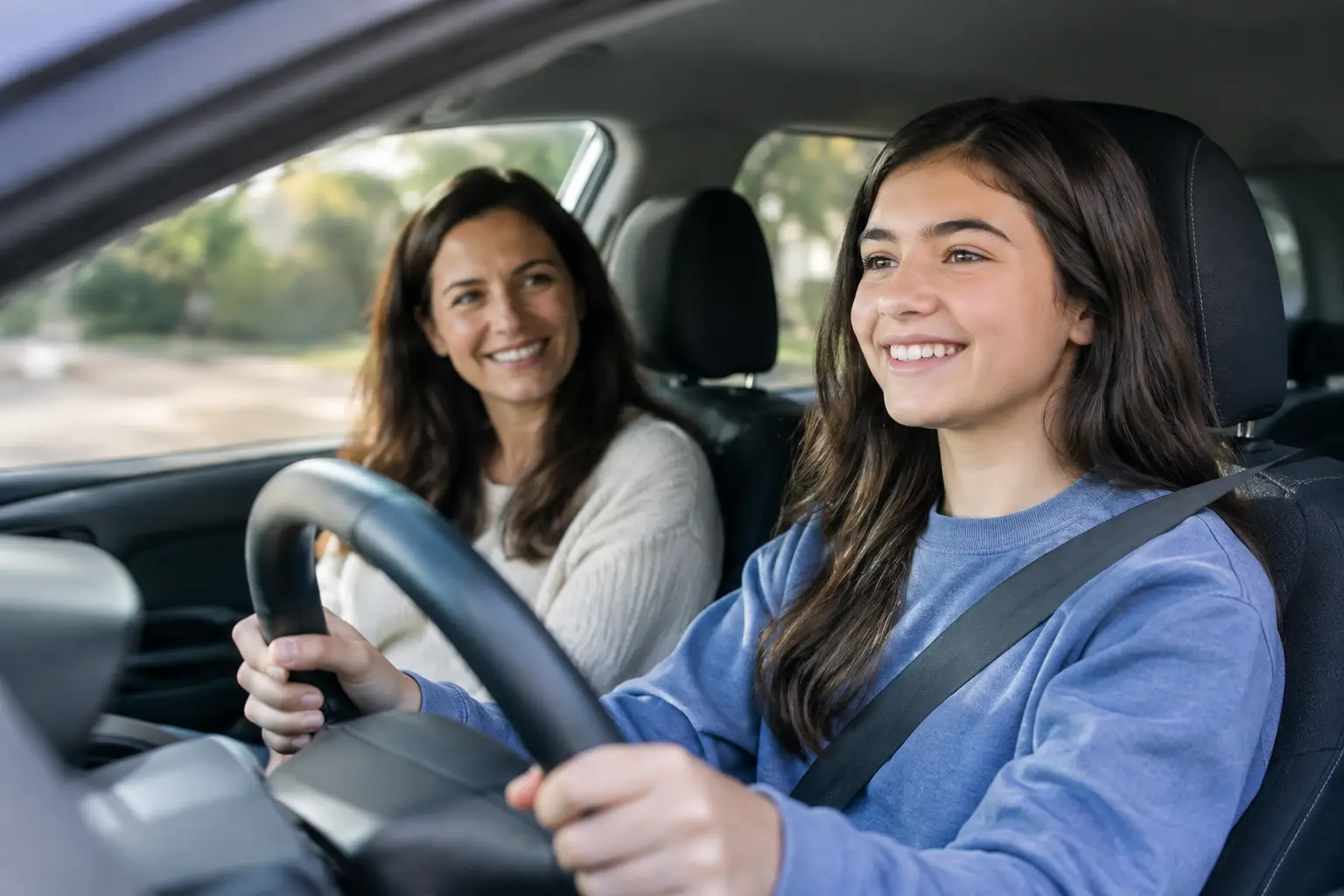
A quiet neighborhood street can feel easy until a teen driver reaches the first uncontrolled intersection, spots a pedestrian near the curb, and has to decide what to do next. That is where teen driving practice becomes more than accumulating hours. It is the process of teaching a new driver to observe, decide, and act safely before a situation becomes urgent.
For parents, the goal is not to make every drive flawless. It is to help a teenager build repeatable habits that hold up on busy Torrance streets, freeway entrances, parking lots, and unfamiliar routes. Progress comes from calm repetition, clear expectations, and practice that becomes gradually more challenging.
Teen Driving Practice Has a Purpose
A learner can spend a great deal of time behind the wheel without gaining much confidence if every practice drive follows the same empty residential loop. Repetition matters, but the right kind of repetition matters more. A new driver needs time to connect the basics of steering, braking, lane position, speed control, and mirror checks with the changing conditions around them.
Early drives should allow the teen to focus on vehicle control. A quiet area with wide streets gives them room to practice smooth starts, complete stops, steady turns, and proper scanning. Once those actions require less conscious effort, they can pay more attention to traffic patterns, signs, cyclists, pedestrians, and the behavior of other drivers.
This is why a paced approach is safer than pushing a teen onto the freeway too soon. Freeway driving is an essential skill in the Los Angeles area, but it asks a driver to merge, judge closing speeds, maintain lane position, and make decisions quickly. A student who still has to think hard about braking smoothly may feel overloaded in that setting. Building skills in stages protects confidence as well as safety.
Start With Short, Specific Practice Drives
Long practice sessions can be tiring for both the learner and the supervising adult. A focused 30- to 45-minute drive often produces better results than a two-hour trip filled with corrections and frustration. Before pulling away, choose one or two skills for the day.
For example, a practice session may focus on approaching intersections correctly: checking mirrors, easing off the accelerator, looking left-right-left, stopping fully when required, and checking again before proceeding. Another session may focus on lane changes, including signaling early, checking mirrors, looking over the shoulder for the blind spot, and moving only when there is adequate space.
Specific practice also makes feedback easier to hear. Instead of saying, “You need to pay more attention,” a parent can say, “Before your next turn, check the right mirror earlier so you can see whether a cyclist is beside you.” The first statement can feel discouraging. The second gives the teen an action they can use immediately.
Build Difficulty One Step at a Time
The best practice route changes as the student changes. Begin where mistakes are manageable, then introduce new demands after the previous skill becomes more consistent. A teen who can make safe turns on quiet streets is ready for moderate traffic. A teen who can handle moderate traffic calmly may be ready for multilane roads, more complex intersections, and eventually freeway driving.
Practice in different conditions is necessary because driving conditions do not stay the same. Daytime driving teaches basic visual awareness, while evening practice teaches a student to manage reduced visibility and headlight glare. Light rain introduces longer stopping distances and the importance of gentle steering, braking, and acceleration. Parking lots are useful for low-speed control, but they also teach an important lesson: pedestrians, shopping carts, and backing vehicles can appear unexpectedly.
Parents should avoid treating difficult conditions as a test. The goal is not to see whether a teen can handle the hardest route possible. The goal is to give them guidance while the stakes are still low. If a student becomes overwhelmed, returning to a simpler route is good judgment, not failure.
Skills Worth Repeating
Certain actions should appear in nearly every drive because safe driving depends on habits, not one-time demonstrations. Teenagers should regularly practice:
- Looking well ahead, not only at the vehicle directly in front of them
- Maintaining a safe following distance that increases in rain, traffic, or low visibility
- Scanning mirrors often and checking blind spots before changing lanes or moving from the curb
- Braking early and smoothly rather than reacting at the last second
- Making complete stops and checking carefully for pedestrians, bicycles, and cross traffic
- Using turn signals consistently and early enough for others to respond
These behaviors may sound basic, but they are the foundation for confident driving. A student who scans early has more time to make choices. A student who leaves space has more room to correct a mistake safely.
Keep Coaching Calm and Useful
Many parents are excellent drivers but find it difficult to teach driving to their own teen. That is normal. The passenger seat can feel stressful when someone else is learning to manage a vehicle, especially on familiar roads where a parent already knows every busy intersection and blind corner.
Try to give directions early and in a calm, even voice. “At the next light, we will turn right,” gives a teen time to plan. “Turn right here!” can cause rushed steering, late braking, or a missed signal. If immediate action is necessary for safety, be direct, but save the full discussion for after the car is parked.
It also helps to limit corrections. If a teen is working on smooth braking, do not fill the same drive with detailed criticism about parking, route choices, and hand position. One or two priorities are enough. End the session by identifying what improved and what to practice next time. Confidence grows when a student can see evidence of progress.
Professional Instruction Adds Another Perspective
Family practice and professional lessons work best together. Parents provide the consistent repetition that turns skills into routine. A trained instructor provides structured coaching, clear safety standards, and an outside perspective that can reduce tension at home.
For California teens under 18, professional behind-the-wheel instruction is also part of the licensing process. A driving school can help students work through the required six hours of instruction while practicing the skills expected on the DMV drive test. Just as important, lessons can identify gaps that are easy to miss during familiar family routes, such as proper curb parking, intersection approach, lane changes, and defensive driving habits.
South Bay Driving School has worked with local families for decades, helping new drivers practice at a pace that matches their experience. For a nervous beginner, that may mean extra time on basic controls and quiet streets. For a student nearing the road test, it may mean refining the small details that demonstrate safe, consistent decision-making.
Practice for Road Readiness, Not Just the Test
A DMV drive test matters, but a passing score is not the finish line. The broader goal is a teen who can make safe choices after the permit period is over, including when no parent or instructor is in the passenger seat.
That means practicing real-life situations carefully: entering and leaving a busy parking area, navigating an unfamiliar neighborhood, changing lanes with traffic, finding a safe place to pull over, and responding when another driver behaves unpredictably. It also means talking honestly about distractions. Before each drive, phones should be put away, music should stay low enough to hear traffic, and passengers should not become part of the lesson until the teen is ready.
California requires supervised practice hours before a provisional license, including nighttime driving. Rather than saving those hours for the last few weeks, spread them across the permit period. A simple written log can help families see whether practice has included a useful mix of routes, traffic levels, parking, and evening driving.
The safest teen drivers are not the ones who never make a mistake during practice. They are the ones who learn to recognize a developing problem early, slow down when needed, and make the next safe decision. Give your teen time to build that judgment. Every calm, purposeful drive is an investment in the person they will become behind the wheel.