
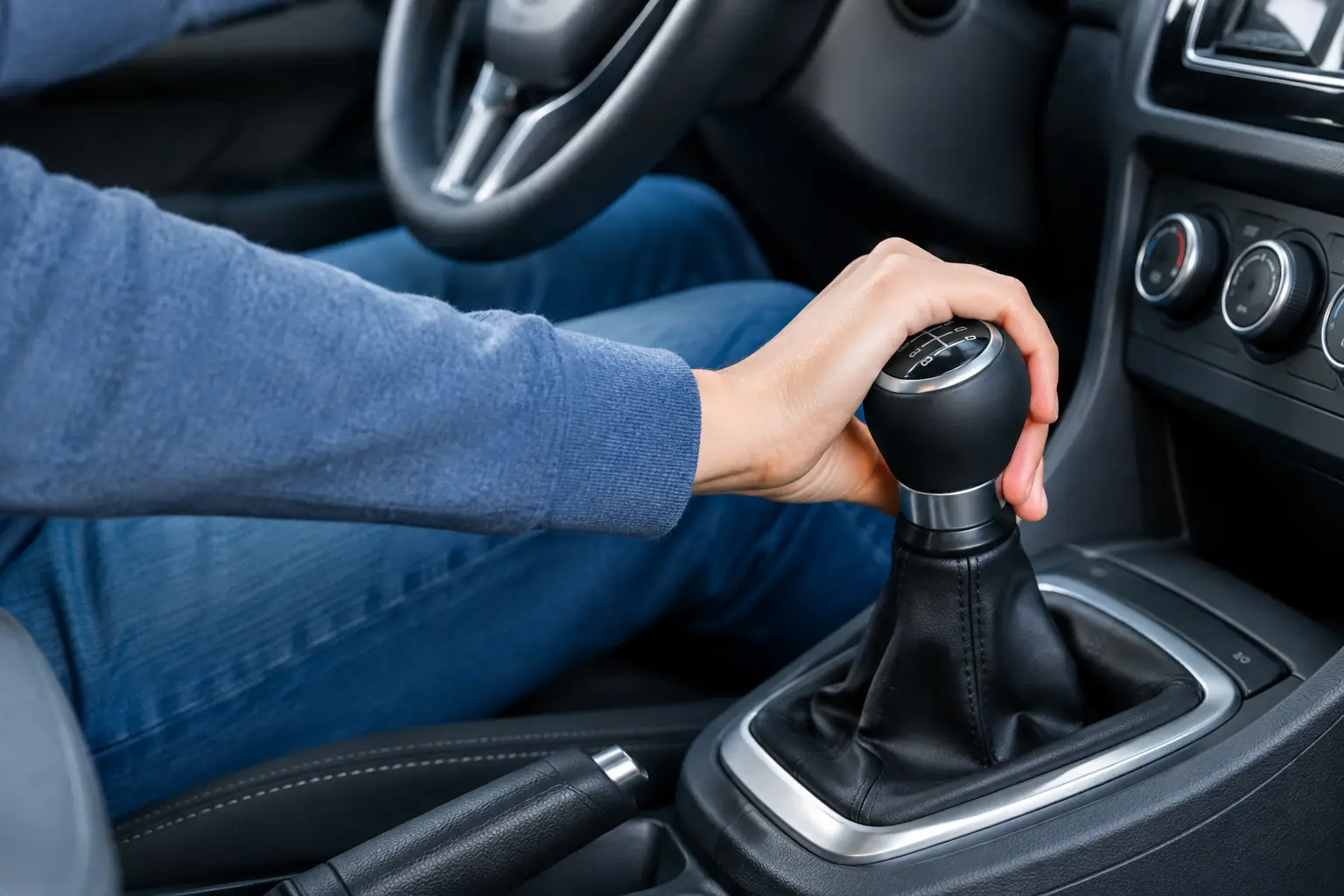
A manual transmission learning example is most useful when it shows what a real first lesson feels like: calm, structured, and slower than most new drivers expect. Learning to use a clutch is not about forcing quick shifts or memorizing a sequence under pressure. It is about building control one repeatable step at a time, in a safe place with an instructor who can explain what the car is telling you.
For a teen, adult beginner, or returning driver, the first few minutes in a manual vehicle can feel like a lot. There are three pedals, a gear selector, a parking brake, mirrors, traffic checks, and the understandable concern of stalling. A paced lesson turns those separate tasks into a routine that becomes more natural with practice.
A Manual Transmission Learning Example in a First Lesson
Imagine a student named Maya arriving for her first manual-transmission lesson. She has driven an automatic before, so she understands steering, braking, lane position, and basic traffic awareness. Her new challenge is coordinating her left foot, right foot, and right hand without taking attention away from the road.
Before the engine starts, the instructor has Maya identify the pedals. From left to right, they are the clutch, brake, and accelerator. The instructor explains a key safety habit: her left foot is used only for the clutch. Her right foot moves between the brake and accelerator, just as it would in an automatic car.
Next, Maya practices the motion of pressing the clutch fully to the floor and releasing it slowly. The vehicle remains parked. This is not wasted time. It gives her body a chance to learn the pedal’s travel and resistance before the vehicle begins moving. The instructor also reviews the shift pattern, including neutral, first gear, second gear, reverse, and where higher gears are located.
With the parking brake engaged and the area clear, Maya starts the engine with the transmission in neutral. She presses the clutch, selects first gear, and keeps her right foot on the brake. At this stage, there is no expectation that she will drive smoothly on the first attempt. The purpose is to understand the order of operations and stay in control.
Finding the clutch engagement point
The next step is the part most people remember: finding the engagement point, often called the bite point. Maya releases the clutch gradually until she feels the car begin to pull forward slightly. The instructor asks her to pause there for a moment, then press the clutch back down. She repeats this several times in a quiet, level area.
This exercise helps the student recognize the exact point where the engine begins transferring power to the wheels. Every vehicle feels a little different. A manual-transmission learner should not expect one universal pedal position or try to copy a friend’s foot movement. Learning the feel of the specific vehicle matters more than rushing through the motion.
Once Maya can find that point consistently, she adds a small amount of accelerator. She brings the engine speed up gently, releases the clutch slowly through the engagement point, and allows the car to roll forward. Her first attempt ends in a stall.
The instructor treats it as information, not failure. Maya released the clutch a little too quickly and did not maintain enough accelerator. She places the shifter in neutral, applies the brake, restarts the vehicle, and tries again. On the second attempt, the vehicle moves forward smoothly for several car lengths before she presses the clutch and brake to stop.
That is real progress. A student does not need a perfect launch on day one. They need to know how to recover safely, understand why a stall happened, and try again without panic.
Building From Starts to Safe Shifting
After several controlled starts and stops, Maya begins practicing the shift from first to second gear. The instructor chooses a low-traffic street or parking-lot route where the student can focus on the process without being rushed by surrounding vehicles.
As the vehicle gains speed, Maya eases off the accelerator, presses the clutch fully, shifts from first to second, releases the clutch smoothly, and gently returns to the accelerator. At first, her shifts are slow. That is appropriate. Speed comes later, after the sequence is accurate and the student can keep the vehicle steady.
The instructor also reminds Maya to look ahead rather than staring at the shifter. A brief glance may be needed while she is learning the gear pattern, but safe driving requires her eyes to return to the roadway. With practice, the hand movement becomes familiar, and the student can shift by feel while keeping attention on traffic, pedestrians, cyclists, and road conditions.
Downshifting is introduced later, once upshifts and stopping are comfortable. It requires more judgment because the driver must select an appropriate lower gear for the vehicle’s speed. A rushed downshift can make the car jerk, raise engine speed sharply, or distract the driver at the wrong moment. Early lessons may focus on braking to a safe speed and selecting the proper gear before moving again.
What a Patient Instructor Watches For
Manual transmission instruction is not only about avoiding stalls. A good lesson watches for habits that affect safety long after the student becomes comfortable with the clutch.
For example, students sometimes rest a foot lightly on the clutch while driving. This is called riding the clutch, and it can cause unnecessary wear while reducing the driver’s readiness to brake properly. Others keep a hand on the shift lever when it is not needed. The better habit is to return both hands to the steering wheel whenever possible.
An instructor also watches how the student handles hills. Starting uphill requires additional coordination, and it should be practiced after the student is confident on level ground. Depending on the vehicle and situation, the parking brake can help prevent rolling backward while the driver transitions from brake to accelerator. This is practiced carefully, in an appropriate location, rather than for the first time with a vehicle waiting close behind.
Traffic awareness remains the priority throughout. A learner may become so focused on the clutch that they forget observation habits, following distance, or speed control. That is why manual lessons should build skills progressively: parking-lot control first, quiet streets next, then more complex intersections, hills, and everyday traffic when the student is ready.
Why the Learning Pace Depends on the Driver
Some students drive away smoothly within one lesson but need more time to shift comfortably in traffic. Others stall several times at the start, then make steady progress once they understand the clutch’s engagement point. Prior automatic-driving experience can help with road awareness, but it does not always make clutch coordination easy right away.
The vehicle also makes a difference. Clutch feel, engine response, gear ratios, and hill conditions all affect the learning experience. A student who struggles in one car is not necessarily a poor manual driver. They may simply need more guided practice in that vehicle.
For South Bay drivers, local conditions can add useful practice once the basics are established. Quiet residential streets can support low-speed starts and stops, while areas with inclines can help students develop hill-start skills under supervision. The right route depends on the driver’s experience, traffic conditions, and comfort level that day.
Practice Between Lessons: Keep It Focused
If a learner has access to a properly insured manual vehicle and a qualified supervising driver, practice should stay purposeful. Repeating smooth starts, controlled stops, and first-to-second shifts in a low-pressure location is more valuable than attempting a difficult route too soon.
It helps to set one goal for each practice session. One day may focus on finding the engagement point without stalling. Another may focus on smooth second-gear shifts or accurate stops before intersections. Short, calm practice sessions often produce better results than a long drive that leaves the learner tense or fatigued.
Students should avoid practicing when they feel rushed, distracted, or pressured to keep up with traffic. Manual driving requires attention at first. The goal is not to prove that you can move the vehicle. The goal is to develop enough control that shifting supports safe driving instead of competing with it.
A first smooth start in a manual car is a satisfying moment, but it is only the beginning. With patient instruction and repeated practice, the pedals and gear pattern stop feeling like separate tasks. They become part of a calm, safe routine that lets the driver put their attention where it belongs: on the road ahead.