
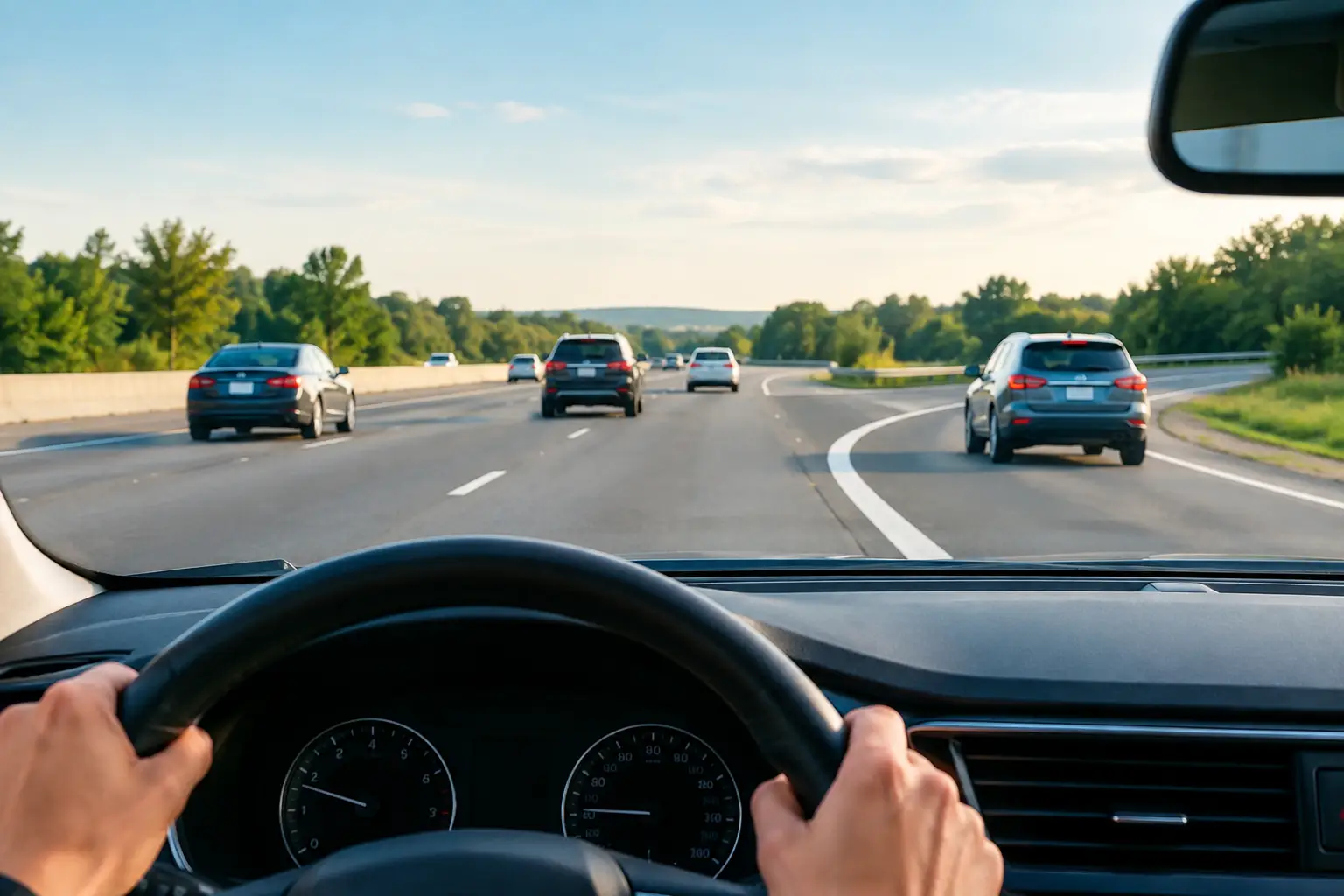
A freeway entrance ramp can make a new driver feel rushed before they have even reached the traffic lane. The most reliable freeway merge techniques are not about forcing your way into a gap. They are about building speed, reading traffic early, communicating clearly, and making one calm, deliberate move when a safe opening appears.
For teens learning around Torrance and the South Bay, freeway driving often means joining fast-moving traffic on roads such as the 405, 110, or 91. The traffic can be busy, but the same habits apply whether the freeway is crowded, moving slowly, or flowing at full speed.
Start With the Right Goal: Match Traffic Flow
The purpose of the entrance ramp is to give your vehicle room to accelerate. Many nervous drivers make the mistake of treating the ramp as a place to drive slowly while they search for a gap. By the time they reach the end, they are traveling too slowly to merge comfortably with freeway traffic.
Instead, begin accelerating smoothly once the ramp opens up and conditions allow. Your target is usually close to the speed of the vehicles in the lane you are entering, not necessarily the posted freeway speed. If traffic is moving at 45 mph because of congestion, match 45 mph. If traffic is flowing near the speed limit, use the available ramp length to get close to that pace.
This does not mean accelerating aggressively or beyond what is safe for conditions. It means avoiding a large speed difference. A vehicle entering at 35 mph when surrounding traffic is traveling 65 mph creates a difficult situation for everyone. Matching the flow gives you more options and makes your movement more predictable to other drivers.
Read the Merge Before You Reach It
Good merging begins well before the solid line on the ramp changes to a dashed line. As you travel along the ramp, look ahead at the merge area, check the traffic lane to your left, and notice the spacing between vehicles. You are looking for a usable space, not waiting for a perfect empty freeway.
Pick a likely gap early, then adjust your speed gradually to arrive beside it. If the opening is ahead of you, ease off the accelerator slightly. If the opening is behind you, continue accelerating smoothly so that you can enter after that vehicle. Small speed adjustments are far safer than sudden braking at the end of the ramp.
Keep your eyes moving. Check ahead for the ramp curve and the end of the acceleration lane, then glance at your mirrors and over your left shoulder to check the blind spot. Return your eyes forward immediately. A shoulder check confirms what your mirrors cannot show, but staring to the side for too long takes your attention away from the road in front of you.
Signal Early and Clearly
Turn on your left signal before you begin moving into the freeway lane. Signaling early gives drivers already on the freeway information about your intention and may encourage a cooperative driver to create additional room. It is communication, not permission.
In California, traffic already on the freeway has the right-of-way. The entering driver must yield and merge only when it is safe. Still, freeway drivers can help by changing lanes when possible or adjusting their speed slightly. Do not depend on another driver to make room, and do not assume that a signal means they have seen you.
Make One Smooth Lane Change
Once you have identified a safe opening, complete the merge with a steady steering movement. Continue looking ahead, maintain an appropriate speed, and move fully into the lane without drifting across it. Avoid sharply turning the wheel or making repeated side-to-side corrections.
A successful merge should feel like joining the flow, not cutting in front of it. Leave a safe following distance after entering the lane. If you merge closely behind another vehicle, ease off the accelerator rather than braking hard. Abrupt braking immediately after a merge can surprise the driver behind you and create a chain reaction in heavy traffic.
When possible, remain in the right lane after entering. Give yourself time to settle into traffic, check your mirrors, and create space before making another lane change. Trying to merge and immediately move across several lanes adds unnecessary pressure, especially for an inexperienced driver.
What to Do When the Gap Changes
Freeway traffic does not always behave as expected. A space that looked open may close when another driver speeds up, slows down, or changes lanes. The answer is not to force the vehicle into that smaller space.
If the gap disappears, keep your vehicle under control and look for the next safe option. Adjust speed smoothly if you have room on the acceleration lane. If traffic is extremely congested, you may need to slow significantly near the end of the ramp. Stopping on an entrance ramp should be a last resort, used only when necessary to avoid a collision and when no safe merging space exists.
Do not drive onto the shoulder to bypass traffic or create your own lane. Do not stop simply because merging feels uncomfortable if there is still enough ramp to continue accelerating and assessing gaps. Each situation depends on traffic speed, ramp length, visibility, weather, and the behavior of nearby drivers. The priority is always to avoid contact and enter only when you have enough room.
Heavy Traffic Requires Patience, Not Hesitation
Slow freeway traffic can be challenging because vehicles bunch together and drivers may change lanes frequently. In this setting, the speed-matching rule still applies, but the target speed is lower. Look for a gap large enough to enter without forcing another driver to brake suddenly.
Be especially cautious around large trucks, buses, motorcycles, and vehicles towing trailers. Trucks have larger blind spots and may need more room to stop. Motorcycles can be difficult to spot and may be hidden by another vehicle. Never merge into a space because you assume a smaller vehicle will move out of the way.
If another driver refuses to let you in, stays beside your vehicle, or behaves aggressively, do not compete for position. Let that vehicle go ahead and use the next opening. Losing a few seconds is always better than creating a dangerous conflict.
Common Freeway Merge Mistakes to Avoid
New and returning drivers often struggle with the same few habits. Recognizing them makes them easier to correct.
Driving too slowly on the ramp is one of the most common problems. It reduces your ability to match traffic and can leave you with too little time to choose a gap. Braking at the end of an open acceleration lane can be just as risky, particularly when another vehicle is following behind.
Another mistake is focusing only on the lane beside you. You still need to watch the road ahead for stopped traffic, a ramp that narrows, or vehicles merging from another entrance. Looking at mirrors without checking the blind spot is also incomplete. Mirrors provide useful information, but a quick shoulder check is necessary before moving laterally.
Finally, avoid treating freeway merging as a test of confidence. The strongest drivers are not the ones who push into the smallest gap. They are the ones who observe early, make measured speed changes, and choose the safe opening without panic.
Practice Builds Predictable Habits
Freeway merging is best learned in stages. A beginning driver may first practice entering a quieter freeway at a low-traffic time, then work up to busier routes and shorter ramps. Repeating the same process helps make the actions automatic: check traffic early, accelerate to the flow, signal, check mirrors and blind spot, then merge smoothly.
Professional behind-the-wheel instruction can be especially helpful for drivers who freeze on ramps or struggle to judge speed and spacing. An instructor can guide the timing in real traffic while helping the student understand why a gap works or why it is better to wait for another one. At South Bay Driving School, that patient, real-road practice is designed to help learners replace anxiety with repeatable decision-making.
The next time you approach a freeway entrance, give yourself permission to focus on the process rather than the pressure. Read traffic early, build an appropriate speed, and take the safe space that develops. With practice, merging becomes less of a stressful moment and more of a steady driving habit.