
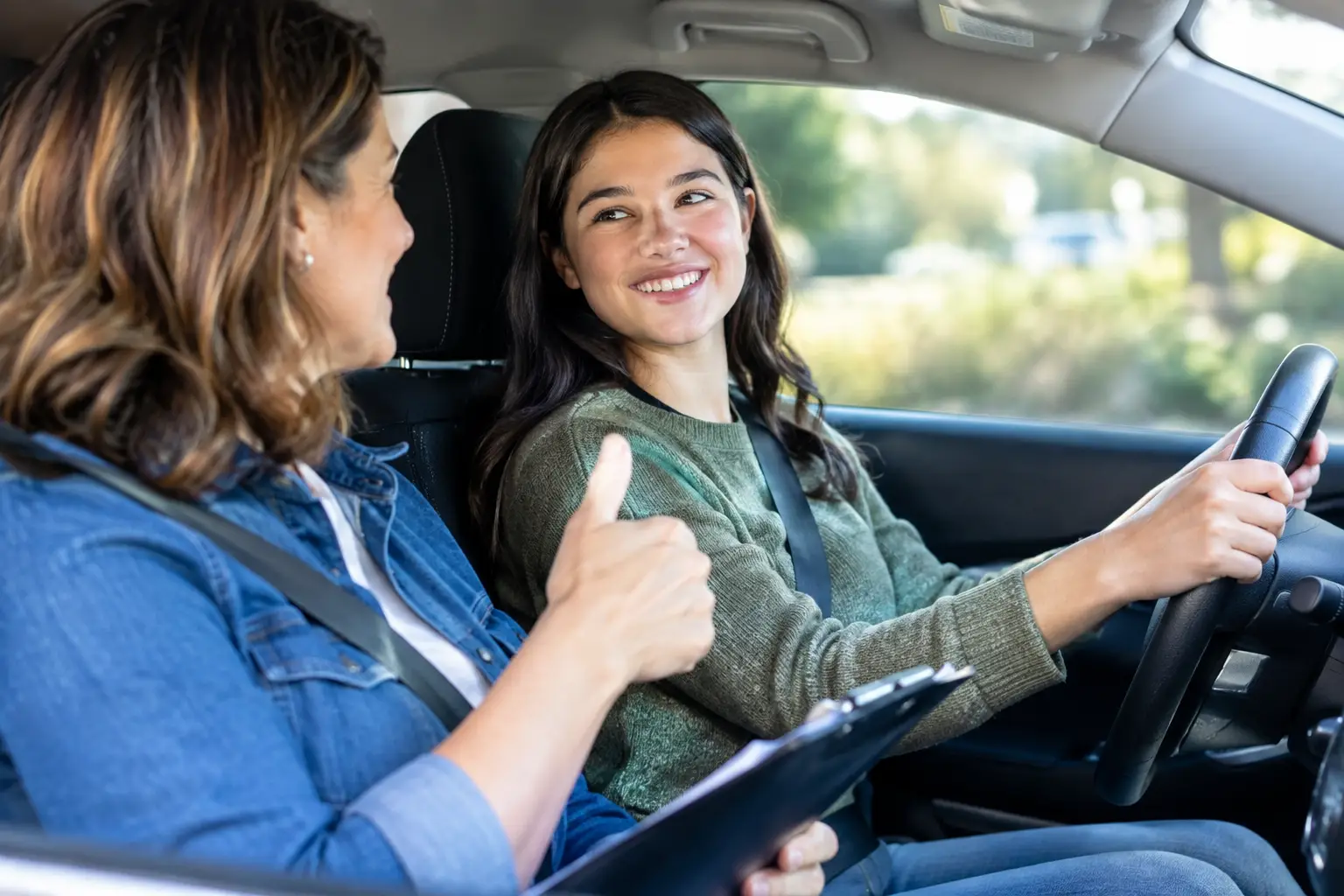
A teen finishes a driving lesson and says, “It went fine.” For a parent who is paying attention to safety, scheduling practice, and an upcoming DMV test, that answer rarely feels like enough. Useful parent lesson feedback fills in the gap between what happens with a professional instructor and what families can reinforce during supervised practice.
The goal is not for a parent to become a second driving instructor or to turn every trip into a test. Good feedback gives families a clear picture of progress, identifies the next skill to practice, and helps a new driver build confidence without overlooking safety concerns.
Why Parent Lesson Feedback Matters
Behind-the-wheel instruction works best when lessons and home practice support each other. An instructor may spend a lesson helping a student improve smooth braking, lane positioning, right turns, mirror use, or decision-making at busy intersections. Without a clear handoff, that progress can fade before the next lesson.
Feedback helps parents understand what their teen is ready to practice and what still needs close supervision. It also prevents a common problem: practicing skills too far ahead of a student’s current ability. A driver who is still learning consistent steering and speed control may not benefit from being pushed into a crowded freeway or a difficult parking situation too soon.
For teens, clear feedback can reduce anxiety. Instead of hearing a vague comment such as “You need more practice,” they can hear something specific: “Your turns are improving. This week, focus on checking the crosswalk before turning right and braking earlier as you approach stop signs.” Specific direction feels achievable.
What Helpful Feedback Should Include
The most useful parent lesson feedback is brief, factual, and connected to the student’s next steps. It should describe what the driver did well, where they needed coaching, and what to practice before the next professional lesson.
A strong update may cover vehicle control, observation, traffic decisions, and confidence. For example, a student may be comfortable starting, stopping, and steering on neighborhood streets but still need reminders to scan intersections or maintain a safe following distance. That distinction matters. Good basic vehicle control does not automatically mean a student is ready for complex traffic situations.
Feedback should also reflect the conditions of the lesson. A student who handles residential streets well may need more time before driving through busy South Bay corridors, approaching multi-lane intersections, or managing heavier traffic near commercial areas. Progress is not always a straight line. A nervous student can perform well one day and struggle the next when conditions are busier or unfamiliar.
Focus on Behaviors, Not Labels
Words such as “careless,” “bad driver,” or “not ready” are usually too broad to be useful. They can also make a teen defensive or discouraged. Behavior-based feedback is more constructive because it gives the driver something they can repeat or correct.
Instead of saying, “You are not paying attention,” try: “At two intersections, you began moving before checking left, right, and left again.” Instead of, “Your parking is terrible,” say: “You are getting closer to the curb, but you need to slow down and use your reference points before making the final adjustment.”
The same approach applies to praise. “Good job” is encouraging, but “You noticed the pedestrian waiting near the crosswalk and stopped early” tells the student exactly what safe decision-making looks like.
How Parents Can Use Feedback Between Lessons
Professional instruction and family practice have different roles. An instructor can introduce skills in a controlled progression and correct habits as they develop. Parents can provide repetition in familiar settings, helping those skills become more natural.
Begin each practice drive with one or two goals from the latest lesson. If the instructor noted that the student needs smoother stops, choose a route with several low-speed intersections rather than adding a difficult parking lot, freeway entrance, and unfamiliar neighborhood all in one drive. A focused practice session is often more productive than a long, stressful drive.
Before starting the car, ask the student what they are working on. This encourages them to take ownership of their learning. During the drive, give directions early and calmly. “At the next light, we will turn right” is much easier to use than a last-second instruction that creates pressure.
Afterward, spend a few minutes reviewing the drive. Ask what felt more comfortable, what felt difficult, and what they would do differently next time. Parents do not need to identify every mistake. Pick the most important safety issue or the main skill goal, then allow the student to absorb it.
Avoid Turning Practice Into a Stress Test
Many parents remember learning to drive themselves, and that memory can shape how they coach. Some become very quiet because they do not want to distract the student. Others react to every small error. Neither approach is ideal.
A quiet parent may miss opportunities to reinforce safe habits, while constant correction can overwhelm a beginner. The better middle ground is calm, timely coaching. Speak up promptly for safety concerns, such as an approaching hazard, excessive speed, missed observation, or unsafe following distance. For smaller issues, wait until the car is parked so the student can keep attention on the road.
It also helps to separate normal learning mistakes from immediate risks. A slightly wide turn in an empty residential street may be a coaching point. Rolling toward an intersection without a complete stop requires immediate correction. The difference is important because teens learn best when feedback matches the seriousness of the situation.
If a practice drive becomes tense, shorten it. Continuing while both parent and teen are frustrated can reinforce nerves rather than skill. Returning to an easier route is not a setback. It is often the right way to rebuild control and confidence.
Parent Lesson Feedback Before the DMV Test
As the DMV road test gets closer, families often want a simple answer: Is the student ready? Readiness is more than completing a certain number of drives or performing one good practice test. A driver should show safe, repeatable habits across different routes and everyday conditions.
Parents can use lesson feedback to watch for consistency in the core skills evaluated during a road test: complete stops, appropriate speed, traffic checks, lane control, turns, backing, signaling, and awareness of pedestrians and other road users. Test preparation should not replace real-world safety. A student who memorizes a route but does not scan effectively or adjust to changing traffic is not fully prepared.
California licensing requirements for minors include supervised driving practice in addition to professional instruction, and those requirements may change over time. Families should verify current DMV rules while continuing to treat practice hours as skill-building time rather than a box to check.
A road-test preparation lesson can be especially helpful when a student has the basics but needs a clear assessment of remaining weak points. At South Bay Driving School, the purpose of that assessment is not to create pressure. It is to help the student know what to practice, what to expect, and when more time behind the wheel would be the safer choice.
When Feedback Suggests More Support Is Needed
Extra practice or additional professional lessons may be appropriate when the same safety issue continues despite repeated coaching. Examples include difficulty judging speed, inconsistent observation at intersections, panic in heavier traffic, trouble with lane changes, or uncertainty about right-of-way decisions.
More instruction is also useful when a parent and teen are struggling to practice calmly together. That does not mean either person has failed. Teaching a family member can be emotionally difficult, especially when the learner is nervous or the parent has limited time. A patient instructor provides neutral coaching and can give both parent and student a clearer plan.
The best feedback leaves a new driver with a next step they can picture. One safe turn, one smoother stop, one better traffic check at a time, confidence becomes less about feeling fearless and more about knowing what to do when the road asks for attention.