
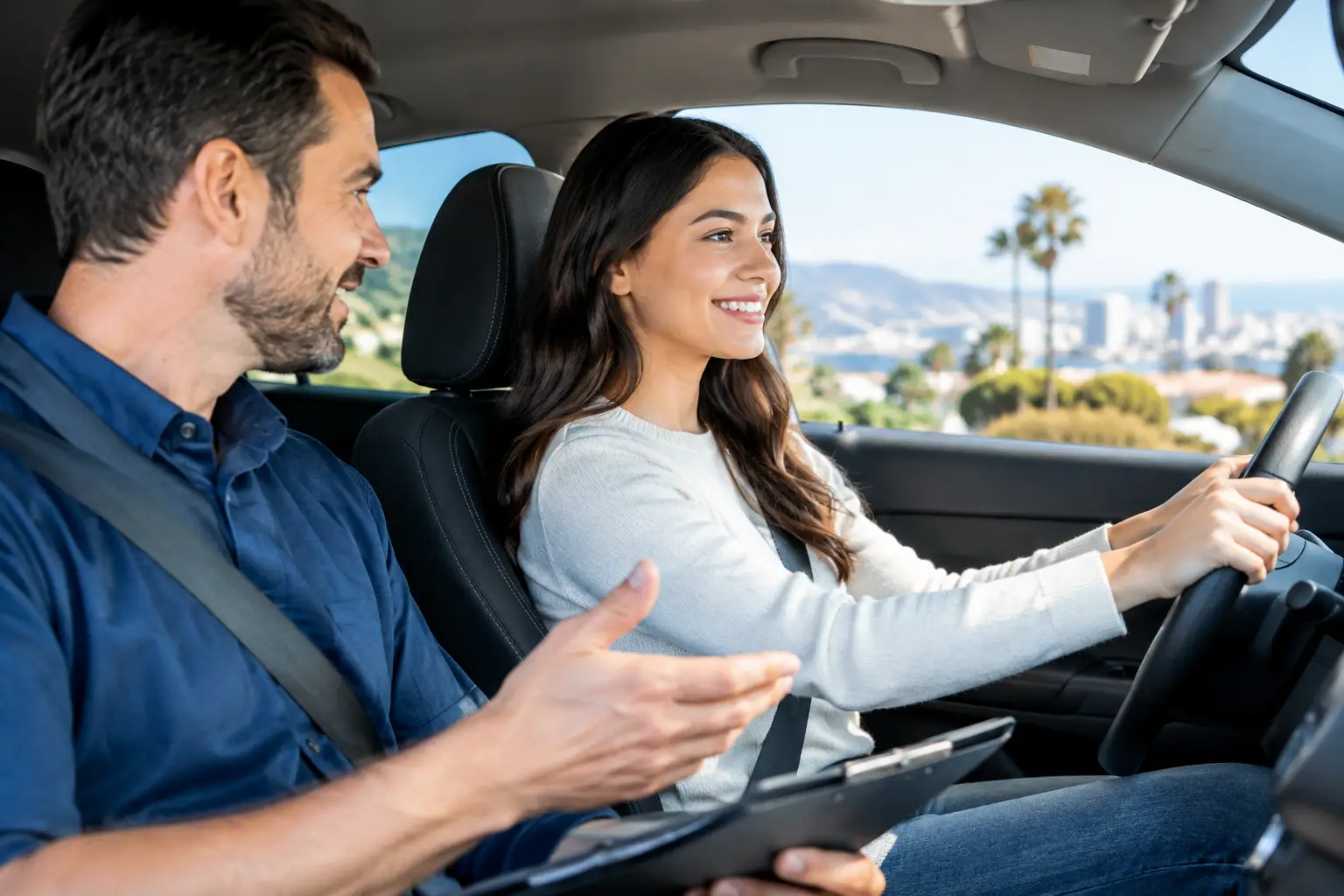
A turn signal, a controlled stop, a glance over the shoulder before changing lanes - these small actions are what make a new driver predictable and safe. Effective driver training is not simply about getting through a DMV road test. It gives students the habits, judgment, and confidence to make good decisions long after they receive a license.
For teens and adults alike, learning to drive can bring real pressure. Teens may worry about making mistakes in front of an instructor. Parents may wonder whether enough practice is happening between lessons. Returning drivers may feel embarrassed that driving no longer feels natural. A patient, structured approach turns those concerns into clear next steps.
What Good Driver Training Actually Teaches
A road test measures a driver's ability to perform specific skills, but daily driving requires far more than memorizing a test route. Students need to understand how to control the vehicle, observe changing conditions, communicate with other road users, and respond without panic when something unexpected happens.
Early lessons should establish vehicle familiarity. That includes adjusting the seat and mirrors, understanding dashboard controls, using signals correctly, steering smoothly, braking with appropriate pressure, and maintaining a safe following distance. These fundamentals may seem basic, but they reduce mental overload when traffic becomes more demanding.
The next stage is observation. New drivers often focus too closely on the car directly ahead or stare at the lane lines. An instructor helps them develop a wider visual routine: look far down the road, check mirrors regularly, scan intersections, watch for pedestrians, and identify vehicles that may enter their path. In the South Bay, that awareness matters on neighborhood streets, busy commercial corridors, freeway entrances, and coastal areas where traffic patterns can change quickly.
Sound instruction also explains the reason behind each action. A student should know not only that they need to make a complete stop, but why rolling through a stop sign limits the time available to see cross traffic, cyclists, or pedestrians. When drivers understand the purpose of a rule, they are more likely to apply it consistently when no one is sitting beside them.
Confidence Comes From Repetition, Not Pressure
Confidence is often misunderstood as feeling completely relaxed from the first lesson. For most beginners, confidence develops through repeated practice at a manageable pace. A student who can perform a right turn correctly on a quiet street can gradually work toward busier intersections, lane changes, parking lots, and freeway driving.
Pushing too quickly can create the opposite result. A nervous student asked to handle unfamiliar traffic before they have reliable steering, braking, and scanning habits may become overwhelmed. On the other hand, staying only on empty streets for too long does not prepare a driver for real conditions. The right pace depends on the student, which is why personalized lessons are more useful than a rigid, one-speed approach.
Professional instruction also gives students a calm space to make and correct mistakes. Missing a turn, braking too early, or needing a reminder to check mirrors is part of learning. The goal is to identify the pattern, practice the correction, and move forward with a better routine. Safe driving is built through steady progress, not criticism.
A Clear Path From Permit to DMV Road Test
For many California families, the licensing process can feel like a series of deadlines and requirements. A good training plan makes the sequence easier to understand. Students generally begin with driver education, earn a learner's permit, complete required professional behind-the-wheel instruction, practice with a qualified adult, and prepare for the DMV drive test.
Online driver education can be a convenient starting point for busy students. It allows teens to learn traffic laws, signs, safe-driving principles, and California licensing rules on a schedule that works alongside school and activities. However, classroom knowledge and behind-the-wheel skill are different. A student may know the right answer about right-of-way but still need time to recognize a real intersection where that decision matters.
Behind-the-wheel lessons should build logically. Students commonly start with basic residential driving, turns, stops, and lane position. As their control improves, instruction can include multi-lane roads, lane changes, parking, backing, intersections, and higher-speed driving. Practice should address the areas that need work rather than treating every lesson as the same route.
As the DMV test approaches, a focused preparation lesson can be especially useful. This is the time to review common test skills such as controlled stops, turns, lane changes, curb parking, backing, and safe observation. It is also an opportunity to correct habits that may have developed during informal practice, such as incomplete stops, late signaling, or failing to check blind spots.
Test preparation should not encourage students to drive like they are following a script. DMV examiners are looking for safe, legal, controlled driving. The best way to prepare is to make safe driving actions consistent enough that they happen naturally.
Driver Training for Different Starting Points
Teen drivers are not the only people who benefit from instruction. Adult beginners may need a schedule that fits around work or family responsibilities, along with an instructor who understands that learning later in life can feel intimidating. They may progress quickly in some areas while needing more time to become comfortable in traffic.
Returning drivers often have a different goal. Perhaps they have not driven in years, recently moved to California, or want to rebuild confidence after a collision or a difficult driving experience. A refresher should begin with an honest assessment, then focus on the situations that create the most concern. For one person, that may be freeway merges. For another, it may be parking, busy intersections, or navigating at night.
Senior drivers may benefit from patient coaching that reinforces visual scanning, intersection decisions, parking, and adapting to changes in comfort or reaction time. The purpose is not to rush anyone through a standard program. It is to support safe independence with practical, respectful instruction.
Manual-transmission learners also need a different lesson structure. Learning clutch control, finding the engagement point, coordinating braking, and starting on hills requires focused repetition. Once those motions become familiar, students can concentrate on traffic awareness rather than the mechanics of shifting.
How Parents Can Support Practice at Home
Professional lessons are most effective when they are reinforced with calm practice between appointments. Parents do not need to become driving instructors, but they can help a teen get consistent experience in varied conditions. Start with situations that match the student's current skill level, then add complexity gradually.
Before driving, agree on one or two skills to practice. For example, a session might focus on smooth stops and early signaling rather than trying to correct every possible habit at once. Afterward, ask the student what felt comfortable and what felt difficult. This approach encourages reflection without turning the drive into a stressful review.
It also helps when parents and instructors communicate around the student's goals. If a learner is doing well with turns but remains hesitant about lane changes, practice time can be used purposefully. Consistent expectations make it easier for students to build habits instead of receiving conflicting advice.
Choosing a Driving School With Care
The lowest-priced lesson is not always the best value if it leaves a student uncertain or underprepared. Families should look for experienced instructors, clear lesson options, properly equipped training vehicles, convenient scheduling, and a school that explains how instruction fits into California's licensing process.
Convenience matters, too. Pickup and drop-off service can make lessons more practical for teens and families balancing school, sports, and work. In communities such as Torrance, Redondo Beach, Manhattan Beach, Carson, Gardena, Lomita, Palos Verdes, and San Pedro, local instructors can also help students gain experience with the road environments they will encounter regularly.
South Bay Driving School has served local learners since 1992 with instruction designed around individual ability, not a one-size-fits-all lesson plan. Whether a student is beginning with a permit, returning after time away from driving, or preparing for a DMV test, the aim remains the same: help them become calm, capable, responsible drivers.
The most useful lesson is often not the one where everything goes perfectly. It is the one where a learner notices a challenge, practices a safer response, and leaves knowing exactly what to work on next.