
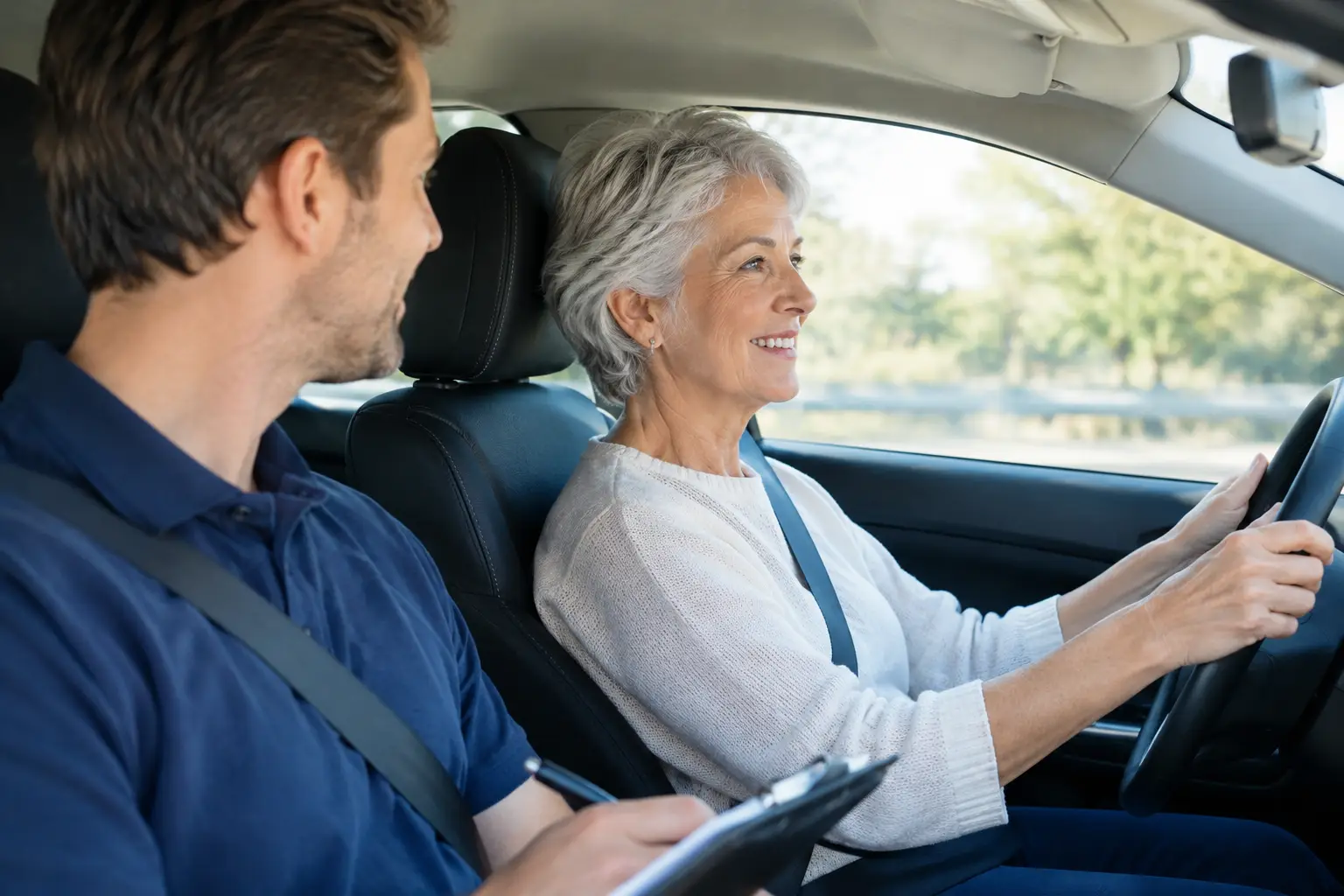
A driving lesson can answer a question many older adults quietly carry: “Am I still driving as safely and comfortably as I need to?” Senior lesson feedback should provide a clear, respectful answer. It is not about judging a driver by age or pressuring anyone to give up independence. It is about identifying current strengths, noticing habits that may need attention, and creating a realistic plan for safer driving.
For a senior driver, useful feedback is specific. “Be more careful” is not a plan. A helpful instructor explains what happened, why it matters, and how to practice the correction on the road. That approach can help a returning driver feel more confident, give family members better information, and make everyday trips less stressful.
What Senior Lesson Feedback Should Cover
Older adults bring a wide range of experience to a driving lesson. Some have driven for decades but want a refresher after an accident, illness, medication change, or long period of limited driving. Others are confident in familiar neighborhoods but uneasy in heavy traffic, at night, or on freeways. The lesson should begin with the driver’s own goals rather than assumptions.
A thorough evaluation usually considers vehicle control, observation, judgment, and comfort level. An instructor may watch how smoothly the driver accelerates and brakes, whether they maintain a safe following distance, and how consistently they check mirrors and blind spots. They may also look at lane position, turns, parking, right-of-way decisions, and responses to pedestrians, cyclists, and changing traffic signals.
The most valuable comments connect the observation to a practical next step. For example, if a driver brakes late at intersections, the instructor can explain how looking farther ahead creates more time to ease off the accelerator and stop smoothly. If a driver is hesitant with left turns, the next lesson can focus on selecting safe gaps, positioning correctly, and deciding when waiting is the better choice.
Feedback should recognize what is working
A lesson should not feel like a list of problems. Many senior drivers have strong habits built through years of experience: scanning intersections, anticipating other drivers’ mistakes, yielding patiently, and avoiding unnecessary risks. Calling out these strengths matters because confidence is part of safe decision-making.
Constructive feedback also avoids treating one imperfect maneuver as a verdict on a person’s ability to drive. Everyone can have an awkward parking attempt or miss a mirror check when they are nervous in an unfamiliar vehicle. The question is whether the issue is occasional, repeatable, and likely to affect safety. A patient instructor helps separate a correctable habit from a situation that deserves more attention.
How Feedback Turns Into a Safer Driving Plan
The best lesson ends with priorities, not a vague recommendation to “practice more.” Most drivers benefit from focusing on one or two skills at a time. Trying to correct every concern during one outing can create frustration and make it harder to retain new techniques.
A practical plan might begin with daytime driving on familiar streets, then move to busier intersections or parking lots as comfort improves. For someone rebuilding confidence after time away from driving, the first goal may simply be smooth starts, stops, and turns without feeling rushed. A more experienced driver may instead need targeted work on freeway merges, lane changes, or scanning for motorcycles and pedestrians.
Practice should match the type of driving the person actually does. A driver who mainly travels between home, the grocery store, appointments, and family gatherings may not need advanced freeway instruction right away. On the other hand, avoiding every challenging situation can gradually shrink a driver’s comfort zone. It depends on personal needs, health, and local driving conditions. The right plan builds skills without forcing unnecessary stress.
A good instructor explains the “why”
Older drivers are more likely to use feedback when the reason is clear. Consider a few common examples:
- Checking mirrors before braking gives drivers behind you earlier information and encourages awareness of changing traffic.
- Turning the head to check a blind spot is especially important before changing lanes, even when a vehicle has warning technology.
- Leaving more space ahead gives extra time to respond when traffic stops suddenly or a pedestrian steps into a crosswalk.
- Reducing speed before a turn, rather than while turning, supports better vehicle control and a smoother path through the intersection.
These are not arbitrary rules for a driving test. They are repeatable habits that reduce pressure in real traffic.
When Family Members Are Part of the Conversation
Families often want reassurance, but conversations about driving can become emotional. An adult child may notice a new dent, a near miss, or reluctance to drive after dark. The senior driver may feel that concerns about driving are really concerns about losing independence. A professional lesson can offer a calmer, more objective starting point.
With the driver’s permission, feedback can help families discuss specific skills rather than making broad statements such as “You should not drive anymore.” For instance, a driver may be doing well during daytime local trips but benefit from avoiding unfamiliar routes at night until they receive more practice. That is a more useful and respectful conversation than an all-or-nothing decision.
Families should also remember that an instructor evaluates driving performance during a lesson, not a person’s overall medical fitness to drive. If concerns involve vision changes, confusion, fainting, slow reaction times, mobility limitations, or medication side effects, a health care professional may need to be part of the discussion. Honest communication protects everyone on the road.
Choosing the Right Setting for a Senior Driving Lesson
The learning environment matters. A senior lesson should be paced appropriately, with time to ask questions and repeat a maneuver without embarrassment. Fast, high-pressure instruction may make an anxious driver focus on the instructor’s reaction instead of the road.
For South Bay drivers, local practice can be especially useful because conditions change quickly between neighborhood streets, busy commercial areas, multi-lane roads, and freeway entrances. A lesson can focus on the routes a driver uses most while still introducing skills needed for less familiar situations. The goal is not to make every drive feel easy. It is to make the driver better prepared to recognize risk, make a safe choice, and stay calm when traffic becomes unpredictable.
A qualified instructor should also adapt to the vehicle and the student. Some drivers need extra time getting comfortable with a newer vehicle’s controls, backup camera, parking sensors, or steering feel. Technology can help, but it does not replace observation, speed control, and sound judgment. Feedback should show the driver how to use these features without relying on them too heavily.
Signs That Another Lesson May Help
A refresher lesson can be worthwhile before a problem becomes a crisis. It may help if a driver has started avoiding certain roads, feels tense when traffic is heavy, receives frequent honks from other drivers, struggles with parking, or is unsure about newer traffic patterns and rules. It can also be useful after a move, a change in vision correction, recovery from an illness, or a long period without regular driving.
There is no single schedule that fits every older adult. Some drivers benefit from one focused assessment and a few hours of practice. Others prefer occasional refreshers to keep skills current and confidence steady. The best choice is the one that addresses actual driving needs with patience and honesty.
A respectful driving lesson does more than point out mistakes. It gives an older driver a place to ask questions, practice deliberately, and leave with clear next steps. When feedback is specific and supportive, every trip can feel a little more manageable - and a little safer.