
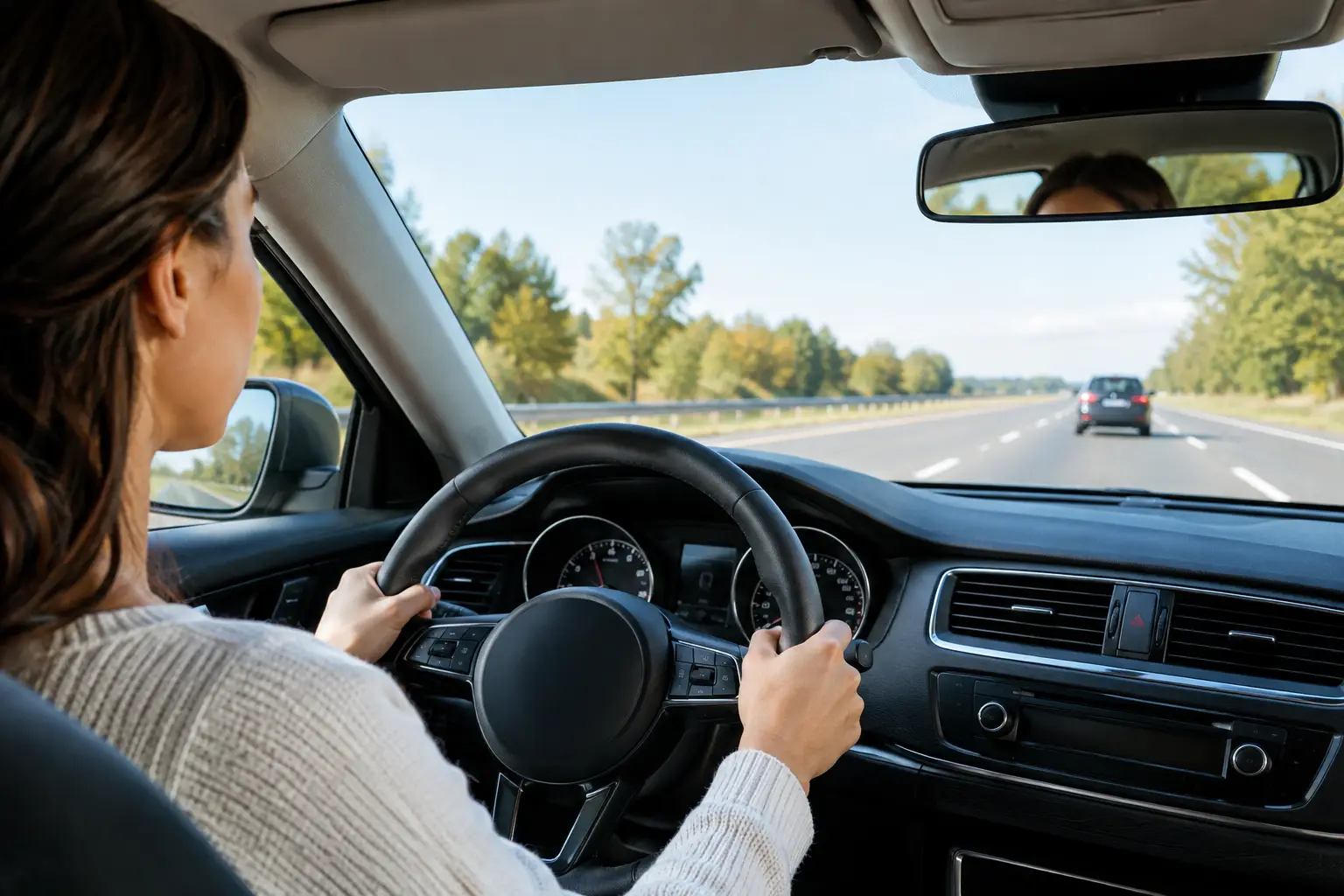
A car ahead brakes sharply near a busy Torrance intersection. A driver merges from the next lane without signaling. A pedestrian steps toward a crosswalk. The drivers who handle these moments best are not necessarily the quickest to react. They have already made room to respond. Learning to use defensive driving space gives new and returning drivers the time, visibility, and choices needed to stay calm when traffic changes unexpectedly.
Defensive space is not about driving timidly or leaving a large gap in every situation. It is about maintaining enough open area around your vehicle to see developing risks and make controlled decisions. For teen drivers, parents, adult beginners, and seniors rebuilding confidence, this is one of the most useful habits to practice from the first behind-the-wheel lesson.
What Defensive Driving Space Really Means
Every vehicle needs space in front, behind, and beside it. That space is your safety cushion. It gives you a chance to brake gradually, steer away from danger when necessary, and avoid being boxed in by other vehicles.
The space in front is usually the most important because it is where you are traveling. When you follow another car too closely, you lose your view of the road ahead and reduce your stopping time. If that driver brakes suddenly, you may have no option except a hard stop or a collision.
Space to the sides matters just as much on crowded South Bay roads, freeway entrances, and multilane streets. A vehicle lingering beside you can limit your escape path. A parked car can hide an opening door or a person stepping into the street. Space behind you matters when traffic is moving quickly or when another driver is following too closely.
A safe driver is always asking one practical question: if something changes in the next few seconds, where can I go?
Use Defensive Driving Space in Front of Your Vehicle
A simple following-distance habit can make driving feel much more manageable. Choose a fixed object ahead, such as a sign, shadow, or utility pole. When the vehicle in front passes it, begin counting: “one thousand one, one thousand two, one thousand three.” If you reach the object before finishing the count, increase your following distance.
Three seconds is a useful starting point in normal, dry conditions. It is not a promise that every situation is safe. Increase that cushion when visibility is poor, roads are wet, traffic is fast, you are driving at night, or you are behind a large truck that blocks your view. New drivers may also benefit from allowing extra room while they are still building smooth braking habits.
The goal is not to invite other drivers to cut in front of you. If someone merges into your space, ease off the accelerator and rebuild the gap. Avoid the urge to close the distance as soon as another car enters. In heavier Los Angeles-area traffic, drivers may move into open spaces often. Letting them in safely is usually better than turning a small gap into a pressure-filled situation.
Looking well ahead supports the space you leave. Do not stare only at the bumper in front of you. Scan down the road for brake lights, intersections, lane closures, stopped traffic, pedestrians, and vehicles preparing to turn. Seeing a problem early allows you to release the gas pedal and slow gradually instead of braking late.
Give Yourself More Room Before Intersections
Intersections create many of the situations that make beginners anxious: turning vehicles, red-light runners, cyclists, pedestrians, and drivers who stop unexpectedly. As you approach, leave enough space that you can slow smoothly if the traffic signal changes or the vehicle ahead hesitates.
When stopped behind another vehicle, avoid stopping bumper-to-bumper. Leave enough room to see its rear tires touching the pavement. This gives you a cushion if you are hit from behind and can also provide a way around the vehicle if it becomes disabled. Once traffic begins moving, return your attention to a safe following distance rather than accelerating just to stay close.
Protect Space Beside and Behind You
Side space begins with lane position. Drive near the center of your lane whenever practical, rather than drifting toward parked vehicles, oncoming traffic, or the line between lanes. On a narrow residential street, you may need to adjust your position for parked cars, cyclists, or a vehicle approaching from the opposite direction. Reduce speed first, then make a controlled adjustment.
Try not to travel for long beside another vehicle, especially on a freeway. If traffic permits, either pass safely or ease back so the other driver is clearly ahead. This helps keep an escape route available if a vehicle changes lanes or something appears in your path.
Blind spots are another reason side space matters. Before changing lanes, check mirrors, signal, and turn your head to look over the appropriate shoulder. Mirrors help you monitor traffic, but they do not show every area beside your vehicle. A lane change should happen only when there is enough open space to enter without forcing another driver to brake.
You cannot always control the space behind you. If someone follows too closely, do not brake-check them or speed up beyond a safe limit. Increase your following distance from the car ahead so you can brake more gradually. When it is safe, change lanes or allow the tailgating driver to pass. Your priority is to reduce pressure, not to teach the other driver a lesson.
Adjust Your Space for Real Conditions
Defensive space changes with conditions. A dry afternoon on a familiar neighborhood street requires different decisions than a rainy evening drive on the freeway. The faster you travel, the farther you travel before you can react and stop. Reduced visibility, slippery pavement, fatigue, and vehicle size all call for more room.
Consider these common situations:
- Rain or wet pavement: Slow down and extend your following distance. Tires need more distance to grip and stop, and spray can reduce visibility.
- Night driving: Headlights limit what you can see ahead. Leave enough space to respond to hazards that appear later than they would in daylight.
- Large trucks and buses: Stay far enough back to see around them when possible, and avoid remaining in their blind spots.
- School zones and residential streets: Expect children, pets, parked-car doors, and pedestrians to enter your path with little warning.
- Freeway driving: Build space before merging, avoid crowding the vehicle ahead, and keep a lane-change option available when traffic slows.
These adjustments are not signs of uncertainty. They are signs that you are reading the road and making decisions before a hazard becomes urgent.
How Defensive Space Helps on the DMV Road Test
California DMV examiners look for safe, predictable driving, not aggressive speed or perfect traffic conditions. Proper spacing supports many of the skills tested during a road test: smooth stops, safe turns, lane changes, backing, and awareness of surrounding traffic.
Following too closely is a common mistake because nervous drivers focus on keeping up with traffic. On the road test, it is better to maintain a reasonable cushion and adjust smoothly than to crowd the vehicle ahead. When preparing to turn or stop, begin slowing early. This shows control and helps prevent abrupt braking.
During a lane change, do not move over simply because you have signaled. Check mirrors and blind spots, judge the available gap, and wait if necessary. There is no benefit to forcing a lane change into a space that is too small. A safe decision, even if it means waiting for the next opportunity, is the better decision.
Practice Building a Space Cushion
This skill improves through focused repetition. During a lesson or supervised practice drive, choose one goal for each trip. For example, spend one drive watching your following distance, then spend the next noticing where your escape routes are at intersections. Saying what you see out loud can help newer drivers connect observation with action: “The light is changing, so I am easing off the gas,” or “That truck blocks my view, so I am leaving more room.”
Parents can support practice by giving calm, specific feedback. Instead of saying “You are too close,” try “Let’s create a little more room so you can see around that SUV.” Clear coaching gives a new driver something useful to do without adding stress.
At South Bay Driving School, behind-the-wheel instruction emphasizes these repeatable habits because they apply well beyond test day. Whether you are learning on residential streets, preparing for freeway driving, or returning to driving after time away, space management helps make each decision more controlled.
The road will never be completely predictable. Your vehicle cannot create extra pavement, stop instantly, or control another driver’s choices. But when you consistently leave yourself room to see, slow, and move safely, unexpected moments become far less overwhelming.