
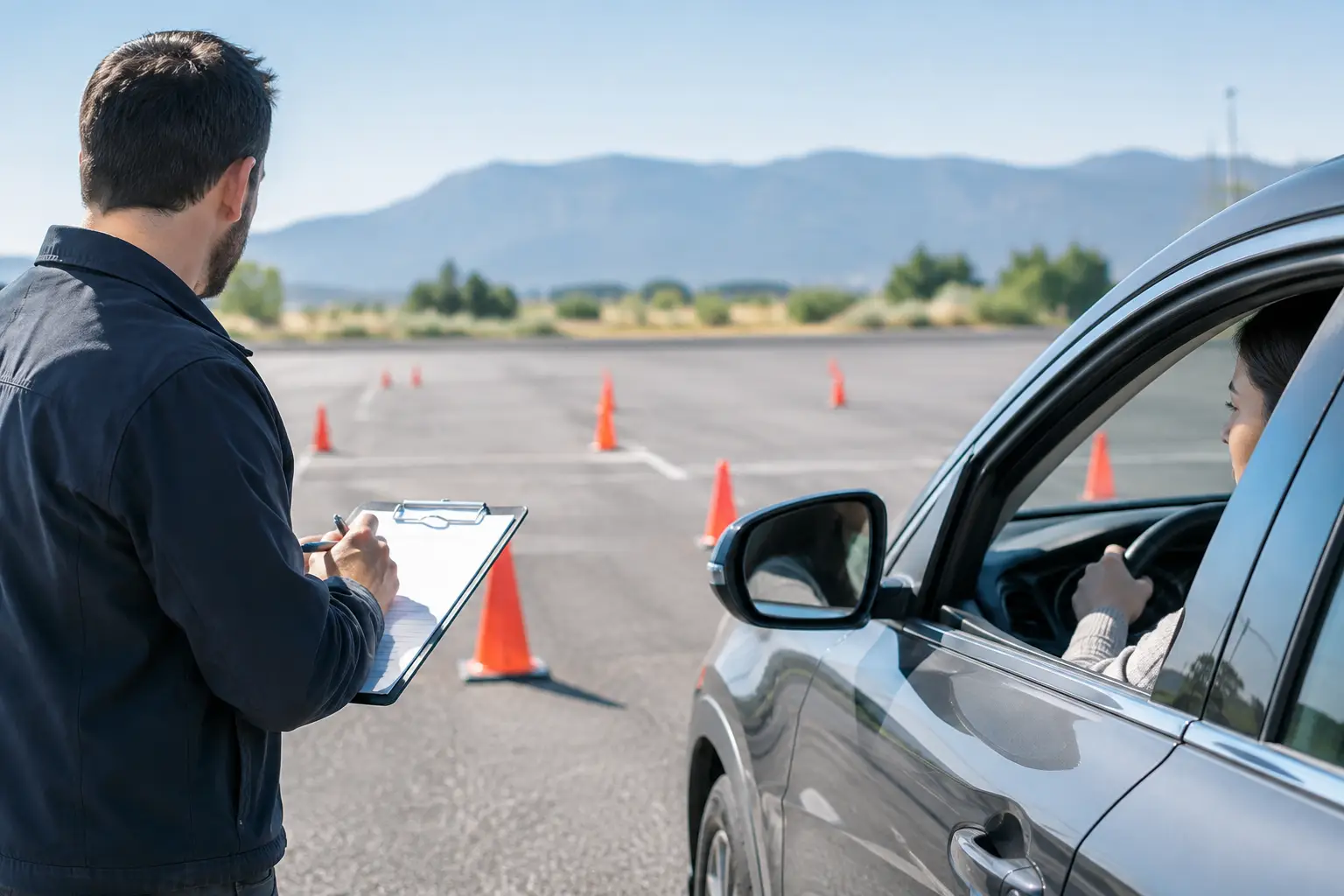
A California DMV road test is not a performance where one imperfect moment automatically means failure. It is a practical safety evaluation. Road tests give an examiner a short, real-world view of how a driver observes traffic, controls the vehicle, follows laws, and responds when conditions change.
That distinction matters for teens taking their first test, adults getting licensed later, and returning drivers who have not been behind the wheel in years. The goal is not to drive like a professional chauffeur. The goal is to show calm, legal, predictable driving habits that protect you, your passengers, and everyone sharing the road.
What Road Tests Are Designed to Evaluate
An examiner is looking for patterns, not just isolated actions. They want to see that you make decisions early, check your surroundings often, and keep the car under control without needing prompts. A driver who pauses appropriately at a stop sign, checks for pedestrians before turning, and maintains a safe following distance is demonstrating sound judgment.
Vehicle control is one part of the evaluation. You should be able to accelerate smoothly, brake gradually, steer steadily, use turn signals correctly, and maintain a safe position within your lane. These skills become especially visible during turns, lane changes, parking maneuvers, and driving on streets with parked cars.
Observation is equally important. Examiners cannot always see every glance you make, so use clear, natural head movements when checking mirrors, intersections, crosswalks, and blind spots. A quick mirror check is useful, but it does not replace looking over your shoulder before moving into another lane, pulling away from a curb, or entering traffic.
The test also measures whether you understand right-of-way rules. This includes yielding to pedestrians, responding correctly at uncontrolled intersections, waiting for a safe gap before turning left, and avoiding the temptation to rush through a yellow light. Being patient can feel slow during a test. It is usually safer than making a hurried decision.
Skills Worth Practicing Before Your DMV Test
Practice should be purposeful. Repeating the same quiet neighborhood loop may help a new driver feel comfortable with steering, but it may not prepare them for the choices required on an actual test. Build practice around the situations that require observation, timing, and judgment.
Starts, Stops, and Turns
Many test-day errors begin before the vehicle is moving. Before pulling away from the curb, check mirrors, signal when needed, and look over your shoulder for bicycles, approaching vehicles, and pedestrians. When stopping, come to a complete stop before the limit line, crosswalk, or intersection. If your view is blocked, stop first, then creep forward carefully to look.
For turns, reduce speed before entering the turn rather than braking hard in the middle of it. Enter the correct lane, signal early enough to communicate your plan, and finish in the appropriate lane. Watch for pedestrians throughout the turn, not only before you start it.
Lane Changes and Traffic Awareness
A lane change should never be a last-second response to a missed turn or an upcoming parked vehicle. Check mirrors, signal, check the blind spot, and move over only when there is enough room. Then cancel the signal if it does not turn off on its own.
Practice maintaining space around the car. Leave room behind the vehicle ahead, particularly in heavier traffic or when the road is wet. Slow down around schools, crosswalks, construction zones, and streets where parked cars may open doors or conceal people stepping into the roadway.
Backing and Parking
Backing requires slower speed and more observation than many learners expect. Look behind the vehicle through the rear window when reversing, while using mirrors as additional references. Back only as far as necessary, and be ready to stop if a person, vehicle, or hazard enters your path.
California road tests may include a parking-related maneuver or a curbside stop. The exact route and requests can vary, so do not rely on memorizing a route. Instead, practice positioning the vehicle near a curb, controlling speed in reverse, and following the parking rules your instructor has taught you. Precision improves with calm repetition, not with rushing.
Do Not Let the Vehicle Create a Preventable Problem
The vehicle used for the test must be safe and legal to drive. Before the appointment, confirm that its registration, insurance, and required equipment are in order. Make sure the brake lights, turn signals, headlights, horn, windshield wipers, mirrors, seat belts, and tires are working properly.
Take a few minutes to adjust the driver’s seat, mirrors, and steering wheel before the test begins. Know where to find the defroster, parking brake, headlights, and windshield wipers. If you are borrowing a family vehicle, practice in that specific car beforehand. A vehicle that feels unfamiliar can make simple actions take more attention than they should.
Do not arrive with a nearly empty fuel tank, a cluttered windshield, or an unresolved warning light that may indicate a safety issue. These details are easy to handle in advance and allow you to focus on driving.
A Better Way to Prepare for Test-Day Nerves
Nervousness is common, including for drivers who perform well during lessons. The answer is not to pretend nerves will disappear. It is to create a routine that leaves less to chance.
Schedule practice sessions at different times of day and in a range of ordinary South Bay driving conditions. A learner who has only driven on empty residential streets may feel overwhelmed by busy intersections, pedestrians near shopping areas, or traffic flowing around a merge. Gradual exposure helps drivers build confidence without pushing them beyond what they can safely manage.
In the days before the test, focus on a few repeatable habits: scan ahead, keep an appropriate following distance, brake smoothly, signal consistently, and check blind spots before lateral movement. These habits matter more than trying to predict every instruction an examiner might give.
The night before, gather the documents and items needed for the appointment. Plan to arrive early enough that a delay, parking issue, or last-minute question does not add pressure. On test day, eat something, wear comfortable shoes, silence distractions, and take a few slow breaths before starting the vehicle.
If you make a small mistake during the drive, do not assume the test is over. Continue safely and focus on the next decision. A tense driver may compound a minor error by speeding up, forgetting observations, or becoming overly hesitant. Resetting your attention is a valuable driving skill in itself.
When Professional Preparation Helps Most
Family practice can be valuable, but it sometimes comes with mixed advice or understandable stress. A parent may know how to drive safely yet find it difficult to explain each decision while also supervising a new driver. Some learners also need more time with lane changes, freeway-adjacent traffic, parking, or general confidence behind the wheel.
A professional lesson provides structured feedback on the habits an examiner is likely to observe. It can identify issues that are easy for a learner to miss, such as incomplete stops, late signals, wide turns, weak blind-spot checks, or following too closely. The purpose is not to make a student memorize a test route. It is to make safe actions consistent enough to hold up on any appropriate route.
For nervous teens, adult beginners, seniors, and drivers returning after a long break, paced instruction can be especially helpful. South Bay Driving School focuses lessons on real driving readiness, giving students time to practice skills until they feel understandable and repeatable rather than forced.
A road test is one appointment, but the habits behind it last much longer. Prepare to show the examiner what responsible drivers do every day: look ahead, leave space, communicate clearly, and choose safety when the situation is uncertain.