
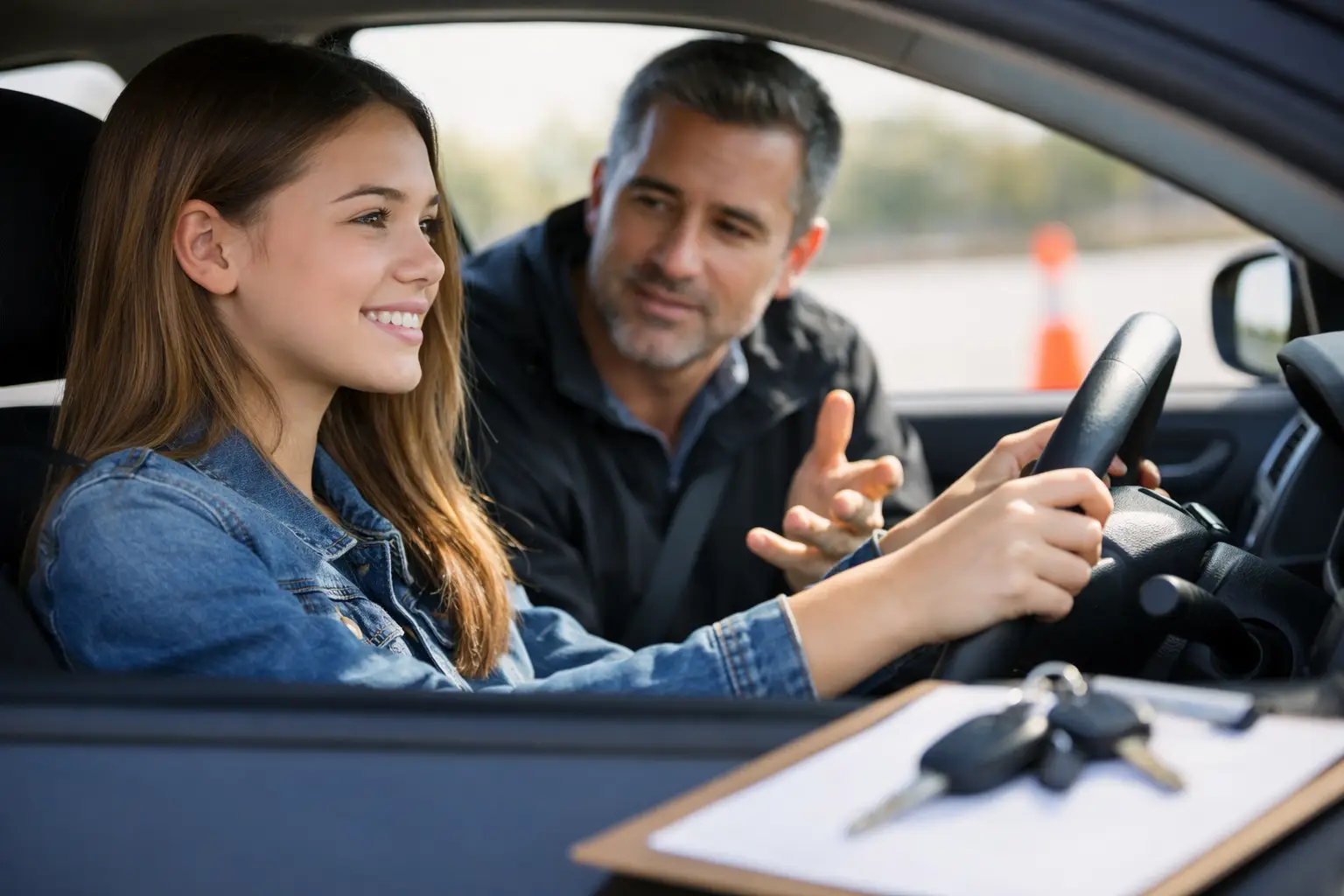
A teen can make a perfect turn at a quiet intersection and still be unprepared for the moment a phone vibrates, a friend starts talking, or traffic suddenly stops on the 405. The most meaningful teen safety trends are not just about passing the DMV road test. They are about helping new drivers make calm, responsible decisions when the drive becomes unpredictable.
For parents, that changes what good practice looks like. Hours behind the wheel still matter, but the quality of those hours matters just as much. A new driver needs repeated exposure to real situations, clear expectations, and coaching that builds judgment without creating panic.
Teen Safety Trends Are Changing What Practice Needs
Modern vehicles, phones, busier roads, and changing driving habits have created challenges that many parents did not face when they learned to drive. The basics remain the same: maintain control, scan ahead, leave space, obey traffic laws, and communicate with other road users. But teens now need to apply those basics around more distractions and more technology.
One of the clearest trends is the gap between knowing a rule and using it under pressure. A student may explain the right-of-way rule correctly while parked, then hesitate at a four-way stop with cars waiting behind them. They may know not to tailgate, but drift too close when traffic compresses near a freeway exit. Patient, repeated practice helps turn knowledge into a habit that remains available when the driver feels rushed.
Another trend is that many teens get comfortable with a vehicle’s technology before they are comfortable reading the road. Backup cameras, parking sensors, lane alerts, and automatic emergency braking can be helpful safety features. They do not replace mirror checks, shoulder checks, speed control, or a driver’s responsibility to look well ahead.
Driver-assist features can create false confidence
A backup camera is useful, but it does not show every angle around a vehicle. Lane-departure warnings may alert a driver after attention has already wandered. Adaptive cruise control can help manage speed on some highways, yet it does not make a teen ready for every merge, lane change, construction zone, or sudden stop.
Parents can help by treating these features as a second layer of protection, not the primary driving skill. During practice, ask the student to describe what they see in their mirrors, where the next risk may come from, and how much following distance they have. This keeps their attention outside the vehicle instead of fixed on a screen or dashboard alert.
The Phone Is Still the Most Personal Distraction
Most teens understand that texting while driving is dangerous. The harder issue is the smaller interruption: checking a notification at a red light, changing music at the next stop sign, responding to a group chat from a parking lot before pulling out, or using a navigation app without setting it up first.
These choices can feel minor, especially to a driver who has not yet experienced how quickly traffic conditions change. A vehicle moving at city speed travels a surprising distance in just a few seconds. Looking down is not simply a brief pause. It is a period of reduced awareness when a pedestrian, cyclist, brake light, or turning vehicle can appear.
A practical family rule is to set navigation, music, and climate controls before shifting into drive. Put the phone where it cannot be casually handled, and let a passenger manage directions when one is available. If the driver needs to change a route or answer an urgent call, they should pull over legally and safely first. This approach is more realistic than relying on willpower after a notification appears.
Passenger distraction deserves equal attention
Teen passengers can be a major distraction even when nobody is using a phone. Laughter, conversation, showing a video, or pressure to keep up with another car can divide a new driver’s attention. California’s provisional license rules place restrictions on young passengers during the first year for a reason, though families should review current DMV requirements and any applicable exceptions.
Even after those restrictions no longer apply, new drivers benefit from building passenger experience gradually. Start with one quiet passenger on familiar daytime routes. Add complexity only when the teen can maintain lane position, speed, observation, and decision-making without becoming overloaded. A driver who says, “I need to focus for this turn,” is showing good judgment, not being impolite.
Speed, Space, and the Pressure to Keep Up
Speeding is often discussed as a deliberate choice, but new drivers also speed unintentionally. They may follow the flow of traffic, roll downhill, accelerate to merge, or feel pressured by a vehicle close behind. In the South Bay, a route can move quickly from a calm neighborhood street to a busy boulevard, freeway ramp, or congested shopping area.
The useful skill is not simply memorizing speed limits. It is learning to match speed to conditions while leaving enough room to react. That means slowing earlier for stale green lights, crowded crosswalks, wet pavement, curves, school zones, and traffic that is bunching up ahead.
Following distance is especially valuable because it gives a teen time to think. When a student drives too close, every brake light becomes an emergency. With proper space, they can ease off the accelerator, brake smoothly, check mirrors, and avoid a chain-reaction response. Parents can ask their teen to identify a fixed point that the vehicle ahead has passed, then count the seconds before reaching it. The specific gap depends on weather, speed, visibility, and traffic, but the habit of leaving room should be consistent.
Night Driving and Bad Weather Need Their Own Lessons
Daytime neighborhood practice is a necessary starting point, not the finish line. Night driving changes depth perception, visibility, glare, and a driver’s ability to notice pedestrians or cyclists. Rain adds reduced traction, longer stopping distances, and reflections that can make lane markings harder to see.
These conditions should be introduced in stages. A student who has just learned to steer, brake, and turn smoothly does not need their first rainy drive to be a nighttime trip through unfamiliar traffic. Begin with a short, planned route and discuss how the conditions change vehicle control. Encourage earlier braking, lower speeds, larger following gaps, and extra care around intersections.
It also helps to practice using headlights, defrosters, windshield wipers, and climate controls before conditions demand them. A teen should not have to search for a control while rain starts falling or windows fog up. Small moments of preparation reduce workload when attention needs to stay on the road.
The Best Training Builds Decision-Making, Not Just Maneuvers
Parallel parking, lane changes, and unprotected left turns are all useful skills for a DMV test and everyday driving. But a safe driver also learns when not to force a maneuver. Missing a turn is better than cutting across lanes. Waiting through another signal cycle is better than turning without a clear gap. Pulling into a safe lot is better than trying to solve a navigation problem while moving.
This is where professional instruction and parent practice work well together. An instructor can teach a planned progression, correct habits before they become routine, and expose students to appropriate real-world situations. Parents can reinforce the same habits on regular drives to school, work, activities, and family errands.
At South Bay Driving School, the goal of behind-the-wheel training is not to rush a nervous student through a checklist. It is to give each learner paced practice in vehicle control, traffic observation, defensive space management, and DMV-ready maneuvers. Some students need more time with turns and intersections; others need extra freeway, parking, or test-route preparation. Personalized coaching gives them room to improve without embarrassment.
How Parents Can Keep Practice Productive
The tone inside the car matters. Frequent criticism can cause a teen to freeze or focus only on avoiding a parent’s reaction. Silence can be unhelpful too, particularly when a student does not recognize a developing risk. The most effective coaching is calm, specific, and early.
Before a drive, choose one or two focus areas, such as smooth stops and mirror checks. During the drive, give directions with enough notice to act safely. Afterward, ask the teen what felt comfortable, what felt difficult, and what they would do differently next time. This encourages self-assessment, which is a core skill for independent driving.
Practice should also include ordinary trips, not only test preparation. A DMV road test evaluates key skills, but a teen’s long-term safety depends on decisions made in parking lots, drive-thrus, freeway traffic, busy intersections, and unfamiliar neighborhoods. The best next lesson is often the situation the student is likely to face next.
A new license should mark the beginning of continued learning, not the end of it. Give your teen time to build experience carefully, keep expectations clear, and treat cautious choices as signs of growing confidence.