
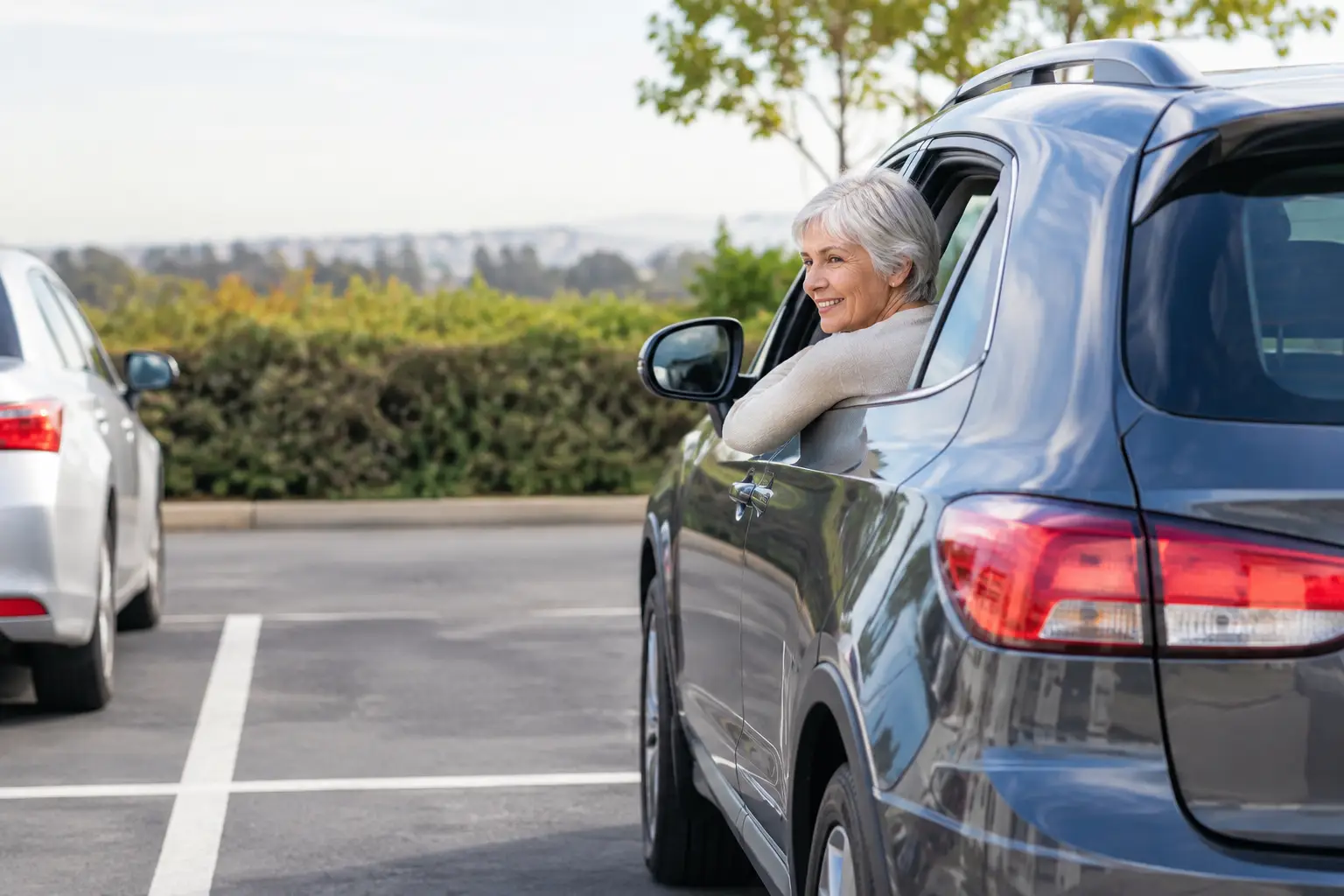
A parking space can look simple until a driver feels rushed by traffic, unsure of clearance, or uncomfortable turning to look behind the vehicle. This senior parking skills example shows how a patient, repeatable routine can make parking feel more controlled. The goal is not to park quickly. It is to position the vehicle safely, protect people walking nearby, and leave enough room to get in and out without stress.
For many older drivers, parking is one of the first situations where confidence can change. A driver may have decades of experience but now find that a larger vehicle, reduced neck flexibility, glare, or a busy shopping center requires more deliberate habits. That does not mean giving up independence. It means practicing skills in a way that matches the driver’s current needs.
Why Parking Deserves Focused Practice for Seniors
Parking combines several tasks at once: steering at low speed, judging distance, checking mirrors, looking over the shoulder, watching for pedestrians, and deciding when to stop. In a crowded South Bay parking lot, drivers also contend with shoppers pushing carts, vehicles backing out unexpectedly, and limited visibility between larger SUVs and trucks.
A good practice session separates those tasks rather than expecting a driver to improve everything at once. Start in a quiet, mostly empty lot during daylight. Practice the approach, the turn, and the final position as individual steps. Once those movements become familiar, add busier locations and more realistic conditions.
It also helps to adjust the vehicle before moving. The seat should allow the driver to press the brake firmly without stretching. Mirrors should provide a clear view down both sides of the vehicle, and the steering wheel should be comfortably within reach. These small adjustments can reduce strain and improve awareness before the car ever enters a space.
Senior Parking Skills Example: Pulling Into a Space
Imagine a driver approaching an open space on the right in a quiet parking lot. The space is between two parked cars, with no pedestrians nearby. Instead of turning in sharply at the last second, the driver uses a steady five-part routine.
First, the driver slows to a walking pace and signals if other traffic is present. Slowing early gives the driver time to scan for people, carts, and vehicle doors that might open. It also prevents the common mistake of trying to correct a fast turn inside a narrow space.
Next, the driver moves slightly left within the travel lane, leaving room for the front of the vehicle to swing right. There is no need to drift into the opposite lane or make an exaggerated wide turn. The vehicle simply needs enough turning room to enter the space without clipping the car on the right.
The driver then looks through the windshield toward the center of the parking space, not directly at the curb, line, or nearby vehicle. Looking where the vehicle should end up helps the hands steer more naturally. As the front of the car enters the space, the driver turns the wheel smoothly to the right and continues at a very low speed.
When the vehicle is mostly straight, the driver begins straightening the wheel. The final check is simple: stop with the vehicle centered between the lines, leaving reasonable space on both sides. Shift into park, set the parking brake when appropriate for the vehicle and location, and check that the car is fully secured before opening the door.
If the vehicle is crooked or too close to one side, the safest response is to back out and try again. Trying to fix a poor angle with several tight forward-and-back movements can create confusion and place the driver too close to another vehicle. A calm reset is a good driving decision, not a failure.
What This Example Teaches
The key lesson is that safe parking happens before the car reaches the space. Early speed control, a proper approach angle, and a clear visual target reduce the need for last-second corrections. A driving instructor can help a senior driver identify exactly when to begin the turn, but the routine should remain simple enough to use independently.
Every vehicle handles differently. A compact sedan may turn into a space with less room than a long SUV or pickup. Drivers should practice in the vehicle they use most often, especially after purchasing a new car, switching to a rental, or returning to driving after time away.
Backing Out Safely Is Often the Harder Skill
Pulling into a parking space is only half the task. Backing out requires special attention because pedestrians and cross traffic may approach from either direction. Rearview cameras and parking sensors are useful aids, but they do not replace direct observation.
Before shifting into reverse, the driver should press the brake, check both side mirrors, look through the rear window, and scan to the left and right. The driver should reverse slowly enough to stop immediately if a person, vehicle, cart, or animal enters the path.
Once the vehicle begins to clear the cars on either side, pause if visibility is still limited. This short pause gives approaching drivers a chance to see the vehicle and gives the driver another opportunity to scan. Then continue backing at a controlled pace until there is enough room to turn safely into the travel lane.
A senior driver with limited neck rotation may benefit from practicing a comfortable observation sequence with an instructor. Proper mirror adjustment, a clear rearward glance when possible, and a slow backing speed can work together. If turning to look behind is painful or difficult, it is worth discussing the concern with a health care professional as well as a qualified driving instructor.
Practice the Situations That Cause the Most Stress
A useful lesson plan begins with the parking situations the driver avoids. For some people, it is a crowded grocery store lot. For others, it is a perpendicular space between two expensive-looking vehicles, a narrow driveway, or parallel parking near a busy street.
Start with the easiest version of that situation. In an empty lot, cones or visual markers can represent parked cars and create a low-pressure place to practice space judgment. Repeat the same maneuver several times, then gradually reduce the available room or move to a quieter real parking area.
Parallel parking deserves its own practice session because it involves a different sequence of reference points and steering movements. It can be helpful for California DMV road-test preparation, but it is also a practical daily skill in areas where curb parking is common. The priority remains control and observation, not completing the maneuver in the fewest movements.
Habits That Make Parking Safer Every Day
These habits support nearly every type of parking maneuver:
- Slow down before reaching the space or driveway.
- Keep both hands ready on the steering wheel while the vehicle is moving.
- Scan for people before, during, and after reversing.
- Use mirrors, cameras, and sensors as aids, not as substitutes for looking around.
- Reset and try again when the approach is poor or the space feels too tight.
Drivers should also give themselves permission to choose the easier option. Parking farther from a store entrance, waiting for a wider space, or selecting a pull-through space can lower risk without adding much time. Good judgment is part of safe driving.
When Professional Senior Driving Instruction Helps
A family member may mean well, but practice can become stressful when the passenger gives rapid directions or reacts anxiously. A patient instructor can provide calm feedback, choose appropriate practice locations, and focus on one skill at a time. This is especially helpful for drivers returning after an illness, injury, vehicle change, or long break from driving.
South Bay Driving School offers personalized instruction that can be paced around a senior driver’s comfort level. For drivers in Torrance and nearby communities, a focused parking lesson can address the specific maneuvers that make everyday trips feel harder than they need to be.
The best parking routine is one a driver can remember when the lot is busy and the pressure rises. Practice slowly, scan carefully, and choose the safer option whenever a space or maneuver does not feel right.