
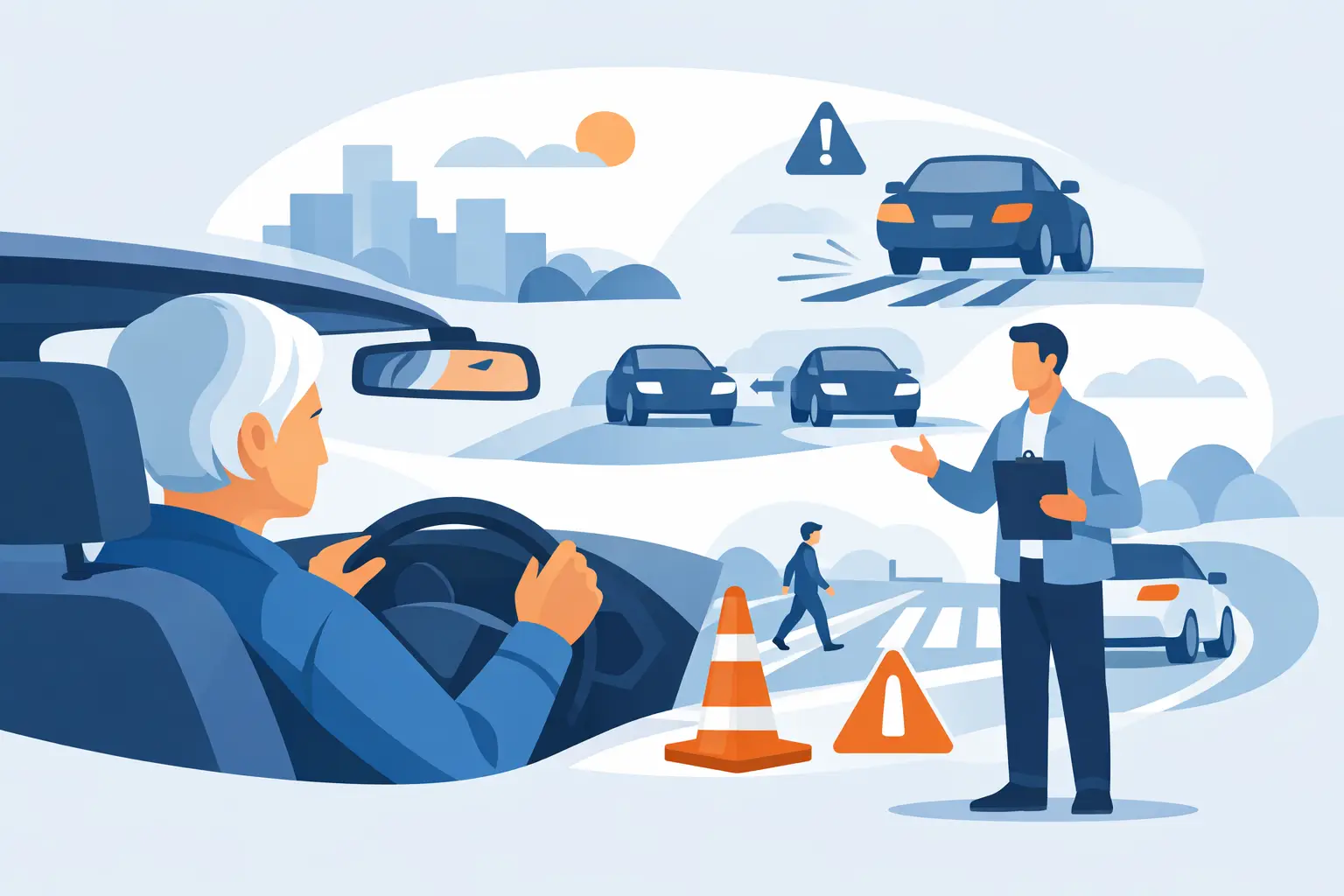
Getting back behind the wheel can feel unexpectedly difficult. A driver may still remember the basic rules, yet hesitate at a busy Torrance intersection, avoid freeways, or feel tense when another car follows closely. Returning driver lessons provide a calm, structured way to replace that uncertainty with current skills, sound judgment, and repeatable driving habits.
The goal is not to prove that you have driven before. It is to make sure you can drive safely now, in the vehicle you use and on the roads you travel. For some people, that takes one focused refresher lesson. For others, especially after several years away from driving, a series of private lessons offers the time and support needed to rebuild confidence without rushing.
Who Can Benefit From Returning Driver Lessons?
Returning to driving happens for many reasons. You may have lived in a city where you did not need a car, taken time away to care for family, recovered from an illness or injury, or lost confidence after a collision or near-miss. Some adults earned a license years ago but never developed enough regular experience to feel comfortable driving independently.
Senior drivers may also choose a refresher because traffic patterns, vehicle technology, and their own comfort level have changed. This is not about judgment. It is about identifying what still feels natural, what needs practice, and what adjustments support safe driving.
A returning driver may be legally licensed but still avoid left turns across traffic, parking lots, nighttime driving, or freeway entrances. Those are practical concerns, and they deserve practical instruction. A patient instructor can break them into manageable steps rather than expecting confidence to appear all at once.
Start With an Honest Driving Assessment
The first lesson should create a clear picture of your present driving ability. That means more than checking whether you can start, stop, and turn. An instructor watches how you position the vehicle, use mirrors, scan intersections, manage speed, respond to signs, and make decisions around other road users.
This assessment is not a pass-or-fail test. It helps shape a lesson plan around your needs. Someone who has not driven in five years may quickly regain basic vehicle control but need extra help with traffic flow and defensive driving. Another driver may be comfortable on neighborhood streets but need concentrated freeway practice. A driver preparing for a California DMV road test may need to review test-day procedures and the maneuvers that are commonly evaluated.
Honesty makes the process more effective. If parallel parking causes anxiety, say so. If you have avoided driving at night or feel unsure about merging, that is useful information. Good instruction meets you at your actual starting point, not where you think you should be.
Rebuild the Habits That Make Driving Safer
Experienced drivers sometimes rely on habits that formed years ago. Some are useful. Others may no longer be safe, especially if they involve incomplete stops, rushed lane changes, distracted attention, or assuming other drivers will do what they should.
Returning lessons focus on the habits that protect you every time you drive. These include looking well ahead instead of staring at the car directly in front of you, checking mirrors regularly, leaving enough following distance, and scanning for pedestrians and cyclists before turns. In South Bay communities, drivers often move between quiet residential streets, crowded shopping areas, school zones, and fast-moving major roads. The ability to adjust speed and attention to those changing conditions matters.
Proper turns deserve special attention. A safe right turn involves more than using a signal. You need to check for pedestrians in the crosswalk, bicycles near the curb, and vehicles entering from nearby driveways. Left turns require good timing, lane position, and patience. Waiting for a safe gap is always better than forcing one.
Parking is another skill worth refreshing. Drivers often feel pressure when cars are waiting behind them, but parking safely is not a race. Lessons can cover backing in a straight line, using mirrors effectively, parking on hills, entering and leaving spaces, and building a steady routine for checking your surroundings.
Confidence Comes From Practice, Not Pressure
Confidence is useful only when it is supported by skill. A driver who feels overly confident may take unnecessary risks. A driver who feels no confidence may avoid driving even when they are capable. The right balance comes from successful repetition in situations that become gradually more challenging.
That progression may begin on familiar, lower-speed streets. Once steering, braking, observation, and turns feel consistent, lessons can move to busier roads, multilane traffic, parking lots, and freeway ramps when appropriate. The pace should reflect the student, not a fixed schedule.
This is especially valuable for nervous drivers. Anxiety can narrow attention, causing a person to focus so hard on one task that they miss important information around them. Calm coaching helps drivers slow down mentally, follow a sequence, and recover from small mistakes. Missing a turn or needing to go around the block is not a failure. It is often the safest choice.
Returning Driver Lessons and DMV Road-Test Preparation
If you need to take a California DMV road test, returning lessons can be tailored to that goal. Test preparation should cover the fundamentals the examiner expects to see: safe vehicle control, proper observation, appropriate speed, complete stops, lane changes, turns, backing, and decision-making in normal traffic.
The best preparation does not depend on memorizing a test route. Routes can change, traffic changes every day, and a road test is designed to evaluate safe driving rather than perfect familiarity with one neighborhood. Instead, practice the underlying habits that apply anywhere. Check mirrors before slowing, signal early, make visible head checks when needed, and keep your attention moving through the roadway environment.
There is a trade-off to consider. If your only goal is passing the test quickly, you may be tempted to practice only test maneuvers. But drivers who build everyday road skills are generally better prepared for the test and more prepared for the first solo drive afterward. A good program makes room for both.
Choose Instruction That Fits Your Situation
Private instruction is particularly helpful for returning drivers because there is no one-size-fits-all refresher. The number of lessons depends on how long you have been away, where you plan to drive, your comfort level, and whether you are preparing for a licensing milestone.
Before booking, consider the situations you want to handle independently. Perhaps you need to drive to work, take a child to school, visit family in Palos Verdes, or manage errands around Torrance and Redondo Beach. Sharing those goals helps an instructor build practice around real driving needs instead of generic drills.
It also helps to ask about vehicle familiarity. Modern cars may have backup cameras, driver-assistance alerts, electronic parking brakes, and different control layouts than the car you last drove. These features can support awareness, but they do not replace mirror checks, visual scanning, or careful judgment. Lessons should teach you how to use available technology without becoming dependent on it.
South Bay Driving School has served local drivers since 1992, with private instruction designed for teens, adults, seniors, and drivers returning after time away. The most useful lesson plan is one that gives you clear feedback, enough practice to improve, and the reassurance of learning at a pace that feels safe.
A Better First Drive Back
Before your first independent drive, choose a simple route at a low-stress time of day. Set up your seat, mirrors, and navigation before moving the car. Give yourself extra time, keep distractions out of reach, and let the trip be ordinary. You do not need to begin with the freeway, a crowded parking structure, or an unfamiliar destination.
Each safe trip reinforces the next one. With patient practice and professional feedback when needed, driving can become less about worrying over every decision and more about making steady, responsible choices mile by mile.