
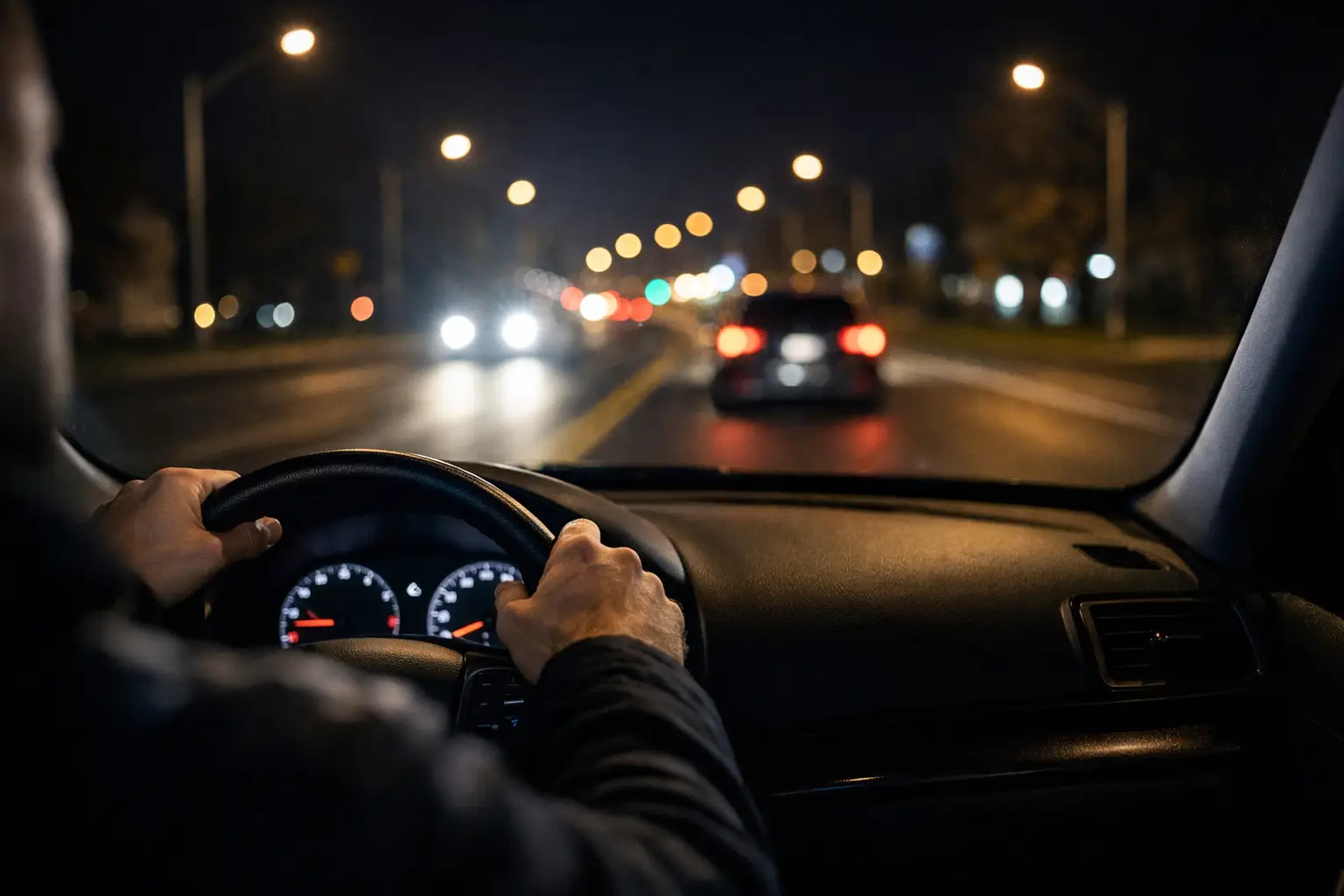
A familiar street can feel completely different after sunset. Glare from headlights, darker crosswalks, tiredness after a long day, and fast-moving traffic all reduce the margin for error. Good night driving safety is not about being afraid of driving after dark. It is about giving yourself more time, more space, and better information before you make each decision.
For new teen drivers, returning adults, and families practicing together, nighttime driving should be introduced gradually. Start on routes you know, in lighter traffic and good weather, then build experience as your observation and vehicle-control skills become more consistent. Confidence matters, but calm, repeatable habits matter more.
Why Night Driving Requires Different Decisions
At night, you can only react to what you can see. Your headlights illuminate a limited area ahead, and dark clothing, uneven pavement, parked cars, cyclists, and pedestrians can blend into the background. Even a driver with good vision needs extra time to identify a hazard and decide what to do.
The challenge is not limited to visibility. Headlight glare can temporarily reduce your ability to see details, especially on roads with oncoming traffic. Fatigue may slow reaction time. Rain can turn road markings and windshield glare into a distraction. In South Bay communities, drivers also need to expect pedestrians near restaurants, beaches, transit stops, and neighborhood intersections, even when the street appears quiet.
The practical answer is simple: reduce speed enough that your vehicle can stop within the distance you can clearly see. The right speed is not always the posted maximum. It depends on lighting, weather, traffic, road familiarity, and your own alertness.
Prepare the Car Before You Need to See Clearly
Many nighttime problems begin with a vehicle that is technically drivable but not prepared for darkness. Before leaving, take a minute to clean the windshield inside and out. A thin film on the interior glass can make oncoming headlights spread into distracting streaks. Clean side mirrors and the rear window as well.
Check that your headlights, taillights, brake lights, and turn signals work. If a headlight seems dimmer than the other, have it inspected rather than assuming it is good enough. Properly aimed headlights are just as important as bright bulbs. Lights aimed too high can glare other drivers, while lights aimed too low may leave you with less useful road visibility.
Keep the dashboard dim enough to avoid reflections in the windshield. Bright screens from phones or navigation systems can make your eyes work harder when shifting attention back to the road. Set directions, music, and climate controls before moving whenever possible. If you need to make a major adjustment, pull over safely.
Make Sure You Are Ready, Too
A clean car cannot make up for a tired driver. If you are fighting sleep, struggling to focus, or repeatedly missing turns, do not try to push through it. Caffeine may help temporarily, but it does not replace rest. Let a parent drive, use another transportation option, or stop somewhere safe until you can continue alertly.
New drivers should also avoid beginning their first independent nighttime trips with several passengers. Friends can be a major distraction, even when they mean well. Build the skill first with a focused practice drive and an experienced adult in the passenger seat.
Use Your Eyes Strategically Around Headlights
Do not stare into oncoming headlights. Instead, keep your attention on your lane position and use the right edge of the road, lane line, or shoulder area as a visual reference when glare is strong. Continue scanning ahead, checking mirrors, and looking toward the path you intend to travel.
Your high beams can provide valuable visibility on dark, open roads when there is no traffic ahead or approaching. However, low beams are the courteous and safe choice when you are following another vehicle or meeting oncoming traffic. If another driver forgets to dim their lights, avoid reacting by flashing high beams or looking directly at the glare. Slow slightly if needed, keep your lane position steady, and let the vehicle pass.
This is also a good time to be especially careful with sunglasses. Taking off dark glasses before driving at night may seem obvious, but drivers sometimes forget after sunset. If glare is frequent or unusually severe, schedule an eye exam. Night vision changes with age, and new drivers can have unrecognized vision issues as well.
Night Driving Safety Starts With Space and Speed
Following distance is one of the most useful safety tools a driver has. At night, increase the space between your vehicle and the one ahead. You need more room to see around it, more time to recognize brake lights, and more distance to respond if an animal, pedestrian, debris, or stopped vehicle appears.
On an unfamiliar road, resist the urge to drive at the speed of faster traffic if you cannot see far enough ahead to feel certain about your path. A vehicle behind you may be impatient, but that does not require you to exceed a safe speed. Stay to the right when appropriate, maintain a predictable pace, and allow faster traffic to pass safely.
Approach intersections with added caution. A green light is not a guarantee that cross traffic has stopped, particularly late at night. Before entering, scan left, right, and left again. When turning, look carefully for pedestrians who may be harder to see in dark clothing or who are crossing outside a marked crosswalk.
Give Wet Roads Even More Respect
Rain changes nighttime driving quickly. Headlights reflect off wet pavement, lane markings can become difficult to see, and standing water can affect braking and steering. Slow down before turns, brake earlier and more gently, and avoid sudden steering inputs.
California drivers should remember that the first rain after a dry period can make roads especially slick as oil and dust rise to the surface. If visibility is poor enough that you are relying on windshield wipers, use headlights as required and keep enough distance to avoid being rushed by the vehicle behind you.
Practice the Skills That Reduce Anxiety
Nervousness often comes from trying to manage too many tasks at once. The best way to improve is structured repetition. Practice nighttime driving first in a familiar parking area or quiet neighborhood, then move to well-lit main roads. Work on smooth braking, steady lane position, mirror checks, turns at controlled intersections, and recognizing pedestrians early.
A productive practice drive does not need to be long. Twenty to thirty focused minutes can be more valuable than an hour of distracted driving. Afterward, discuss one or two specific moments: Was the following distance enough? Did glare affect lane position? Did the driver identify a pedestrian, bicyclist, or parked car early enough? Clear feedback gives a learner something practical to improve next time.
For students preparing for a California DMV road test, night driving may not be part of the test itself, but it develops skills that support safe daytime driving too. Better scanning, smoother speed control, earlier braking, and stronger hazard awareness are useful in every condition. At South Bay Driving School, patient behind-the-wheel instruction can help learners build these habits at a pace that fits their current experience.
Know When to Choose Another Option
There is no prize for driving when conditions are beyond your current ability. Heavy rain, dense fog, an unfamiliar freeway route, severe fatigue, or a vehicle problem can make postponing a trip the responsible decision. Parents can support teen drivers by making this expectation clear before a difficult situation occurs: calling for a ride is good judgment, not failure.
If you must pull over because of a problem, choose a safe, well-lit location when possible. Avoid stopping in a travel lane. Turn on hazard lights if appropriate, remain aware of traffic around you, and contact help from a safe location.
Every successful nighttime trip reinforces a simple lesson: safe drivers do not rely on quick reflexes alone. They prepare, scan farther ahead, leave room for the unexpected, and make calm choices when visibility is limited. Those habits will serve a new driver long after the road home has become familiar.