
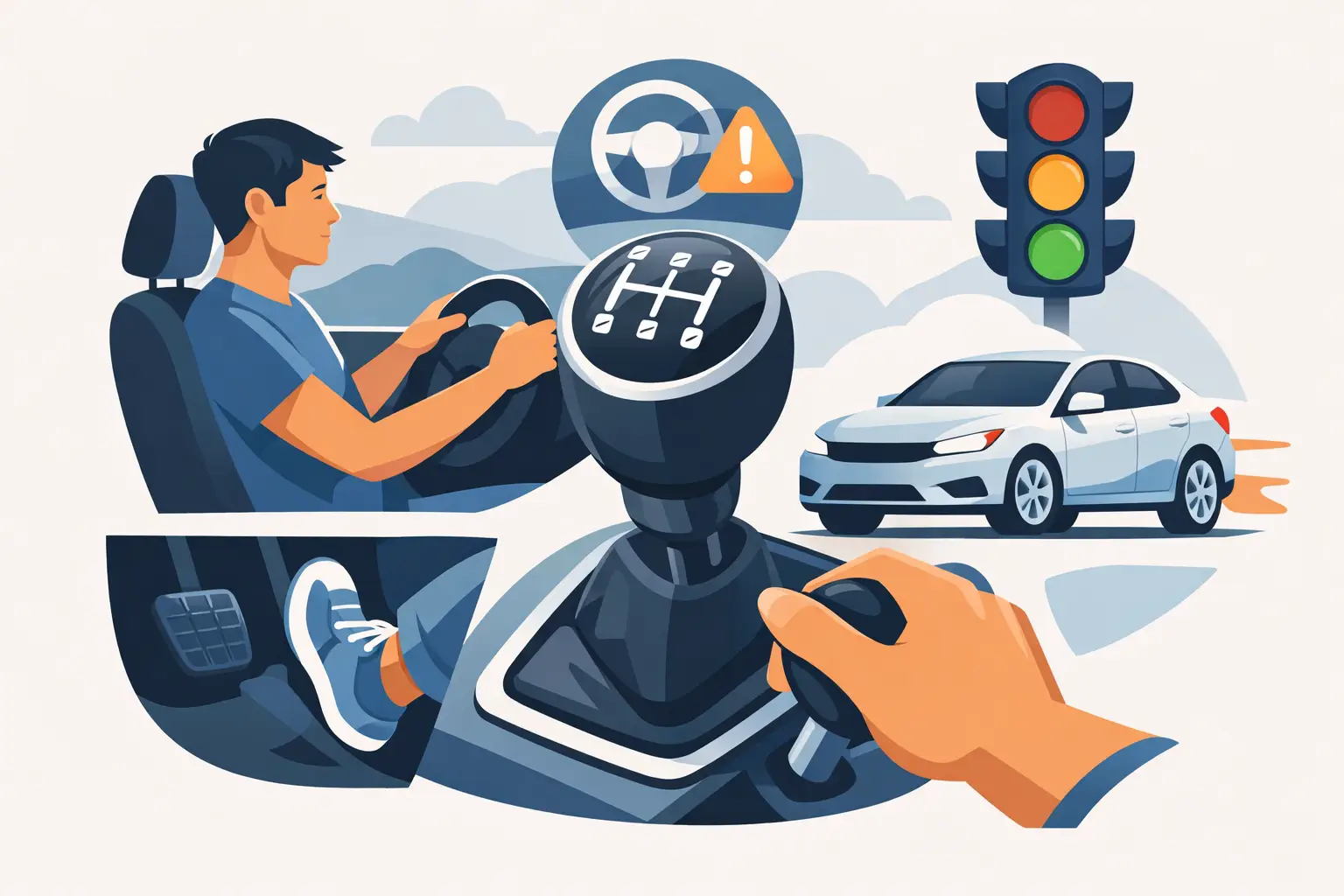
The first time a new driver releases a clutch, the car may stall. That is normal. Manual transmission lessons are designed to turn that uncertain first attempt into a repeatable skill: feeling the engagement point, moving off smoothly, selecting the right gear, and staying aware of everything happening around the vehicle.
Learning to drive a stick shift is not about rushing through a sequence of motions. It is about building coordination and judgment in a calm, structured way. With patient instruction and enough practice, most students find that the pedals, shifter, and engine sound begin to make sense together.
Why Learn to Drive a Manual Transmission?
Many drivers choose a manual transmission because they want more flexibility. They may have access to a family car, want to drive a particular vehicle for work, plan to travel where manual cars are common, or simply prefer the engagement of shifting for themselves. For some students, it is also a useful way to better understand how a vehicle responds to speed, hills, and changing road conditions.
A manual car requires more active participation than an automatic. The driver uses the clutch pedal with the left foot, controls the accelerator with the right foot, and selects gears based on vehicle speed and driving conditions. That added involvement can strengthen attention to vehicle control, but it also means beginners need a measured learning pace.
The goal is not to make every drive feel complicated. It is to develop habits that become natural: clutch in, select the gear, find the engagement point, add gentle acceleration, and release the clutch smoothly. Once those movements are consistent, the driver can devote more attention to traffic, signs, pedestrians, and space around the car.
What Happens in Manual Transmission Lessons
A good first lesson starts before the vehicle moves. Your instructor should explain the controls, proper seating position, mirror setup, pedal placement, and the shift pattern. Students learn where reverse is located, how to use the parking brake, and why neutral matters when starting or stopping the vehicle.
The first driving exercises are usually done in a quiet, low-pressure area. Rather than immediately entering busy traffic, students practice starting and stopping repeatedly. This is where they learn the clutch’s bite point, sometimes called the friction point, which is the moment the engine begins transferring power to the wheels.
Stalling is a normal part of this stage. It usually happens when the clutch comes up too quickly or the engine does not receive enough gas. A patient instructor will help the student identify what occurred, reset safely, and try again. The important habit is not avoiding every stall from the start. It is staying calm, securing the vehicle, and recovering correctly.
Building Up From First Gear
Once starts and stops feel more controlled, lessons progress to shifting between lower gears. Students learn to listen to the engine, notice vehicle speed, and avoid looking down at the shifter. The instructor may use simple reference points at first, but the focus remains on understanding the vehicle rather than memorizing a rigid number on the speedometer.
Upshifting should be smooth and deliberate: ease off the accelerator, press the clutch fully, select the next gear, release the clutch progressively, and return to the accelerator. Downshifting requires similar coordination, with extra attention to choosing a gear appropriate for the current speed. Trying to select too low a gear at too high a speed can make the car jerk and place unnecessary strain on the drivetrain.
Students also practice braking to a stop. Depending on the situation, that may mean braking in the current gear and pressing the clutch as the car slows, or downshifting before a turn when additional control is appropriate. The right approach depends on traffic, speed, road grade, and the vehicle. Safe instruction teaches drivers to make controlled choices instead of treating one technique as the answer for every situation.
Hills, Turns, and Real Traffic
Hill starts are often the skill students worry about most. The concern is understandable: nobody wants to roll backward at a stop sign or light. Manual transmission lessons break the process into manageable steps, often beginning on a mild incline. Drivers learn how to hold the vehicle with the brake or parking brake, locate the engagement point, and move forward without panic.
Turns and intersections add another layer. A driver must choose the proper gear while checking mirrors, scanning cross traffic, yielding when required, and maintaining a safe lane position. This is why clutch control should be introduced in a quiet setting before moving to more complex roads.
As confidence grows, practice can include neighborhood streets, larger intersections, lane changes, parking, and moderate hills. In the South Bay, drivers may encounter stop-and-go traffic, busy commercial corridors, residential streets, and changing conditions near coastal areas. Training should prepare a driver for those real situations without overwhelming them too early.
How Many Manual Transmission Lessons Will You Need?
There is no single number that fits every student. Someone who already drives an automatic may understand traffic rules, steering, braking, and road awareness, so they can focus primarily on clutch and gear coordination. A complete beginner needs time for both basic driving judgment and manual vehicle control.
Lesson length and frequency also matter. A student who practices consistently often retains pedal feel and shift timing more easily than someone who waits several weeks between sessions. Short, regular practice sessions can be more productive than trying to force too much learning into one long day.
Comfort level is another factor. Some learners pick up starting and shifting quickly but need additional time on hills or in traffic. Others need more repetition at the beginning and then progress steadily. Personalized instruction should meet the student where they are, not push them to drive in situations they are not ready to handle.
Practical Habits That Make Learning Easier
Wear shoes that allow you to feel the pedals. Thick soles, loose sandals, or high heels can make clutch control harder, especially during the first few sessions. Keep the driver’s seat close enough to press the clutch all the way to the floor without stretching, while still maintaining a comfortable bend in the knee.
Avoid staring at the gear lever. It is fine to become familiar with the shift pattern while parked, but on the road, your eyes belong ahead and in the mirrors. With practice, the movement of the shifter becomes more familiar through touch.
Do not rush the clutch. Quick, abrupt releases are a common cause of stalls and jerky starts. At the same time, holding the clutch at the engagement point for too long can create unnecessary wear. The aim is a controlled, purposeful release, not an overly slow one.
Finally, give yourself permission to learn gradually. Manual driving asks for coordination that most people have never used before. Feeling challenged in the first lesson does not mean you are a poor driver. It means you are learning a new physical skill.
Choosing a Safe Learning Environment
A manual transmission instructor should prioritize safety over speed. Look for lessons that begin with clear explanations, allow time for repeated practice, and build from quiet streets to more demanding conditions. Students should understand not only how to shift, but also how to stop safely, handle a stall, use the parking brake, and maintain attention on the road.
For teens and adult beginners, professional instruction can reduce the pressure that sometimes comes with practicing in a family member’s car. An instructor can give direct feedback without adding stress, while the student works through the same movement as many times as needed. South Bay Driving School approaches manual instruction as a paced process, helping students gain usable control before taking on more complicated traffic situations.
A manual transmission can feel intimidating when the car shakes, stalls, or rolls slightly during a first hill start. Keep practicing the fundamentals with patience. Smooth driving is built one controlled start, one thoughtful shift, and one safe decision at a time.