
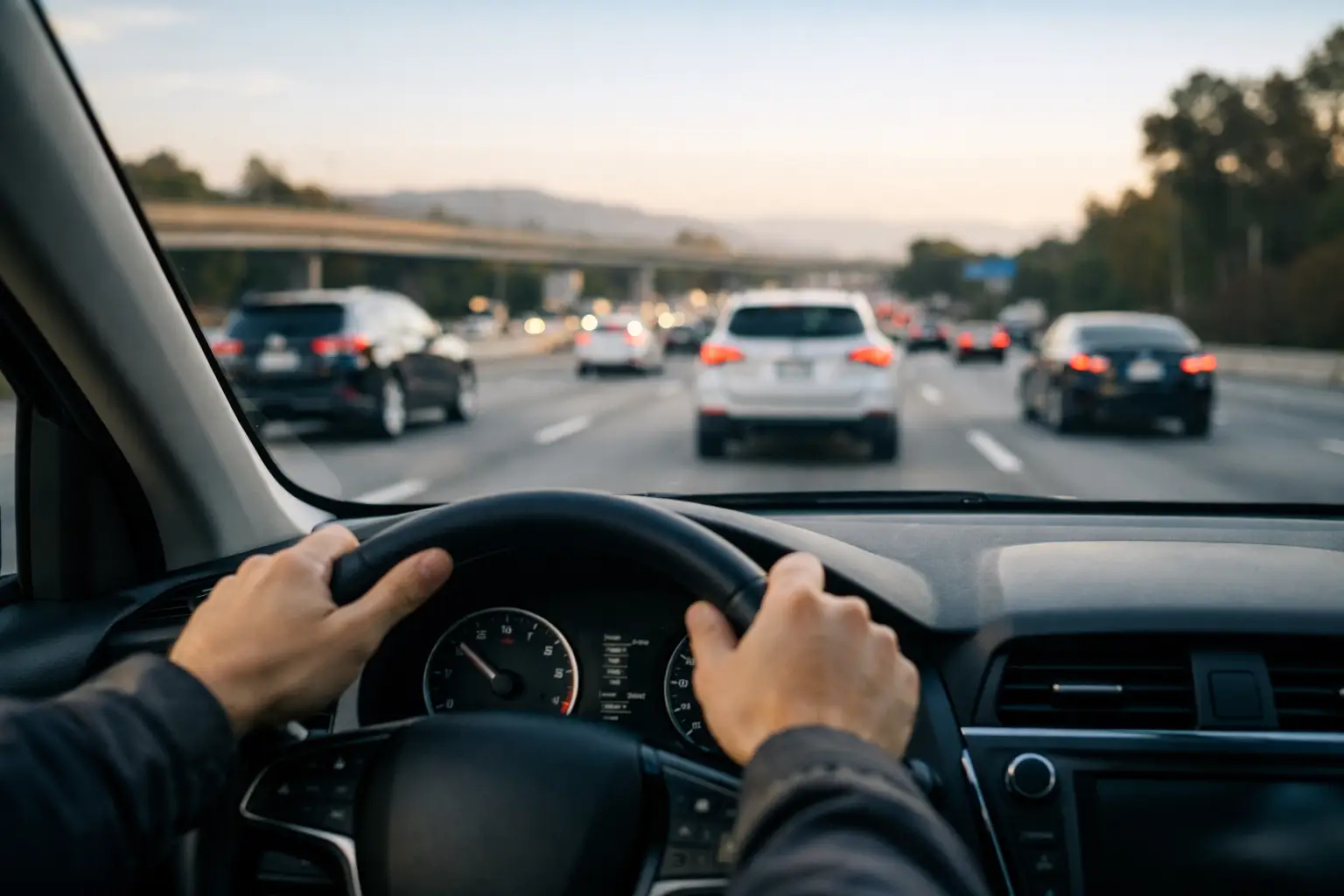
A freeway entrance ramp can feel much faster than a neighborhood street, especially when traffic is moving beside you at 65 mph or more. Learning how to drive on freeway safely is less about being fearless and more about using a repeatable process: prepare early, match traffic speed, look where you are going, and leave yourself room to respond.
For new drivers, the goal is not to rush onto the freeway or prove that you can keep up with the most aggressive vehicle around you. The goal is to become predictable, alert, and calm. Those habits help on every trip, from a short drive on the 110 to a busy afternoon on the 405.
Prepare Before You Reach the On-Ramp
Safe freeway driving starts before your tires enter the ramp. Set your mirrors, adjust your seat, choose your music or navigation, and put your phone away before moving. You should be able to press the brake fully, turn the steering wheel comfortably, and see the road behind you without leaning or stretching.
Know your route ahead of time when possible. Missing an exit is inconvenient, but making a sudden lane change to catch it is dangerous. If you are using navigation, listen for the next exit well before you need to move. In busy South Bay traffic, having an extra minute to get into position can make a major difference.
As you approach an on-ramp, scan for signs that show the freeway direction, upcoming lane changes, or ramp meters. A red ramp meter is not a signal to creep forward. Stop fully when required, then accelerate smoothly when your light turns green. Use the length of the ramp to build speed and assess the flow of freeway traffic.
How to Drive on Freeway Safely When Merging
Merging is often the part that worries new drivers most. It becomes much easier when you follow the same sequence every time. First, look well ahead on the ramp. Next, check your rearview mirror, side mirror, and blind spot. Signal early enough to communicate your plan, then adjust your speed to fit into a safe opening.
The ramp is an acceleration lane. In normal conditions, do not enter the freeway far below the speed of traffic if you can safely reach a similar speed. A large speed difference forces other drivers to brake or swerve and reduces your choices. At the same time, do not accelerate blindly toward a small gap just because you feel pressured by vehicles behind you.
The driver entering the freeway must yield to traffic already on it. Look for a gap, then choose whether to slightly speed up or ease off the accelerator to enter behind another vehicle. Avoid stopping at the end of the ramp unless traffic conditions leave no other safe option. A stopped vehicle must accelerate from zero while freeway traffic continues moving, which can make merging more difficult.
Keep your eyes moving. A quick shoulder check is necessary before changing lanes, but do not stare over your shoulder. Look, confirm the opening, and return your attention to the road ahead. Your hands should make small, steady steering movements rather than a sharp turn into the lane.
Give Other Drivers Room When You Can
If you are already on the freeway and see traffic entering, check whether it is safe to move one lane over. This is a courteous way to create space, but it is not required if another lane is occupied or changing lanes would create a risk. If you cannot move over, maintain a steady speed and leave adequate following distance so the entering driver has room to merge.
Choose a Lane That Matches Your Situation
After merging, avoid crossing several lanes at once. Settle into your lane, recheck your mirrors, and give yourself time to understand the traffic pattern. The lane that works best depends on traffic, your planned exit, road conditions, and the speed of vehicles around you.
For many newer drivers, the right lane or the lane immediately to its left can be a comfortable place to begin. The right lane may have more vehicles entering and exiting, while lanes farther left may have faster-moving traffic. There is no single “safe lane” for every freeway. Choose the lane that gives you the clearest space cushion and allows you to travel at a legal, reasonable speed without forcing others to brake.
Use the left lanes for passing when appropriate rather than staying there while traveling slower than surrounding traffic. Before any lane change, check mirrors, signal, look over your shoulder for the blind spot, and move only when there is enough room. Then cancel the signal once the maneuver is complete.
A good rule for anxious drivers is to make one decision at a time. Merge first. Then stabilize your speed. Then plan your lane change. Trying to handle all three at once can lead to rushed choices.
Manage Speed and Following Distance
The posted speed limit is not a target you must reach in every condition. Traffic congestion, rain, glare, road work, curves, and limited visibility may require a slower speed. Your responsibility is to drive at a speed that is safe for conditions while staying predictable to vehicles around you.
Leave at least three seconds of following distance in normal, dry conditions. Pick a fixed object ahead, such as a sign or overpass. When the vehicle in front passes it, count “one thousand one, one thousand two, one thousand three.” If you reach the object before finishing, you are following too closely.
Increase that space in rain, at night, in heavy traffic, or when you are driving behind a motorcycle, large truck, or vehicle carrying an unstable load. Space is what gives you time to recognize brake lights, decide what to do, and brake smoothly instead of slamming on the pedal.
Avoid matching the exact speed of a vehicle in your blind spot. Either safely move ahead, fall back, or change lanes when there is room. Driving side by side for long periods reduces your options if either driver needs to move suddenly.
Read Traffic Before It Becomes an Emergency
Freeway driving rewards drivers who look far ahead. Scan 12 to 15 seconds down the road, not only at the bumper in front of you. Watch for clusters of brake lights, vehicles drifting within their lanes, stopped traffic near an exit, and signs of construction or emergency activity.
When traffic begins slowing, ease off the accelerator early and brake gradually. Check your mirrors before braking firmly so you know what is happening behind you. If you are coming to a complete stop in fast-moving traffic, leave extra space ahead when possible. That space can give you an escape path if a vehicle behind you is not slowing quickly enough.
Large trucks deserve special attention. Do not linger beside them, cut closely in front of them, or follow so closely that you cannot see their mirrors. If you cannot see a truck driver’s mirrors, the driver may not be able to see you. Give trucks more room on downhill grades and during lane changes because they need more time and distance to stop.
Handle Common Freeway Problems Calmly
If you miss your exit, continue to the next one. Never reverse, stop, or make a sudden turn across lanes. If you take the wrong freeway direction, keep driving until you can exit safely and reroute.
If another driver tailgates you, do not brake-check or speed up beyond what is safe. Maintain a steady pace, increase the space in front of your vehicle, and move right or change lanes when it is safe to let the driver pass. Their impatience does not require a reaction from you.
For a breakdown or warning light, signal and move toward the right shoulder only when it is safe. Turn on hazard lights and pull as far from traffic as possible. If the vehicle is unsafe to drive, get professional help rather than attempting to continue through a busy freeway.
In rain, reduce speed before standing water or a curve, use headlights as conditions require, and create more following distance. Smooth inputs matter even more on wet pavement. Hard braking, sharp steering, and sudden acceleration can reduce traction.
Build Freeway Confidence Through Practice
Confidence comes from experience, but the most useful experience is structured. Start during daylight and lighter traffic periods with a calm, experienced supervising driver or professional instructor. Practice entering and exiting the same freeway section several times before adding complicated interchanges, night driving, or heavier commute traffic.
A behind-the-wheel lesson can be especially helpful for drivers who know the rules but freeze when traffic begins moving quickly. At South Bay Driving School, freeway practice is approached at the student’s pace, with coaching on observation, merging, lane changes, and real traffic decisions. The objective is not simply to complete a freeway drive. It is to build habits you can repeat independently.
The next time you approach an on-ramp, give yourself permission to slow your thinking down even while traffic is moving quickly. Check, signal, choose a gap, and merge smoothly. With each careful trip, the freeway becomes less of a test and more of a road you know how to use responsibly.