
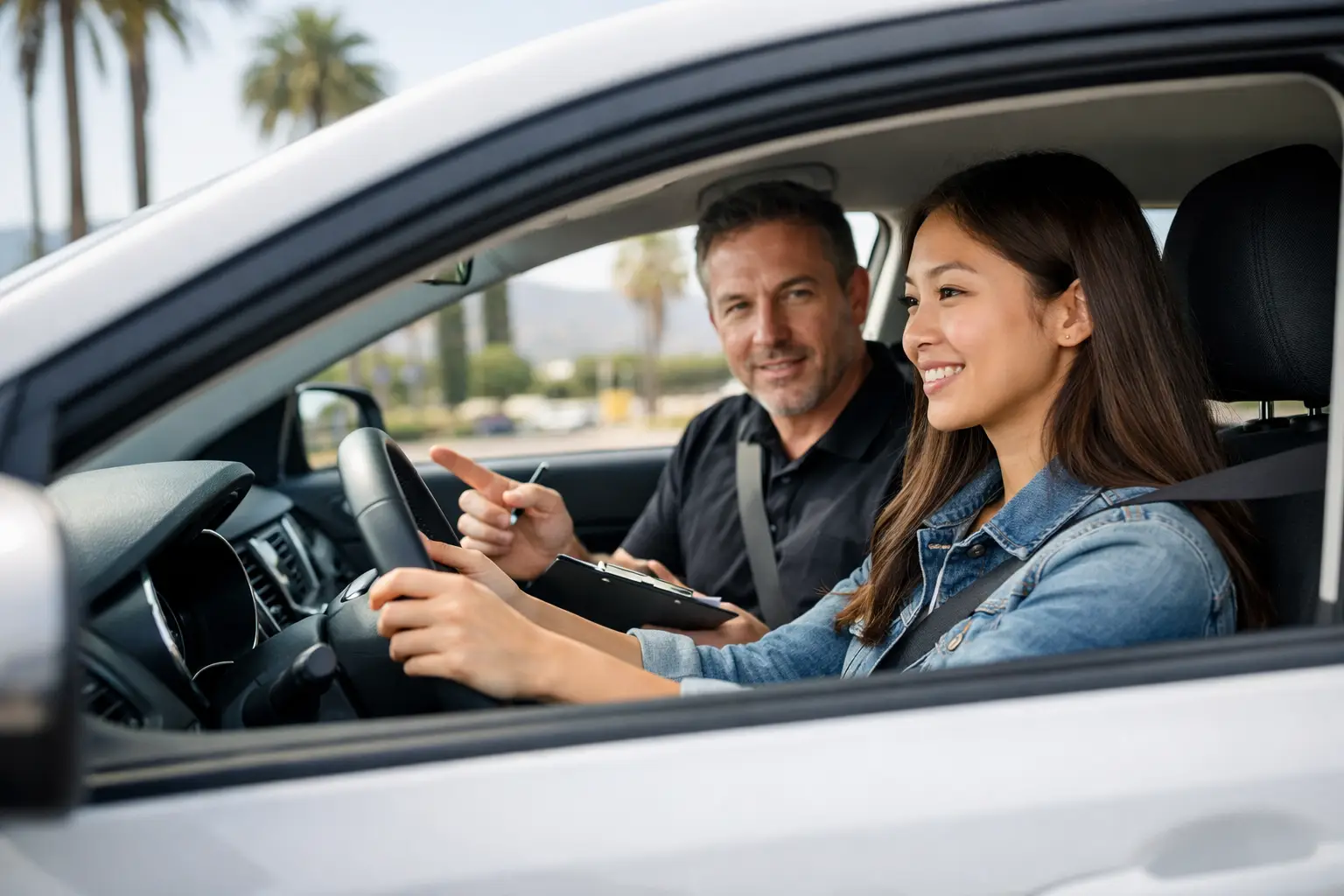
A teen has a permit, a parent has a busy schedule, and neither wants the first practice drive to happen during rush-hour traffic on Hawthorne Boulevard. That is where professional instruction can make a real difference. If you are wondering how private driving lessons work, the short answer is that a licensed instructor teaches one student at a time, building skills in a planned order and at a pace that fits the driver.
Private lessons are not simply supervised time behind the wheel. They are structured coaching sessions that help a new, returning, or nervous driver make safer decisions before those decisions are needed in traffic. For families, they also create a clearer path from permit to DMV road test without placing all the teaching pressure on a parent or guardian.
How Private Driving Lessons Work From the First Booking
Most private driving lesson programs begin with a quick look at the student's experience, permit status, goals, and comfort level. A complete beginner needs a different first lesson than an adult who drove years ago, or a teen who has practiced parking but is anxious about lane changes.
For a teen in California, the student must generally have a valid instruction permit before beginning behind-the-wheel training. A professional instructor can then provide the required in-car instruction while helping the student prepare for the additional supervised practice they will complete with a parent, guardian, or other qualified adult.
Lessons are scheduled individually or purchased as part of a package. Many schools offer pickup and drop-off for teen students within their service area, which can make lessons easier to fit around school, work, and family commitments. The instructor typically meets the student in a dual-control training vehicle, reviews the plan for the day, and begins in an area appropriate for the driver's current skill level.
A first-time driver may start on quiet residential streets or low-traffic areas. Someone with more experience may begin by reviewing basic control, then move quickly into busier intersections, multilane roads, and the kinds of situations that need extra practice before a DMV test.
What Happens During a Private Driving Lesson?
The instructor's job is to give clear direction while gradually asking the student to take on more responsibility. Early lessons usually focus on vehicle setup and control: adjusting mirrors and the seat, checking blind spots, smooth braking, steering, turns, speed management, and proper lane position.
As those basics become more consistent, instruction expands to real traffic situations. The student practices scanning ahead, recognizing hazards, judging gaps, responding to signs and signals, making safe lane changes, entering and exiting traffic, and handling common South Bay driving conditions. Depending on where the lesson takes place, that may include crowded commercial streets, school zones, hills, freeway entrances, or intersections with multiple turn lanes.
Private instruction is valuable because feedback happens in the moment. Rather than hearing only that a turn was too wide, the student can learn why the vehicle drifted, where to look before turning, and how to correct the habit on the next attempt. That kind of specific feedback turns a mistake into a repeatable skill.
The instructor may also cover maneuvers that commonly make students nervous, such as backing in a straight line, parking, three-point turns, curb approach, and pulling away from the curb safely. A lesson is not meant to rush through a checklist. It is meant to help the driver understand what safe performance feels like and practice it until it becomes more natural.
The Instructor Can Adjust the Pace
One student may be ready for heavier traffic after a few sessions. Another may need more time with turns, speed control, or visual scanning. Neither situation means the student is failing. Learning to drive involves physical coordination, judgment, and confidence, and those develop differently for every person.
A patient instructor can slow the pace when anxiety is getting in the way or increase the challenge when a student has outgrown empty parking lots. This is particularly helpful for adult beginners, returning drivers, and senior drivers who may want focused practice without the pressure of learning alongside someone else.
Private Lessons and Parent Practice Have Different Roles
Professional lessons and family practice work best together. The driving school provides organized instruction, safety oversight, and an objective view of what the student needs to improve. Practice with a parent or guardian gives the new driver the repetition needed to build experience in different conditions.
For California teens, professional behind-the-wheel instruction is only one part of licensing. They must also complete supervised practice hours, including required nighttime driving, before becoming eligible for a provisional license. Because DMV rules can change, families should confirm current permit, training, practice-hour, and testing requirements before scheduling the road test.
Parents do not need to become driving instructors overnight. After each private lesson, it helps to ask the student what they worked on and practice that same skill in a lower-pressure setting. If the lesson covered smooth stops and right turns, a short neighborhood drive with a parent can reinforce those habits. If an instructor identifies a recurring concern, such as late braking or incomplete blind-spot checks, the family can give that one item extra attention between lessons.
How Many Private Driving Lessons Will You Need?
It depends on the driver's experience, comfort level, and goals. California teen drivers need a minimum amount of professional behind-the-wheel training, but meeting the minimum does not automatically mean a student is ready for the DMV road test. Some students benefit from additional lessons to gain consistency in traffic or prepare for a test appointment.
An adult who already understands the rules of the road may need only a few refresher sessions. A complete beginner may choose a larger package so there is time to build skills progressively. Manual-transmission lessons also often require more repetition because the driver is learning clutch control, shifting, hill starts, and vehicle coordination at the same time.
A good program does not treat extra lessons as a requirement for everyone. It should explain what the student is doing well, what still needs work, and whether more professional training would provide value. The goal is road readiness, not simply filling a calendar.
What to Expect Before the DMV Road Test
DMV road-test preparation is usually more focused than a beginner lesson. The instructor evaluates whether the student can perform the skills expected during the exam while maintaining safe habits throughout the drive. That includes observation, signaling, speed control, turns, lane changes when appropriate, backing, parking-related skills, and following directions calmly.
A practice lesson near common test-area conditions can be useful, but the purpose is not to memorize a route. DMV examiners can change routes, and daily traffic conditions vary. The better preparation is learning how to approach any legal, safe driving situation: look well ahead, check mirrors and blind spots, make complete stops, choose an appropriate speed, and avoid rushing a decision.
Students should also understand that the test vehicle matters. Before the appointment, they need a valid permit or license as applicable, required documents, and a vehicle that is properly insured and in safe working condition. If a school offers drive-test support, confirm what is included, where the vehicle will be available, and what the student must bring.
Choosing a Private Driving School
The lowest price is not always the best measure of value. Look for a licensed school with qualified instructors, training vehicles designed for instruction, clear scheduling policies, and a lesson plan that can adapt to the student. For parents, pickup and drop-off options and straightforward communication can be just as important as the number of hours in a package.
Experience in local driving conditions matters, too. South Bay Driving School has served local families since 1992, helping students build practical skills for California roads rather than practicing only the easiest maneuvers. Whether a lesson starts in Torrance, Redondo Beach, Gardena, or another nearby community, the best instruction matches the route and level of traffic to the student's readiness.
Private lessons work best when the driver arrives prepared to learn, ask questions, and practice between sessions. A calm, consistent approach can turn the permit stage from a stressful family milestone into the beginning of safe driving habits that last well beyond the DMV test.