
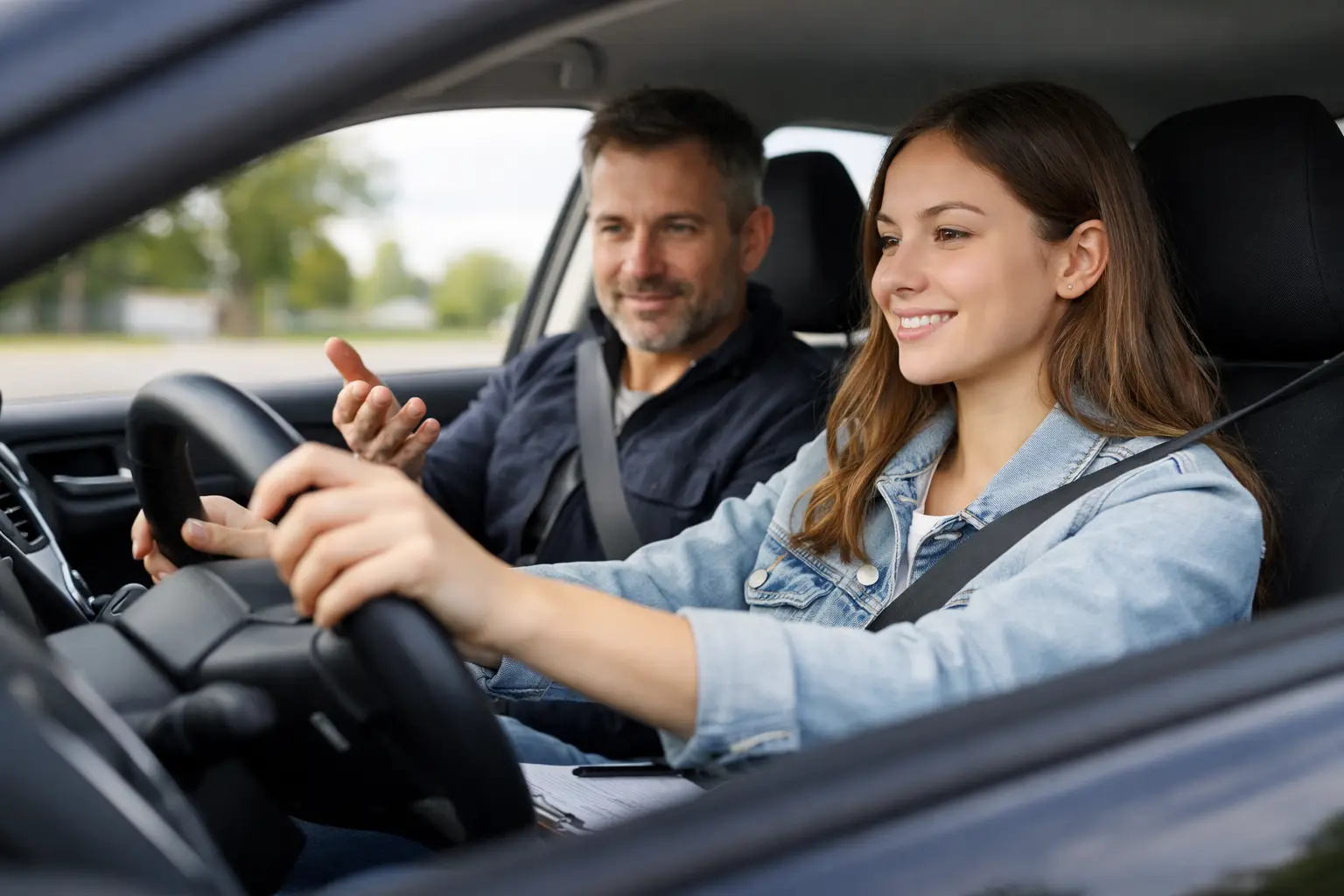
The first few minutes in the driver’s seat can feel much bigger than they are. Your hands may be tight on the wheel, every parked car may seem close, and the thought of moving a vehicle may bring real nerves. This first driving lesson guide is here to make that moment more predictable. A professional first lesson is not about proving you already know how to drive. It is about beginning with safe, manageable steps.
For teens, adults starting later, and returning drivers, confidence grows from understanding what will happen next. With patient instruction and a pace that matches the learner, driving becomes a set of skills that can be practiced rather than a test of nerves.
Before Your First Driving Lesson
Come prepared, but do not feel pressure to study every driving maneuver in advance. Your instructor will explain the vehicle, demonstrate key habits, and give clear directions as you go. In California, you will need to bring your valid instruction permit before getting behind the wheel for a lesson. Wear comfortable shoes with thin, secure soles so you can feel the brake and accelerator clearly. Avoid sandals, heavy boots, or anything that could slip off.
It also helps to arrive rested, hydrated, and a few minutes early. If you are nervous, say so. Good instructors expect first-time drivers to have questions, and knowing your comfort level helps them choose an appropriate starting point. A learner who has never driven needs a different first lesson from someone who has practiced in an empty parking lot with a family member.
Parents can help by keeping the day low-pressure. Treat the lesson as the first stage of training, not a performance review. Ask your teen what they learned afterward, rather than immediately asking whether they were "good" at driving. That small difference keeps the focus on progress and safety.
What Happens During a First Driving Lesson?
Most first lessons begin before the car moves. Your instructor will help you adjust the seat, mirrors, steering wheel position, and head restraint. You will learn why a proper seating position matters: you should reach the pedals comfortably, maintain a slight bend in your arms, and have a clear view of the road and mirrors.
Next comes a basic introduction to the controls. You will identify the brake, accelerator, turn signals, windshield wipers, gear selector, parking brake, hazard lights, and dashboard indicators. In an automatic vehicle, new drivers often need time to understand how gently the accelerator responds and how much distance is needed to brake smoothly. That is normal.
Your instructor will usually choose a quiet, low-traffic area for the first driving practice. The goals are simple: starting and stopping smoothly, steering with control, looking ahead, making basic turns, and scanning for pedestrians, cyclists, parked cars, and intersections. You may practice pulling away from the curb, stopping at stop signs, and using turn signals correctly.
You are not expected to drive on a busy boulevard, merge onto a freeway, or parallel park on your first day. Those skills come later, once the basics feel more familiar. The safest training plan builds one skill on top of another.
Expect Coaching, Not Constant Correction
A calm instructor gives directions early enough for you to process them. Instead of hearing a rushed command at the last second, you should receive guidance such as, "At the next intersection, we will turn right. Check your mirrors, signal, and begin slowing gently."
There will also be moments when the instructor corrects your steering, braking, or observation. That does not mean you are failing. It means you are learning in real time. Professional training vehicles have an instructor brake for added safety, but the purpose is prevention, not alarm. Your instructor is there to manage risk while helping you develop independent judgment.
The First Driving Lesson Guide to Staying Calm
Nerves can make drivers grip the wheel too tightly, brake abruptly, or focus only on the car directly ahead. The best response is not to force yourself to "relax." Instead, give yourself one job at a time.
When you are preparing to move, focus on your seating position, mirrors, brake pressure, and the space ahead. When approaching an intersection, focus on slowing down, checking for traffic and pedestrians, and following the signs or signals. Breaking driving into small actions gives your brain something useful to do.
If you make a mistake, keep breathing and listen for the next instruction. A missed turn can be corrected. A rough stop can become smoother with practice. Even experienced drivers occasionally misjudge a turn or need to take another route. Safe driving is not perfection. It is staying aware, making responsible choices, and recovering calmly when something does not go as planned.
It can also help to limit distractions before the lesson. Put your phone away, avoid rushing from another activity, and do not bring along an audience. A private lesson gives beginning drivers room to concentrate without feeling watched by friends or family.
Skills to Practice Between Lessons
Behind-the-wheel lessons are most effective when learners have regular, supervised practice between appointments. California permit holders must follow the state’s supervised driving rules, and parents or guardians can play an important role in reinforcing what was taught professionally.
At first, practice in familiar areas with light traffic and wide streets. Repeat the basics: smooth starts, controlled stops, right and left turns, checking mirrors, using signals, and maintaining a steady lane position. Repetition matters because driving requires coordination. The goal is for safe habits to become more natural without becoming careless.
As skills improve, add new situations gradually. A driver who is comfortable on quiet neighborhood streets may be ready for busier intersections, lane changes, multi-lane roads, nighttime driving, or parking practice. The right next step depends on the learner. Moving too quickly can create anxiety, while staying only in empty streets for too long can delay useful progress.
Keep practice conversations specific. Instead of saying, "Pay more attention," try, "Before changing lanes, check your rearview mirror, side mirror, signal, and look over your shoulder." Specific feedback is easier to use on the next attempt.
Questions New Drivers and Parents Should Ask
Before beginning a lesson program, ask how instruction is paced for beginners and how progress is tracked from one lesson to the next. It is also reasonable to ask whether pickup and drop-off are available, what areas are used for early practice, and how the school prepares students for California DMV road-test requirements.
For South Bay families, local familiarity can be especially helpful. Traffic patterns in Torrance, Redondo Beach, Gardena, and nearby communities can vary widely by time of day, school zones, commercial areas, and busy intersections. A knowledgeable instructor can introduce real-world conditions at the right pace rather than sending a new driver into difficult traffic before they are ready.
A good program should also make room for the learner’s goals. A teen working toward a first license may need a structured path through education, practice, and DMV test preparation. An adult beginner may need additional time building basic vehicle control. A returning or senior driver may benefit most from a patient refresher focused on current habits, confidence, and decision-making.
What Progress Looks Like After Lesson One
After a first lesson, success is not measured by how many miles you drove. A successful lesson leaves you with a clearer understanding of the car, a few basic skills to practice, and less uncertainty about what comes next.
You may still feel nervous before the next lesson, and that is completely reasonable. Confidence does not arrive all at once. It builds when you notice that a stop is smoother than last time, a turn requires less thought, or you recognize a traffic situation and know what to do. Give yourself permission to learn gradually. Safe drivers are built through patient practice, thoughtful coaching, and the decision to keep showing up.