
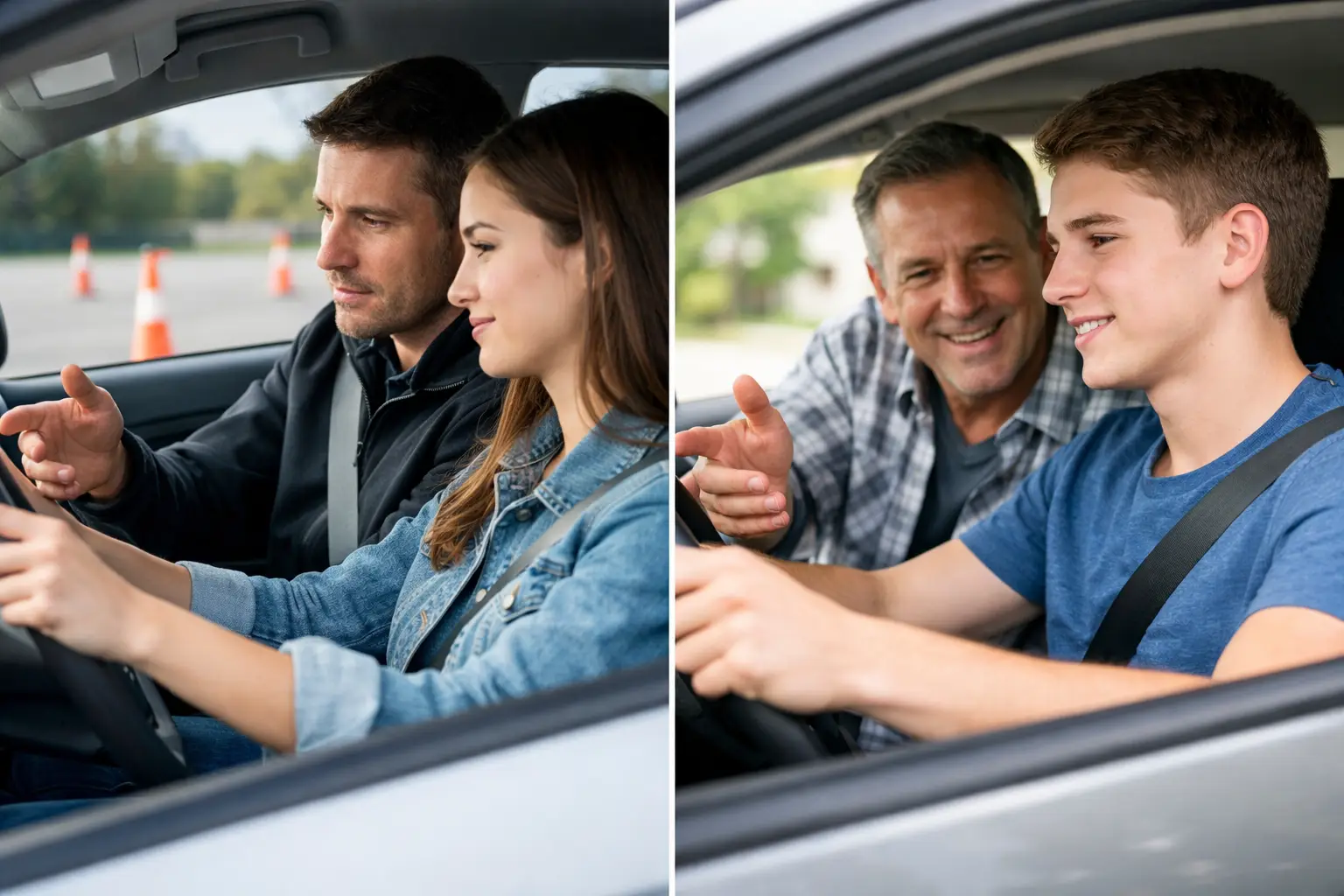
A teen may feel comfortable practicing turns in an empty neighborhood, then freeze when traffic builds near a busy Torrance intersection. That gap between basic vehicle control and real road readiness is where the driving school versus parent teaching decision matters most. Both can help a new driver learn, but they serve different purposes - and California families usually get the best results when they understand how the two approaches work together.
For a California teen under 18, professional instruction is not simply optional. The licensing process requires driver education, six hours of behind-the-wheel training with a licensed driving instructor, and substantial supervised practice with a parent, guardian, or other qualified adult. The practical question is not whether a family should choose one and ignore the other. It is how to use professional lessons and at-home practice to build safe, confident habits before the DMV road test.
Driving School Versus Parent Teaching: The Real Difference
A parent usually knows their teen better than anyone. They can offer frequent practice, encouragement after a difficult lesson, and time behind the wheel in the vehicle the teen may eventually drive. That familiarity can make early practice less intimidating, especially for a nervous beginner.
A professional instructor brings a different kind of value: a structured teaching plan, trained observation, and an objective perspective. Instructors are used to spotting the small habits that can become larger safety problems, such as rolling through stops, looking too briefly at mirrors, braking late, drifting during turns, or hesitating at an uncontrolled intersection.
Neither role replaces the other. Parents provide repetition and support. Professional lessons establish safe technique and give students a clear progression from low-traffic streets to lane changes, parking, freeway driving, and DMV-style maneuvers.
What a Professional Instructor Can Catch Early
Learning to drive involves more than remembering the rules. A student must scan far ahead, judge speed and distance, check blind spots, control the car smoothly, and make decisions under pressure. Those tasks can overwhelm a new driver when they are introduced too quickly.
A trained instructor breaks them into manageable steps. Early lessons may focus on steering, braking, right turns, and stop signs. As the student improves, instruction can move to busier streets, left turns across traffic, lane changes, backing, parking, and defensive driving strategies. This paced approach helps students understand not only what to do, but why a particular choice is safer.
Professional instruction also creates useful distance between the student and the person teaching them. A parent may understandably react strongly when their child makes a mistake. Even well-meaning corrections can feel stressful in the moment. An instructor is calm, direct, and focused on the next decision. For many teens, adults returning to driving, and seniors seeking a refresher, that neutral coaching reduces anxiety and makes it easier to learn from errors.
A driving school vehicle adds another layer of safety during lessons. It is equipped for instruction, and the instructor can intervene when necessary. That allows students to practice challenging situations with a trained professional beside them rather than asking a parent to manage every risk alone.
Local driving conditions are part of the lesson
South Bay learners need more than a generic checklist of skills. They may encounter dense traffic, multi-lane roads, changing speed limits, pedestrians near shopping areas, coastal glare, freeway entrances, and busy intersections. A local instructor can introduce those conditions at the student’s pace and help them develop dependable routines for handling them.
That preparation is particularly valuable before the DMV road test, but the larger goal is everyday safety after the license is issued.
Where Parent Teaching Makes the Biggest Difference
The six professional hours required for a California minor are a foundation, not enough time by themselves to create an experienced driver. California also requires at least 50 hours of supervised driving practice, including 10 hours at night, before a teen can take the driving test. Consistent parent-guided practice is how those hours become meaningful experience.
Parents can reinforce what the instructor has taught by practicing one skill at a time. After a lesson on lane changes, for example, a teen may benefit from repeating the instructor’s mirror-signal-blind-spot routine on familiar roads. After a parking lesson, a quiet parking lot can provide a low-pressure place to repeat the steps until steering and vehicle placement feel natural.
The key is to avoid turning every drive into a test. A new driver needs specific feedback, then time to apply it. Comments such as “check the crosswalk before your turn” or “start slowing earlier next time” are more useful than a stream of corrections while the car is moving. If a practice drive becomes tense, it is often better to pull over safely, reset, and discuss one or two priorities.
Parents are also in the best position to model the habits they want their teen to copy. Full stops, phone-free driving, appropriate following distance, calm responses to other drivers, and consistent seat belt use are lessons a student sees every time they ride in the car.
Cost, Convenience, and the Value of Structure
It is understandable for families to weigh the cost of driving lessons against teaching at home. Parent practice has no separate lesson fee, and it can fit around school, work, and family schedules. For a student who already has a calm, experienced supervising driver and access to a suitable vehicle, it is an essential and cost-effective part of the learning process.
However, relying entirely on a parent can have hidden costs. A family may spend hours practicing without a clear sequence, miss a skill that needs attention, or delay scheduling the DMV test because the student still lacks confidence. A parent may also not know what the examiner expects during a road test or which mistakes can cause an automatic failure.
Professional lessons offer structure and a measurable starting point. An instructor can identify whether a student needs more work on observation, speed control, parking, turns, or decision-making before test day. For families with demanding schedules, private lessons with pickup and drop-off can also make it easier to maintain momentum rather than letting weeks pass between practice sessions.
South Bay Driving School has worked with local families for more than 35 years, and that experience supports a simple goal: help each student progress at a safe pace without treating every learner the same. Some students need extra time to become comfortable with traffic. Others are ready for DMV road-test preparation but need help refining a few habits.
When One Approach May Need More Support
Some students will do well with a few professional lessons plus regular family practice. Others benefit from additional instruction. More professional support is often worthwhile when a student is highly anxious, struggles to process several directions at once, has had a long gap in practice, or keeps repeating the same mistake despite family coaching.
It can also help when the parent and student are stuck in a frustrating pattern. If every drive ends in an argument, more time in the car together may not solve the issue. A patient instructor can assess the student’s current skills, rebuild confidence, and give the family a shared plan for home practice.
Adult beginners, returning drivers, and seniors may face a different version of the same decision. They may not have a parent available to teach them, or they may want to refresh skills without feeling judged by a family member. Professional instruction provides focused practice for these situations, whether the need is basic vehicle control, freeway confidence, parking, or manual-transmission training.
A Better Plan Than Choosing Sides
The strongest learning plan is usually coordinated. Begin with driver education and professional behind-the-wheel lessons to establish correct fundamentals. Use supervised practice to repeat those skills in a range of conditions. Then return to professional instruction when the student is ready for more advanced driving, needs an objective evaluation, or wants focused DMV road-test preparation.
Parents can make this partnership work by asking the student what they practiced in each lesson and carrying that skill into the next home drive. Keep a simple practice log, including daytime and nighttime hours, routes driven, and areas that still feel challenging. That record helps prevent last-minute surprises when the permit period is ending.
A driver’s license should not be the moment learning stops. The best result of professional guidance and patient family practice is a new driver who can recognize risk, stay calm, and make safe choices when no instructor or parent is in the passenger seat.