
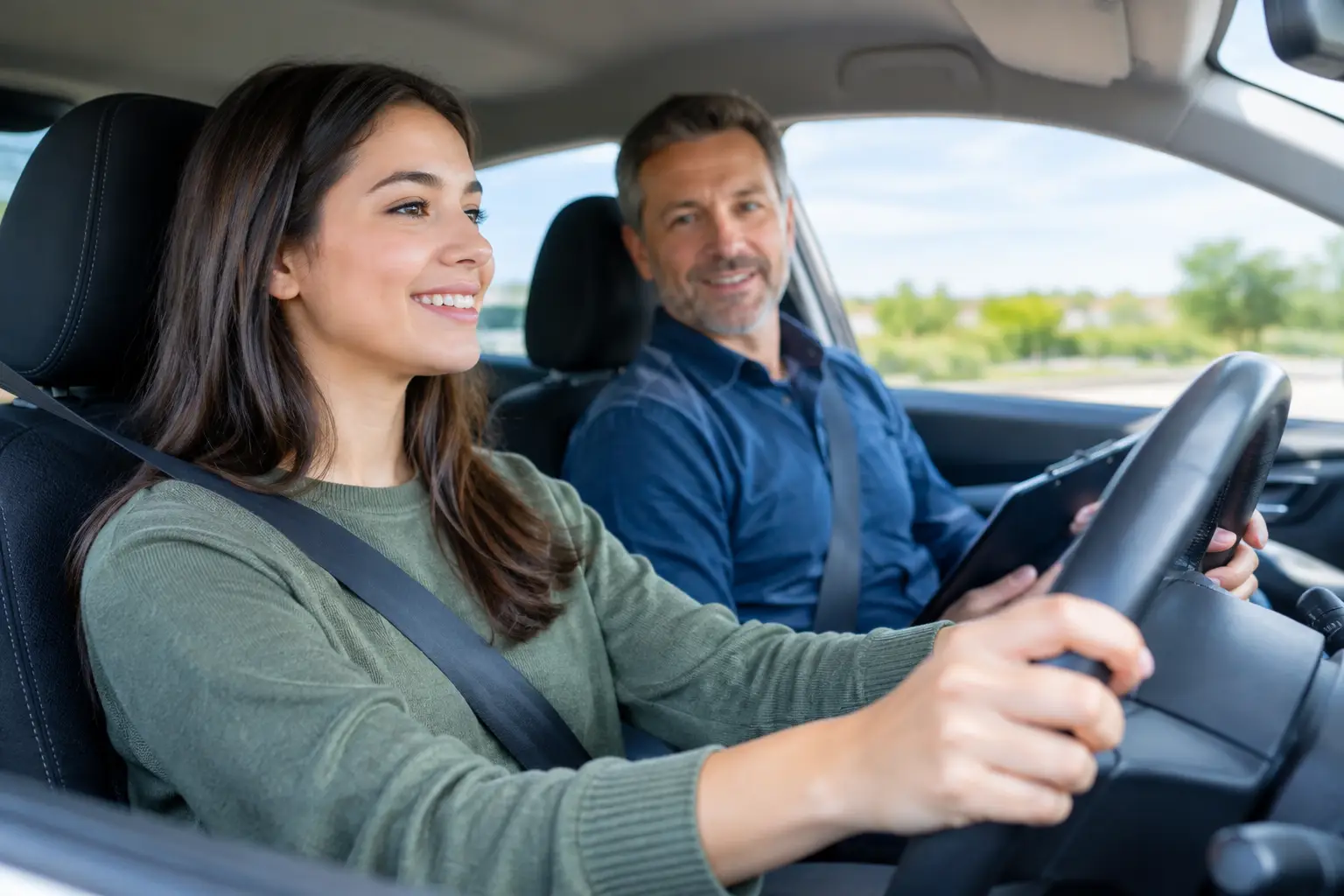
A first driving lesson is not supposed to feel like a DMV road test. For many teens, adults, and returning drivers, the right driving school expectations begin with a calm instructor, a clear plan, and enough time to learn without feeling rushed. Parents should expect the same: practical communication, safe instruction, and visible progress that goes beyond simply checking off required hours.
Learning to drive in the South Bay means preparing for busy intersections, neighborhood streets, parking lots, freeway entrances, pedestrians, cyclists, and changing traffic conditions. Good instruction should help a student handle those situations gradually, at a pace that supports confidence and sound judgment.
Driving School Expectations That Matter Most
A professional driving school should provide structure, but not a one-size-fits-all experience. Every student starts somewhere different. One teen may already be comfortable with basic steering and braking after supervised practice at home. Another may be nervous even sitting behind the wheel. An adult learner may understand traffic laws but need time to build vehicle control. A returning senior driver may want a patient refresher focused on current driving habits and confidence.
The lesson plan should reflect those differences. Early lessons commonly focus on seating position, mirror use, smooth acceleration and braking, steering control, scanning, lane position, and basic turns. As the student develops consistency, instruction should move toward more complex skills such as lane changes, unprotected turns, parking, freeway driving, and independent decision-making.
Progress should be based on readiness, not pressure. A student who needs another lesson on turns, speed control, or observation should receive that practice before moving on to more demanding traffic situations. Safe drivers are built through repetition and thoughtful coaching, not by rushing to the next maneuver.
Expect a Safe, Patient Learning Environment
Nervousness is common, especially during the first few lessons. A qualified instructor should recognize that anxiety affects how a student processes directions. Calling out too many instructions at once can make a new driver more tense. Calm, specific guidance gives the student time to understand what is happening and respond safely.
Students should expect their instructor to explain the reason behind a correction. For example, rather than only saying, “Slow down,” a helpful instructor may explain that the vehicle is approaching an intersection too quickly for the available sight distance. That connection helps the student develop judgment instead of memorizing commands.
Safety also includes using a properly equipped training vehicle and keeping the lesson appropriate for the student’s ability. A beginning driver should not be sent immediately into heavy freeway traffic just to “get used to it.” At the same time, lessons should not remain only in empty parking lots after the student is ready for more. The goal is controlled, steady progress.
Mistakes Are Part of the Lesson
A student should expect to make mistakes. Stopping too hard, turning wide, hesitating at an intersection, or missing a mirror check are common learning moments. What matters is how those mistakes are handled.
Constructive instruction identifies the issue, explains the safer choice, and gives the student an opportunity to practice it again. Embarrassment and criticism do not create better drivers. Clear feedback, repeated practice, and a patient instructor do.
Driver Education and Behind-the-Wheel Training Serve Different Purposes
Families sometimes assume that online driver education and behind-the-wheel lessons cover the same ground. They work best together, but they have different roles.
Driver education teaches the rules, signs, risks, and responsibilities that support legal and safe driving. It helps new drivers understand topics such as right-of-way, defensive driving, distracted driving, sharing the road, and California licensing requirements. Completing driver education is an important milestone, but knowledge alone does not create the physical and mental habits needed on the road.
Behind-the-wheel training applies that knowledge in real time. The student learns how far in advance to scan, when to begin braking, how to judge space around the vehicle, and how to remain composed when traffic does something unexpected. Professional lessons also give students a chance to receive feedback that family practice may not always provide.
Home practice remains valuable. A driving school cannot replace the repetition gained through supervised practice with a parent or guardian. The strongest preparation usually combines professional coaching with frequent, low-pressure practice between lessons. Students improve faster when they can repeat recently learned skills while the instructor’s feedback is still fresh.
What to Expect From DMV Road-Test Preparation
DMV test preparation should not be treated as a shortcut or a guarantee. No responsible school can promise that every student will pass on the first attempt, because road tests depend on individual performance, preparation, and conditions on test day.
What a school can provide is focused preparation. As the DMV test approaches, students should expect practice with the skills commonly evaluated during a road test: vehicle safety checks, controlled starts and stops, intersections, turns, lane changes, backing, parking, speed management, observation, and appropriate response to traffic signs and signals.
A good instructor will also help identify weak areas honestly. If a student is still inconsistent with lane changes or tends to stop past the limit line, additional practice may be the better choice. That may feel disappointing when a test date is close, but it is more useful than offering false reassurance.
For South Bay students, local experience can be especially helpful. Torrance and nearby communities present a mix of residential streets, busy commercial corridors, school zones, and multi-lane traffic. Practicing in realistic local conditions helps students become adaptable rather than comfortable only on a familiar route.
Communication Should Include Parents and Adult Students
For teen drivers, parents and guardians should expect reasonable communication about lesson progress and recommended next steps. They do not need a report on every small correction, but they should understand whether the student is building skills as expected, what needs more practice, and how to support safe driving at home.
Adult students should receive that same clarity directly. Whether someone is learning for the first time, returning after years away from driving, or working on manual-transmission skills, the instructor should outline the learning goals and adjust them when needed.
Scheduling is also part of the experience. Lessons should fit around school, work, and family responsibilities when possible, with a straightforward process for booking and planning ahead. For teens, pickup and drop-off convenience can make professional instruction easier to manage, especially for busy South Bay families.
Be Realistic About Time, Cost, and Confidence
Driving schools can provide expert guidance, but they cannot make every student equally ready after the same number of lessons. Some learners need only targeted help before the DMV road test. Others benefit from a longer plan that begins with basic vehicle control and builds over time. This is not a sign of failure. It is a reflection of different experience levels, comfort levels, and opportunities for practice.
When comparing packages or lesson options, consider what is included and what the student actually needs. A lower initial price is not always the best value if it leaves a nervous beginner without enough practice or test preparation. On the other hand, a student with solid supervised experience may need fewer professional lessons focused on specific skills.
Confidence is also not the same as readiness. A student may feel confident driving on quiet streets but still need work with traffic flow, observation, or defensive decision-making. The best kind of confidence comes from knowing how to assess a situation, make a safe choice, and recover calmly when conditions change.
A driving school should leave students with more than a completed requirement or a scheduled DMV appointment. It should give them practical habits they can use long after the first license is issued: look ahead, leave space, communicate with other road users, manage speed, and never let pressure make the next decision for them.