
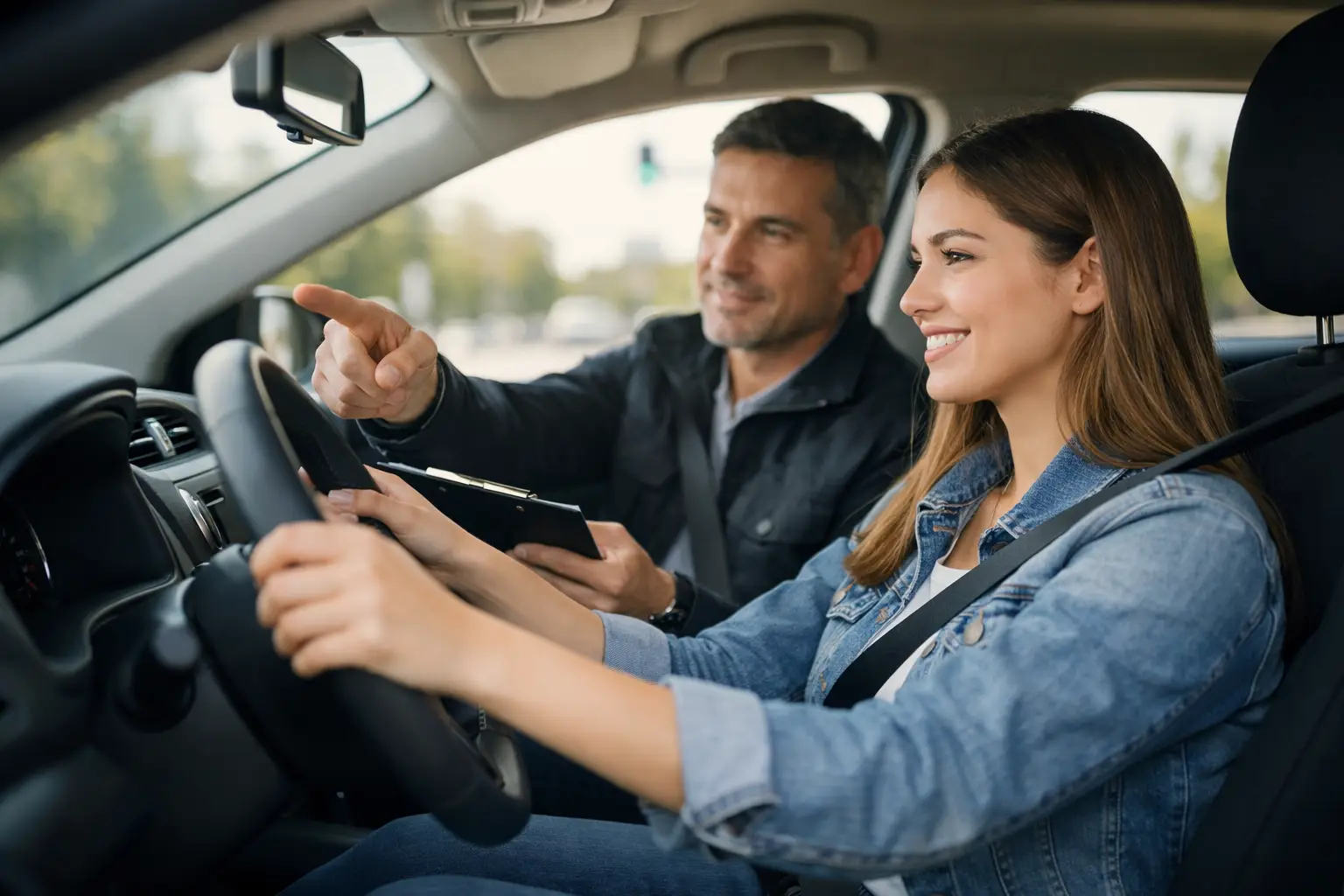
A learner can memorize the steps for a turn and still feel their hands tighten at a busy Torrance intersection. That is where quality driving lessons make the difference. They turn rules on a page into calm, repeatable decisions behind the wheel - from checking mirrors before a lane change to judging the speed of approaching traffic.
For teens, adults starting later in life, returning drivers, and seniors, the goal is bigger than passing a test. The goal is to build habits that hold up when traffic is moving quickly, another driver is impatient, or an unfamiliar situation requires a clear decision.
What Good Driving Lessons Actually Teach
Behind-the-wheel instruction should begin at the learner’s current comfort level, not at a predetermined pace. A first-time driver may need time getting familiar with steering, braking pressure, mirrors, and the vehicle’s controls before entering heavier traffic. A returning driver may already know those basics but need support rebuilding confidence after years away from driving.
A patient instructor observes the details that are easy to miss during casual practice. Is the student looking far enough ahead? Do they brake gradually or wait until the last moment? Are they checking mirrors consistently, signaling early, and leaving enough space around the vehicle? These patterns shape safe driving far more than a single perfect parking attempt.
Lessons should also connect each skill to a real purpose. A proper visual scan helps a driver spot a pedestrian near a crosswalk or a car preparing to pull out. Smooth braking gives the driver behind more time to react. A complete stop is not merely a DMV requirement; it gives the driver a moment to assess the intersection.
Vehicle Control Comes Before Complex Traffic
New drivers often want to move quickly into the parts that feel like “real driving.” But vehicle control deserves focused practice. Steering through turns, maintaining a steady lane position, accelerating smoothly, and stopping with control create the foundation for every later skill.
Once those basics become more natural, lessons can expand to residential streets, multilane roads, busy intersections, parking lots, freeway entrances, and other situations appropriate to the learner’s readiness. There is a trade-off here: exposure builds experience, but pushing a nervous student into demanding traffic too soon can make it harder to learn. The right pace challenges the student without overwhelming them.
A Clear Path From Permit to California DMV Test
For many California families, learning to drive involves several moving pieces: driver education, the instruction permit, required behind-the-wheel training, supervised practice, and preparation for the DMV road test. A structured plan keeps those steps from becoming a last-minute scramble.
Online driver education can help teens complete the knowledge portion on a schedule that works for school and family responsibilities. Behind-the-wheel sessions then give the student a chance to apply those concepts with direct coaching. Practice with a parent or guardian remains valuable between lessons because repetition is how new habits settle in.
Professional instruction and family practice serve different purposes. An instructor provides a trained, neutral perspective and can introduce skills in a logical order. A parent provides familiarity, additional seat time, and insight into the routes the student may drive regularly. Students benefit most when both approaches reinforce the same safety basics: full stops, steady scanning, safe following distance, consistent signaling, and attention to changing road conditions.
DMV Preparation Should Feel Like Practice, Not Pressure
A DMV road test can feel high stakes, especially for a teen who has waited months for an appointment. Test preparation is most useful when it identifies specific skills to improve rather than treating the lesson as a quick rehearsal of memorized moves.
A strong road-test preparation session may focus on observations, right and left turns, lane changes, backing, parking, speed control, and the ability to follow directions while staying aware of the road. The student should understand why an examiner watches these behaviors. Safe driving requires both correct actions and clear awareness of the environment around the car.
It also helps to practice managing normal test-day nerves. Taking a breath before starting, listening carefully to instructions, and recovering calmly from a small mistake can prevent anxiety from becoming a larger problem. One imperfect moment does not mean a driver should rush, freeze, or abandon safe habits.
Choosing Lessons for the Driver You Are Now
Not every learner needs the same program. A teen working toward a first license usually needs a coordinated plan that includes education, required training, and plenty of supervised practice. An adult beginner may want private lessons that start with the basics and allow more time for questions. Someone returning after an accident, illness, a long break, or a move to a busier area may benefit from a confidence-focused refresher.
Senior drivers may want patient coaching on current traffic situations, parking, lane changes, or freeway driving without being treated as though they are starting from zero. Manual-transmission students need a different kind of repetition: coordinating the clutch, shifting smoothly, starting on a hill, and paying attention to traffic while operating the vehicle. These are distinct needs, and the lesson plan should reflect them.
Before booking, consider what makes driving difficult right now. Is it general nervousness, freeway merging, parallel parking, traffic awareness, a looming DMV appointment, or lack of recent experience? Naming the concern helps an instructor build a useful first lesson instead of spending valuable time guessing.
What Parents Can Look For in a Driving School
Parents are not simply purchasing time in a training vehicle. They are choosing a teacher for one of their teen’s most serious responsibilities. Experience matters, but so does the way that experience is delivered.
Look for a school that explains its programs clearly, schedules lessons in a practical way, and treats questions with patience. Convenience can matter too. For busy South Bay families, pickup and drop-off for teen lessons may make it easier to fit training around school, sports, and work. Online education and straightforward scheduling can reduce the administrative stress that often accompanies the licensing process.
The instructor’s approach is equally important. A student should receive specific feedback, not vague criticism. “Check your mirror earlier before moving toward the lane line” gives the learner a behavior to practice. “Be more careful” does not. A supportive instructor can be direct about safety while keeping the student focused and willing to improve.
South Bay Driving School has served local learners since 1992, and that kind of long-term local experience can be valuable when students need instruction that reflects the mix of neighborhood streets, commercial corridors, and higher-speed routes they will encounter after licensing.
Making the Most of Each Lesson
Progress between sessions is not about trying to practice everything at once. It is better to choose one or two skills from the last lesson and work on them deliberately during supervised driving. If the instructor noted late braking, for example, the student can practice looking farther ahead and easing off the accelerator earlier. If lane changes feel stressful, the student can rehearse the observation routine until it becomes familiar.
Students should also speak up when something feels unclear. There is no benefit in pretending to understand a maneuver that still feels confusing. A good lesson creates room to ask why a decision was made, when to use a technique, and what to do when the road situation changes.
Confidence is not the absence of nerves. It is the ability to notice what is happening, use sound habits, and make a safe choice even when the drive is unfamiliar. With paced instruction and honest practice, that confidence grows one ordinary trip at a time.