
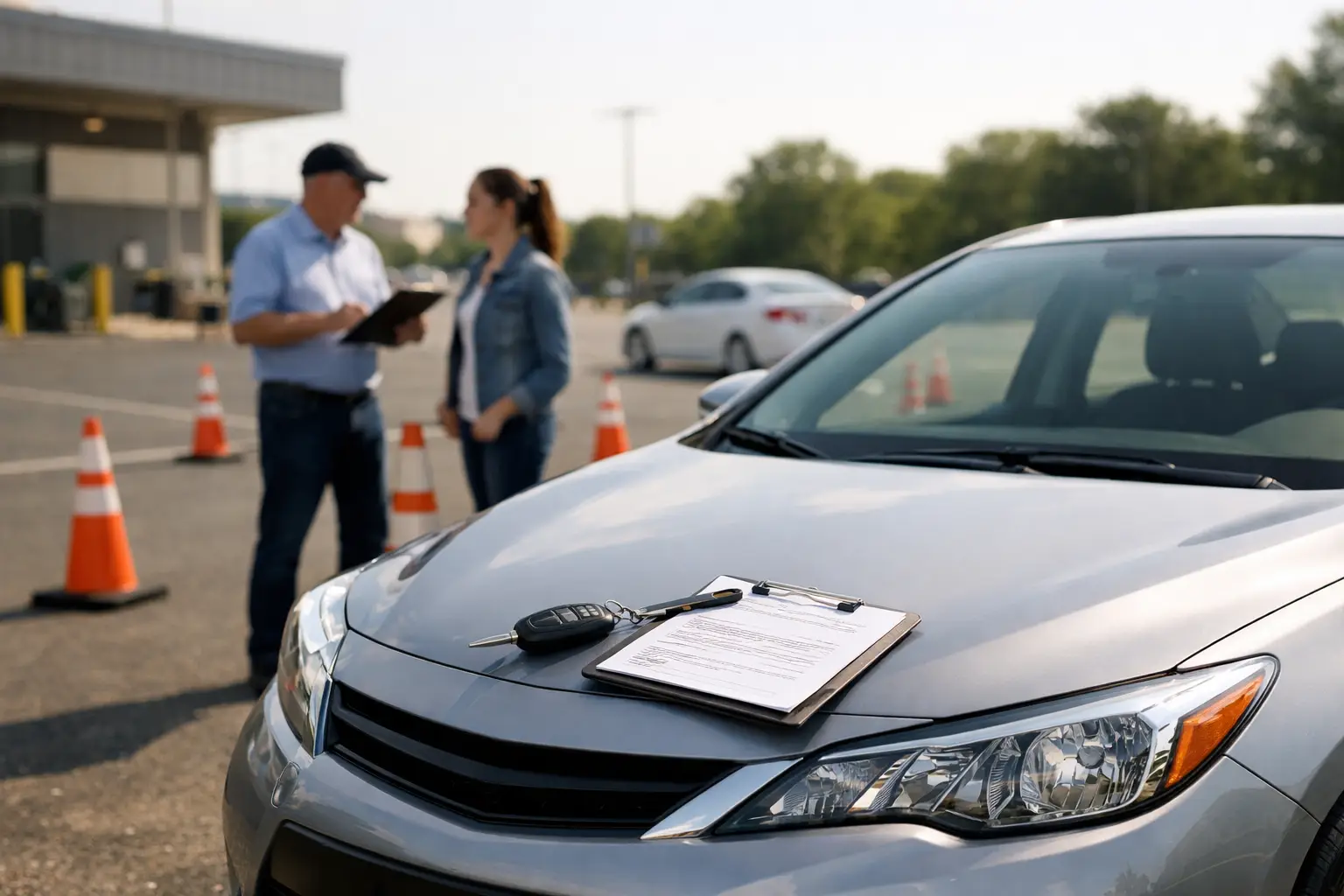
A DMV road test car rental can sound like an easy answer when the family car is unavailable, too large to feel comfortable, or not in test-ready condition. But for a California permit holder, the rental itself is often the smallest part of the decision. The bigger questions are whether the rental company allows the vehicle to be used for a driving test, whether the required insurance and licensed supervision are in place, and whether the student has practiced enough in that exact car to drive safely under pressure.
For many first-time drivers, a familiar, properly equipped driving school vehicle is the less stressful choice. Still, a rental may work in certain situations if you plan well and confirm every requirement before test day.
Can You Use a Rental Car for a California DMV Road Test?
Possibly, but do not assume every rental vehicle is approved for a DMV driving test. The California DMV expects every test vehicle to be safe, legally registered, insured, and in working order. It must also meet the DMV's equipment and visibility standards. An examiner can cancel or reschedule a test if the vehicle has a safety issue, missing documentation, or equipment that does not work as required.
A rental company has a separate set of rules. Its rental agreement may limit who can drive, set a minimum age, require named drivers, or restrict use for road tests. Many standard rental agencies will not rent directly to a teen permit holder, and a parent who rents the vehicle may need to be listed as the primary renter and remain responsible for the contract. Policies vary by location, vehicle type, and company, so get a clear answer from the specific rental office, not just a general online booking page.
The driver taking the test should also understand California permit restrictions. A permit holder cannot simply pick up a car and drive to the DMV alone. A properly licensed adult must handle the transportation and supervision required under California law, and the rental company must permit that person to drive the vehicle.
DMV Road Test Car Rental: What to Confirm First
Before reserving a car, call both the rental location and the DMV office where the test is scheduled. Confirming details early can prevent a costly last-minute change.
Ask the rental company whether its contract specifically permits use for a DMV road test. Ask who may drive the car, whether the permit holder can be added as an authorized driver, what insurance coverage is required, and whether there are age-related rules. If the answer is vague, request the policy in writing or consider another option. A vehicle that is available for a weekend trip is not automatically suitable for a licensing exam.
Then make sure the car will meet DMV expectations on the day of the appointment. Bring the current registration and proof of financial responsibility required for the vehicle. Check the headlights, brake lights, turn signals, horn, windshield wipers, mirrors, tires, seat belts, doors, and windows. A warning light, damaged tire, obstructed windshield, or inoperative signal can create a problem before the test begins.
It is also wise to inspect the car after pickup rather than waiting until the appointment. Rental fleets are maintained regularly, but a car can still have a low tire warning, a loose mirror adjustment, or an unfamiliar control layout. Give yourself time to address an issue or exchange the vehicle.
The Hidden Challenge: An Unfamiliar Car
A clean, late-model rental may feel reassuring, but unfamiliarity can work against a new driver. The student may need time to locate the headlight controls, adjust the mirrors, judge the braking response, understand the parking brake, and become comfortable with the size of the vehicle. Even small differences matter when someone is already nervous about checking blind spots, maintaining speed, and listening to examiner directions.
Practice in the exact vehicle before the appointment whenever possible. Start in a quiet area and adjust the seat, mirrors, steering wheel, and climate controls. Practice smooth starts and stops, right and left turns, lane changes, backing in a straight line, and parking. Make sure the student knows how to operate the defroster and windshield wipers without taking attention away from the road.
A compact sedan is often easier for a newer driver than a large SUV, truck, or oversized passenger van. That does not mean every student should choose the smallest car available. A tall driver may need more seat and pedal room, while a driver who has practiced consistently in a crossover may feel more natural in a similar vehicle. The right test car is one that is safe, easy to control, and familiar enough that the driver can focus on traffic decisions rather than the dashboard.
Rental Costs Can Add Up Quickly
The advertised daily price is only one part of a rental. Depending on the company and the renter's situation, the total may include a security deposit, insurance charges, an additional-driver fee, underage fees, fuel, mileage limits, or a fee for returning the car to a different location. If a DMV appointment is delayed or canceled, rental timing can become another expense.
For a family that already has an insured, test-ready car, using that vehicle is generally the most economical route. A rental can make sense when there is no available family vehicle or when the available car has a genuine safety, registration, or reliability concern. It is less appealing when it is being used as a substitute for practice.
That distinction matters. Renting a nicer car will not replace the repeatable skills that support a passing drive test: complete stops, steady steering, mirror checks, safe following distance, proper lane position, and calm responses to changing traffic conditions.
A Driving School Test Car May Be the Better Fit
DMV drive-test support from a driving school is different from a traditional car rental. The goal is not simply to provide a vehicle. It is to give the student a properly maintained, instructor-familiar car and a structured opportunity to prepare before the exam.
At South Bay Driving School, students can schedule DMV road-test preparation and drive-test support with an instructor who understands the concerns new and returning drivers commonly bring to the appointment. That may include a pre-test review of turns, lane changes, parking, observation habits, and vehicle setup, followed by transportation in an appropriate school vehicle when service is arranged.
For teens and families in Torrance and nearby South Bay communities, this approach can reduce several moving parts at once. Instead of coordinating a rental reservation, insurance questions, a licensed supervising driver, and a new vehicle, the student can focus on the skills that matter most. It also gives parents reassurance that the car used for preparation has been selected for driver training rather than simply for short-term transportation.
This option is not necessary for every driver. A student who has a reliable family car and has practiced consistently in it may be well positioned to test in that vehicle. But when the family car is unavailable, the student is uncomfortable in it, or the test date is approaching without enough focused practice, professional support can be a practical investment in safety and confidence.
Plan for Test Day, Not Just the Car
Whether you choose a rental, a family vehicle, or a driving school car, arrive early enough to settle in. Bring your permit and any DMV documents required for your appointment. Make sure the supervising driver has the appropriate license and that the vehicle documents are accessible. Avoid rushing through a vehicle check in the parking lot five minutes before the test.
The best vehicle choice is the one that lets the student demonstrate safe, practiced driving without unnecessary surprises. A calm driver in a familiar, well-maintained car has a much better foundation than a nervous driver trying to figure out an unfamiliar rental at the curb. Give the car decision the same thoughtful preparation you give the driving itself, and test day can feel like the next step in learning rather than a gamble.