
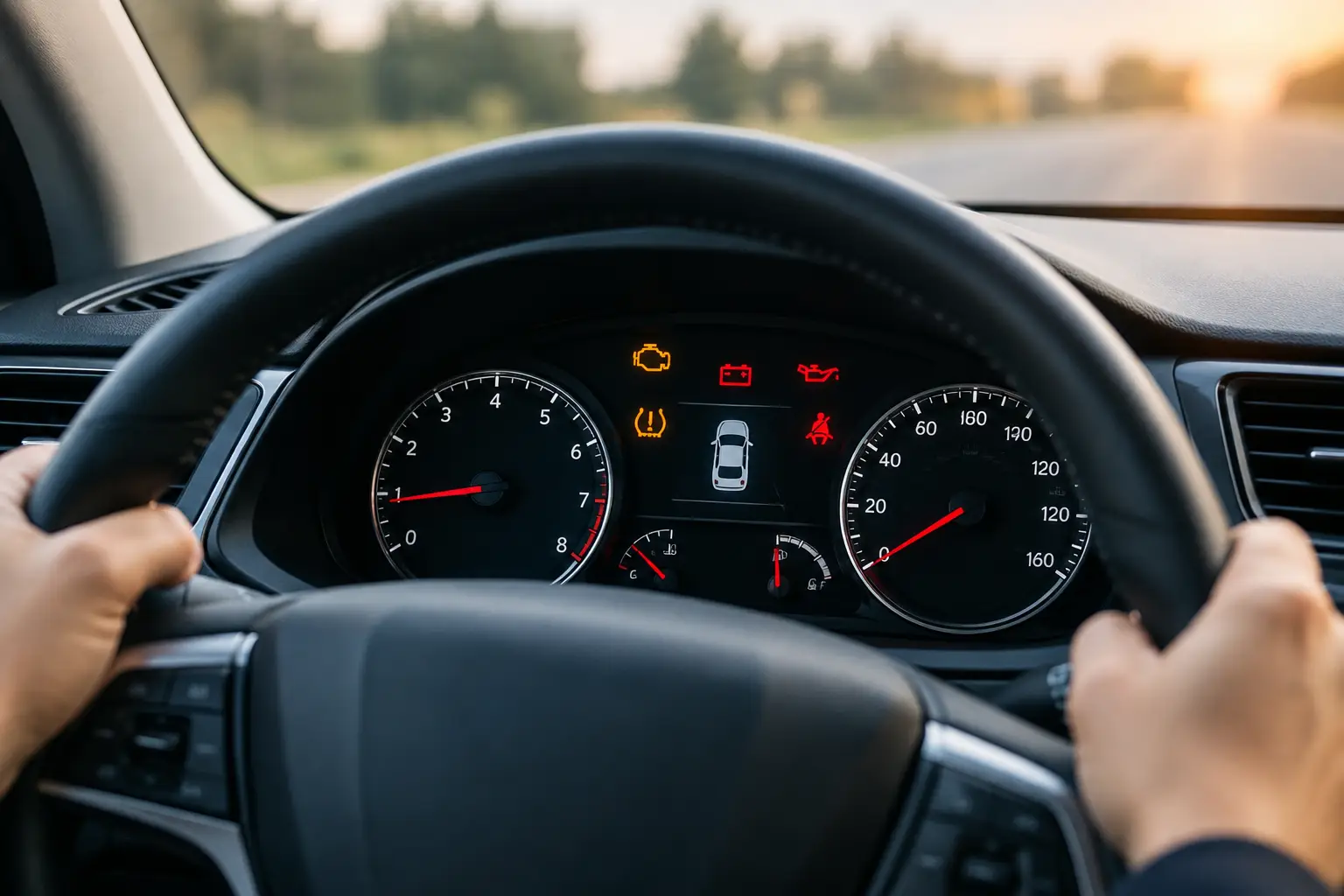
A warning light comes on just as you merge onto a busy street, and suddenly it is hard to think about anything else. Learning new driver dashboard warnings before that moment helps you respond calmly instead of guessing. The goal is not to memorize every symbol on every vehicle. It is to recognize what needs immediate action, what needs attention soon, and when it is safe to continue driving.
Dashboard symbols vary by make, model, and year, so the owner’s manual for the vehicle you drive is always the final reference. Still, the colors and the most common symbols follow patterns that every new driver should understand.
Start With the Color of the Warning Light
A dashboard light is a message, not a reason to panic. First notice its color, then consider how the vehicle feels. Is it steering normally? Is there smoke, a burning smell, a loss of power, or an unusual noise? Those clues matter as much as the icon itself.
Red usually means stop as soon as it is safe
A red light often signals a condition that could damage the vehicle or make it unsafe to drive. Find a safe place to pull over, rather than stopping suddenly in a travel lane. On a freeway, keep control of the vehicle, signal, and move toward a safe exit or shoulder only when it can be done safely.
Examples include low oil pressure, an overheating engine, a serious brake-system warning, and a red battery or charging warning in some vehicles. Once stopped, put the vehicle in park, set the parking brake, and assess the situation. If the engine temperature is high, do not open the radiator cap. Steam and hot coolant can cause serious burns.
Yellow or amber means pay attention soon
Yellow or amber lights generally mean the car needs service, inspection, or a driving adjustment. The vehicle may still be drivable, but that depends on the light and whether the car is handling normally.
For example, a steady check engine light may allow you to drive carefully to home, school, or a repair shop. A flashing check engine light is more urgent because it can indicate an engine misfire that may cause further damage. Reduce speed, avoid hard acceleration, and arrange help promptly.
Green, blue, and white lights are usually status indicators
These lights often show that a system is operating, such as headlights, high beams, turn signals, cruise control, or lane-assist features. They are not usually warnings, but they still deserve your attention. A blue high-beam indicator, for instance, is a reminder to lower your high beams when approaching or following another vehicle.
New Driver Dashboard Warnings to Recognize
You do not need to identify every symbol from memory on your first day behind the wheel. Start with the warnings most likely to affect safe driving and basic vehicle care.
Oil pressure warning
The oil pressure symbol often looks like a small oil can. If it comes on while the engine is running, pull over safely and turn off the engine as soon as possible. This does not simply mean the car is due for an oil change. It can mean the engine is not receiving the lubrication it needs, and continuing to drive may cause expensive engine damage.
Do not assume adding oil will solve the problem. A leak, failed oil pump, or other mechanical issue may be involved. Check the owner’s manual and seek qualified help.
Engine temperature warning
This symbol may look like a thermometer over wavy lines. It means the engine coolant temperature is too high. Turn off the air conditioning, pull over safely, and shut down the engine if the temperature continues to rise or the warning remains on.
Never pour cold water over a hot engine or remove a hot radiator cap. Let the vehicle cool completely before anyone checks coolant levels. If there is steam, a sweet smell, or visible fluid leaking, the vehicle should not be driven until it has been inspected.
Brake system and parking brake warnings
A red brake warning may appear when the parking brake is engaged. Before driving, confirm that the parking brake is fully released. If the light stays on after release, or it appears while driving with no obvious explanation, treat it seriously. It can indicate low brake fluid or a brake-system problem.
If the brake pedal feels soft, sinks toward the floor, or the car pulls sharply when braking, do not continue driving. A yellow ABS light is different: normal braking may still work, but the anti-lock feature may not. That distinction matters in hard braking, especially on wet pavement.
Battery or charging-system warning
The battery-shaped light does not necessarily mean the battery is dead. It often indicates that the charging system is not working properly. The car may continue running temporarily, but it can eventually stall once the battery loses its remaining charge.
Turn off unnecessary electrical items if practical, such as phone chargers or seat heaters, and head to a safe location or repair facility. If the vehicle loses power steering assistance, lights, or other essential functions, stop driving safely.
Tire pressure warning
The tire pressure monitoring system, or TPMS, symbol resembles a tire cross-section with an exclamation point. It may mean one or more tires are underinflated, which affects handling, braking, and fuel economy. It can also appear after a major temperature change.
Slow down and inspect the tires at a safe location. Look for a visibly low tire, a nail, or damage to the sidewall. Do not rely on appearance alone, since a tire can be low without looking flat. Check pressure with a reliable gauge when the tires are cold and use the pressure listed on the driver’s door placard, not the maximum pressure printed on the tire itself.
Airbag warning
An airbag or supplemental restraint system warning usually means part of the airbag system may not operate correctly in a crash. The vehicle may be drivable, but the issue should be inspected soon. Do not ignore it simply because the car seems to drive normally.
What to Do When a Warning Appears While Driving
The safest response is deliberate, not rushed. Practice this sequence until it feels routine:
- Keep your eyes on the road and maintain control of the steering wheel.
- Notice the warning color, any sounds or smells, and changes in how the vehicle responds.
- Ease off the accelerator and avoid sudden braking or sharp lane changes.
- Signal early and move to a safe location, such as a parking lot, a side street, or the next safe exit.
- Check the owner’s manual or contact a parent, trusted adult, roadside assistance provider, or mechanic before deciding whether to continue.
Hazard lights can help alert other drivers when you are moving unusually slowly or stopped in a safe location. They are not a substitute for signaling when you are changing lanes or turning.
Build Dashboard Awareness Before Your DMV Test
A good pre-drive routine gives new drivers more confidence and reduces distractions once the car is moving. Before leaving the curb, adjust your seat and mirrors, fasten your seat belt, verify that the parking brake is released, and look at the instrument panel. When the vehicle starts, many warning lights briefly illuminate as a system check and then turn off. A light that stays on is worth asking about before beginning a trip.
During behind-the-wheel lessons, dashboard awareness should be part of normal vehicle control, not something that takes your attention away from traffic. A quick glance at the speedometer and gauges is appropriate when conditions allow. Staring at the dashboard, changing settings while moving, or trying to research a warning at a red light creates a distraction when your attention should remain on the road.
For California learners preparing for a DMV drive test, make sure the training vehicle is safe and properly maintained before test day. A warning light related to brakes, tires, engine temperature, or other safety systems is not something to hope will disappear on the way to the appointment. Address it ahead of time.
Ask Questions Before a Small Issue Becomes a Roadside Problem
New drivers are not expected to diagnose a car, and trying to do so can create risk. Your responsibility is to notice the warning, make a safe driving decision, and ask for help when needed. During a lesson, a patient instructor can explain what the vehicle’s gauges and indicators mean while helping you keep your focus where it belongs.
South Bay Driving School teaches learners to build these habits alongside steering, braking, lane changes, and defensive driving. Knowing when to pull over, when to seek service, and when a light is simply an active vehicle feature is part of becoming a responsible driver.
The next time a dashboard symbol appears, take a breath, read the situation, and choose the safe response. That calm decision-making will serve you well long after you earn your license.