
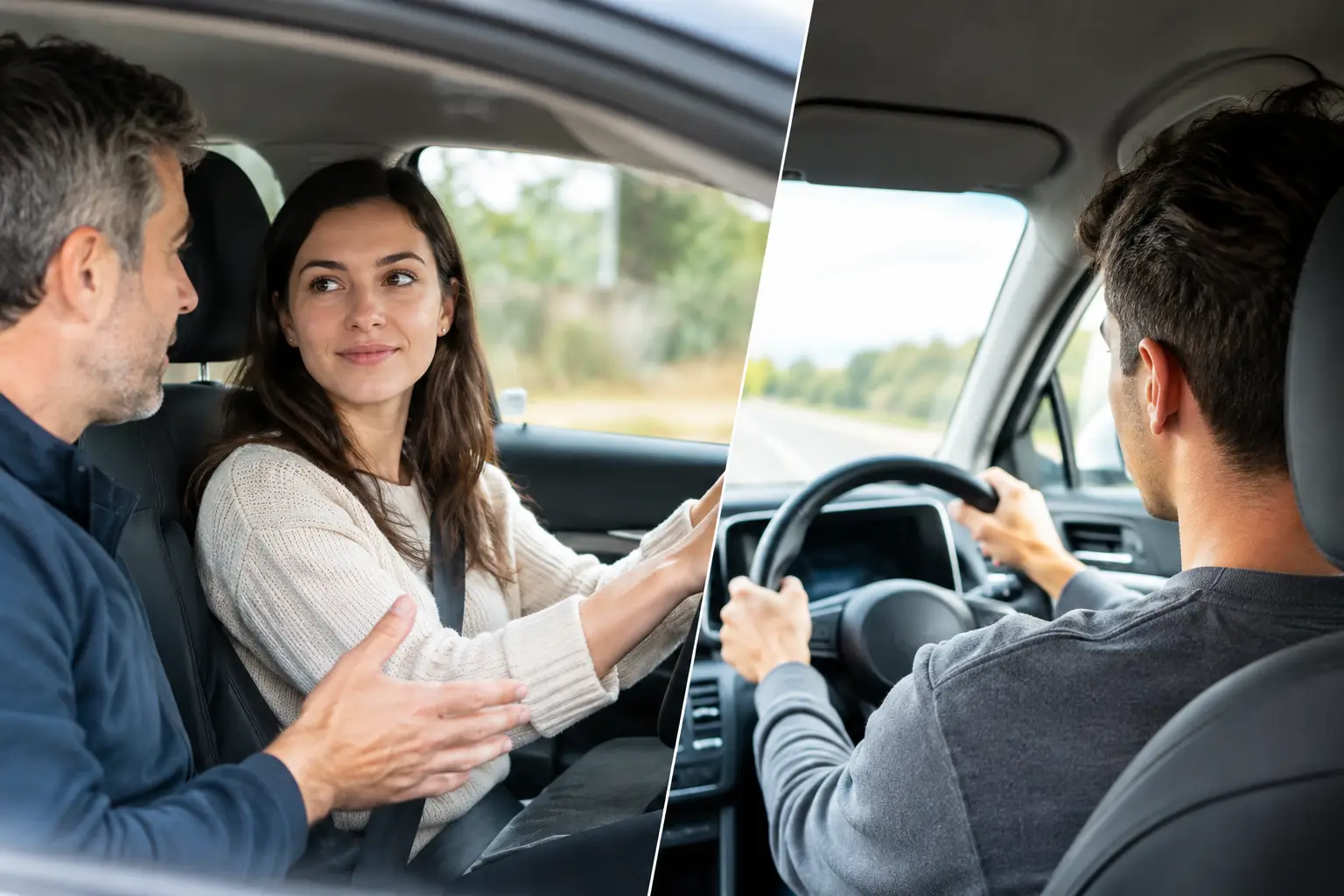
A driver can hold a license for years and still feel their hands tighten before a freeway on-ramp, an unprotected left turn, or a crowded parking lot. That is where the choice between refresher coaching versus self practice becomes practical, not theoretical. Both can help a returning driver feel more capable, but they do not solve the same problems. The right choice depends on what has changed, how much confidence has been lost, and whether anyone can identify the habits creating stress.
Refresher coaching versus self practice: the core difference
Self practice means building driving time independently, usually with a trusted licensed adult when required or by driving familiar routes after licensing. It is useful because repetition matters. The more often a driver checks mirrors, manages speed, scans intersections, and makes controlled stops in real traffic, the more natural those actions become.
Refresher coaching adds something practice alone cannot always provide: a trained observer. An instructor can spot a late mirror check, a rushed lane change, unnecessary braking, improper steering position, or a gap judgment that feels safe but is too close. Feedback is immediate and specific, so the driver has a chance to correct the habit before repeating it another 20 times.
Neither option is automatically better. A driver who already has sound fundamentals but needs more time on local streets may benefit most from regular practice. A driver who avoids freeway driving, has been away from the road for years, or keeps receiving conflicting advice may progress faster with a few focused professional lessons followed by independent repetition.
When self practice is enough
Self practice can be a strong next step when the driver understands the basics and can perform them consistently in lower-pressure settings. For a teen who has completed a lesson on turns, intersections, and lane changes, driving the same skills with a calm parent or guardian can turn instruction into dependable muscle memory. For an adult who recently returned to driving, short trips to familiar destinations may rebuild comfort without adding too much at once.
The key is to practice with a purpose. Driving around the block without a goal can feel productive while leaving the most difficult situations untouched. Instead, choose one skill for each drive: smooth braking, maintaining a safe following distance, scanning for pedestrians near crosswalks, parking between lines, or changing lanes with enough planning.
Start in conditions that match the driver’s current ability. A quiet residential street is a reasonable place to work on steering and right-of-way awareness. It is not the best setting to prepare for a busy South Bay boulevard, a freeway merge, or traffic near a school pickup line. Gradually adding traffic, unfamiliar routes, darkness, and different parking situations helps confidence become transferable.
Self practice works best with a supportive passenger. The person supervising should give directions early, use a calm voice, and avoid correcting every small detail while the car is moving. Last-second commands and anxious reactions can make a nervous driver focus on the passenger instead of the road. If a practice drive repeatedly ends in frustration, it may be time to bring in an instructor.
Where self practice can fall short
The biggest limitation of self practice is that familiar habits can go unchallenged. A parent may be an experienced driver but may not remember the step-by-step routines a new driver needs. Another adult might have strong opinions that conflict with California DMV expectations, leaving the learner unsure which approach to follow.
It can also be hard for family members to separate safety coaching from emotion. Parents and teens often want the same result, but the car is a stressful classroom. A teenager may interpret a parent’s urgent reminder as a lack of trust. A parent may become alarmed when a learner hesitates at an intersection. That tension can shorten practice sessions or lead families to avoid the driving situations the student needs most.
For returning adults and senior drivers, self practice may also encourage avoidance. It is easy to keep taking the same daylight route to the grocery store while continuing to avoid left turns across traffic, freeway entrances, parallel parking, or driving after dark. Comfort improves only up to the point where the driver is willing and able to practice.
What a refresher lesson provides
A refresher lesson should not feel like starting over. It is a focused assessment and coaching session built around the driver’s current needs. The instructor observes the driver’s vehicle control, visual scanning, decision-making, and response to traffic conditions. From there, the lesson can concentrate on the situations that matter most.
For one person, that may mean rebuilding smooth braking and proper turns after several years without driving. For another, it may mean freeway entry, lane changes, defensive spacing, or practice on routes that resemble a DMV road test. A senior driver may want patient feedback on managing busy intersections and maintaining awareness without feeling rushed. An adult beginner may need structure before independent practice can be useful at all.
Professional coaching is particularly valuable when the issue is not obvious to the driver. Someone may say, “I am nervous on the freeway,” but the cause may be late speed adjustment on entrance ramps, not checking blind spots early enough, or trying to merge without a clear plan. Once the specific cause is identified, the solution becomes more manageable.
At South Bay Driving School, individualized behind-the-wheel instruction is designed to meet drivers where they are, whether they are preparing for a California DMV test or returning to the road after time away. The goal is not to pressure a driver through difficult traffic before they are ready. It is to build skills in a paced way, then give the driver a clear plan for what to practice next.
Signs professional coaching is the safer choice
A refresher lesson is worth considering when a driver has had a collision, a close call, or multiple traffic citations and is unsure what needs to change. It can also help after a long break from driving, a move to an area with faster or more complex traffic, or a major change in confidence following illness or injury. In these cases, more driving time is useful, but feedback helps ensure that time is spent safely.
Coaching is also a sensible option before a DMV road test when a student has practiced but still feels inconsistent. A qualified instructor can identify whether the driver needs work on observation, speed control, parking, turns, lane position, or test-day routines. No lesson can guarantee a passing result, but a realistic assessment can prevent a student from arriving at the DMV with avoidable weak spots.
Consider professional help if any of these situations sound familiar: the driver freezes when traffic builds, family practice sessions become arguments, the driver avoids a necessary skill, or different supervisors give different instructions. These are not signs of failure. They are signs that a neutral, patient coach may make progress easier.
A practical approach: combine both
For most learners, the best answer is not refresher coaching or self practice. It is both, used in the right order. A lesson establishes a correct routine and gives the driver targeted feedback. Self practice then turns that routine into a habit through frequent, lower-pressure repetition. A follow-up lesson can check progress, introduce the next challenge, and correct anything that drifted off course.
For example, a driver who struggles with lane changes might first work with an instructor on mirror checks, signaling early, checking blind spots, selecting a safe gap, and making a smooth movement into the next lane. Between lessons, that driver can practice the same routine on familiar multi-lane streets. Once the routine feels controlled, the next coached session can apply it to faster traffic.
This approach respects both safety and budget. Instead of booking lessons for every minute of experience, families can use professional instruction for assessment and higher-risk skills, then use supervised practice to reinforce what was taught. Keep a simple record of what felt comfortable, what created stress, and what needs another session. It gives each practice drive a direction.
Build confidence from evidence, not pressure
Confidence behind the wheel should come from repeated proof that a driver can notice hazards, make sound decisions, and recover calmly when traffic does not go as planned. It does not come from being told to “just relax” or from forcing a driver into situations beyond their current skill level.
If practice is going well, keep expanding it gradually and follow current California licensing and supervision requirements. If the same concern keeps returning, a refresher lesson can provide the calm second set of eyes that breaks the pattern. The most helpful next step is the one that lets the driver leave each session safer, clearer, and more willing to get back behind the wheel.