
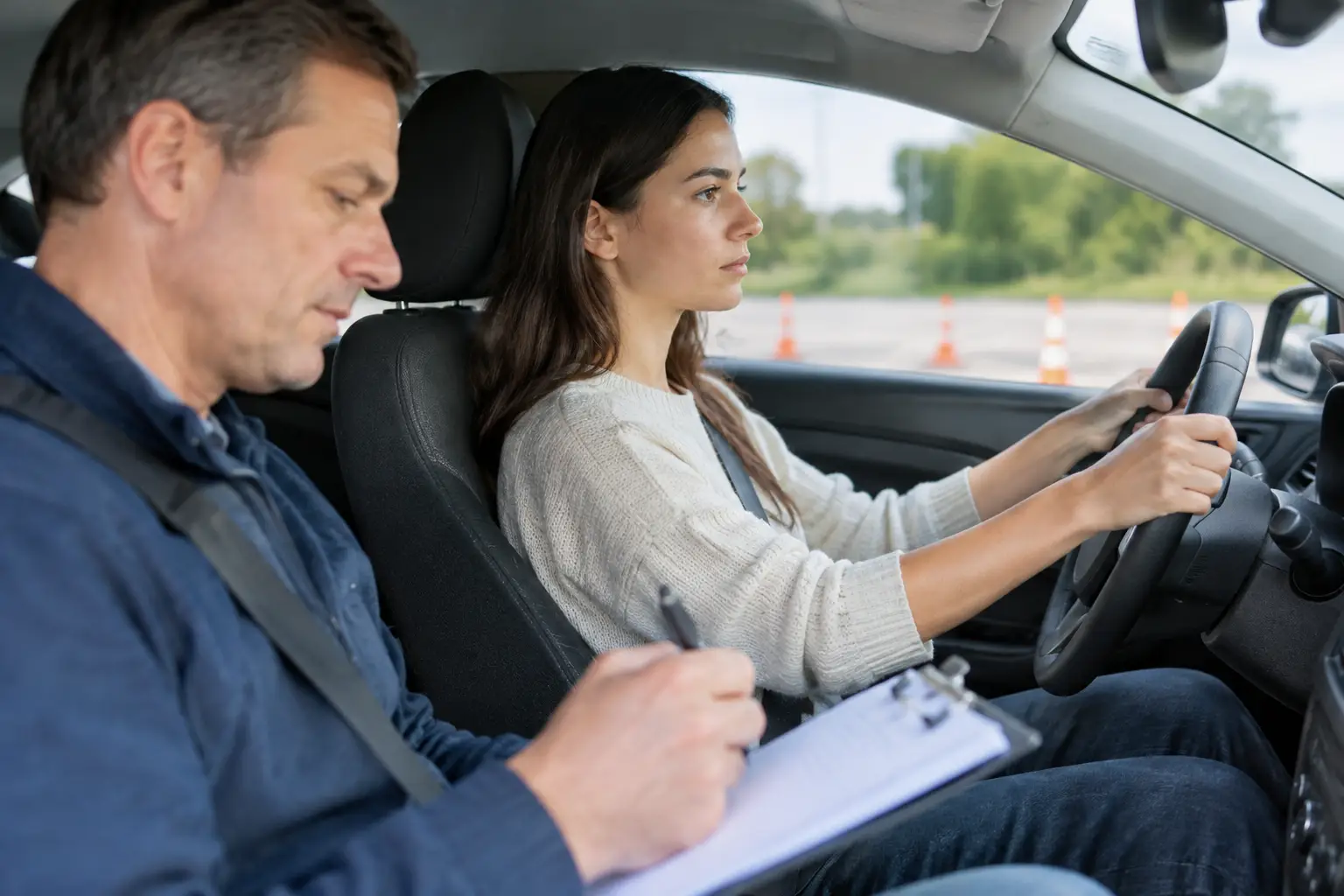
A student can make clean turns, park well in an empty lot, and still leave the DMV without a passing result. So, why do drivers fail road tests? Usually, it is not because they do not know how to move a car. It is because they have not yet made safe observation, judgment, and vehicle-control habits consistent enough to show under test-day pressure.
For teens, adults learning later in life, and returning drivers, that can feel discouraging. But a failed test is useful feedback. It points to a skill that needs more practice before driving independently. The goal is not to perform perfectly. It is to make safe, legal decisions repeatedly, even when traffic, pedestrians, and nerves make the drive more demanding.
Why Do Drivers Fail DMV Road Tests?
DMV examiners assess whether a driver can operate safely in ordinary traffic. They are looking beyond whether the car stays in the lane. A driver must scan ahead, check mirrors, recognize hazards, follow signs and signals, select an appropriate speed, and communicate intentions clearly.
Some mistakes can create an immediate safety concern. Others may add up over the course of the drive. The exact route and traffic conditions vary, so there is no value in trying to memorize a route or “beat” the test. A better approach is to build the same reliable routine for every drive.
Nervousness often makes existing weaknesses more visible. A nervous driver may hold the wheel too tightly, forget a mirror check, rush through a stop, or hesitate so long that they disrupt traffic. That is why preparation should include driving in real conditions, not just practicing one maneuver until it feels comfortable.
Incomplete Stops and Weak Right-of-Way Decisions
Stopping is one of the clearest examples of a habit that needs to be deliberate. At a stop sign, the vehicle should come to a complete stop at the proper limit line, crosswalk, or point of visibility. Rolling through a stop, stopping too far beyond the line, or moving before checking for cross traffic can signal a serious safety issue.
Right-of-way errors are another common reason drivers struggle. These may happen at four-way stops, uncontrolled intersections, left turns, crosswalks, and merges. The rule is not simply to go when it is “your turn.” A safe driver confirms that the intersection is clear and yields when required, especially to pedestrians and oncoming vehicles.
Overly cautious driving can also create problems. Waiting briefly for a safe gap is sensible. Waiting through several safe opportunities because you are afraid to commit can confuse other road users and may show that you need more experience judging traffic flow. The right balance comes from supervised practice with an instructor who can explain what makes a gap safe, rather than simply telling you to go.
Missing Mirror, Blind-Spot, and Traffic Checks
An examiner needs to see that you are aware of the space around your vehicle. This means using mirrors consistently and checking the blind spot before changing lanes, pulling away from a curb, merging, or moving into traffic.
Many learners understand this in theory but fail to make the check visible and timely. A quick glance after beginning a lane change is too late. The safer sequence is to check mirrors, signal early, check the blind spot, confirm that the space remains open, then move smoothly when safe.
Observation also matters at intersections. Drivers should look left, right, and left again as appropriate before proceeding, while continuing to watch for cyclists, pedestrians, cars turning unexpectedly, and vehicles that may not obey a signal. Looking only straight ahead is one of the fastest ways to miss a developing hazard.
Speed Control That Does Not Match Conditions
A posted speed limit is a maximum under ideal conditions, not a target that must always be reached. Driving well below the limit without a reason can impede traffic, while driving too fast for traffic, weather, visibility, or a curve reduces the time available to react.
New drivers often focus so hard on the speedometer that they stop reading the road. Others do the opposite and gradually creep over the limit because they are concentrating on the next instruction. A good habit is to glance at the speedometer regularly while also using the flow of traffic, road design, and following distance to guide decisions.
In busy South Bay areas, conditions can change quickly. A residential street may have parked vehicles, children near a crosswalk, delivery trucks, or limited sight lines. A wider street may invite speed even when cars are entering from driveways or turning across traffic. Safe drivers adjust before they reach the hazard, not after.
Turns, Lane Changes, and Positioning Errors
Turns involve more than steering. Before turning, drivers should be in the correct lane, signal with enough notice, slow to an appropriate speed, check for pedestrians and cyclists, and enter the proper lane after the turn. Cutting a corner, drifting wide, turning from the wrong lane, or failing to signal can all indicate incomplete control.
Lane changes require the same calm sequence every time. Signal, check mirrors, check the blind spot, and move gradually when there is enough space. Do not force another driver to brake or swerve. If the opening is not there, stay in the lane and wait for a better opportunity.
Positioning also includes leaving enough room from parked cars, staying centered in the lane, and not crowding the vehicle ahead. These details may seem small, but together they show whether a driver is managing the vehicle with awareness rather than reacting at the last second.
Parking and Backing Without a Clear Plan
Parking maneuvers can make drivers anxious because they are easy to judge visually. Yet most parking errors begin before the driver starts steering. The car may be positioned poorly, the driver may reverse too quickly, or they may look only in one direction instead of checking the full area around the vehicle.
For backing, slow speed is an advantage. Drivers should look through the rear window as needed, use mirrors as support, and continue checking for people and traffic. A backup camera can be helpful in daily driving, but it should not replace direct observation.
Parallel parking and curb parking improve with a repeatable reference process, but the process needs to remain flexible. Curb height, vehicle size, street width, and available space can differ. Practice in several locations so the skill is based on vehicle control and judgment, not memorizing one set of landmarks.
Poor Preparation Before the Car Moves
A road test starts before the first turn. Drivers should know the vehicle’s basic controls and make sure the seat, mirrors, and steering wheel are adjusted before moving. They should be able to locate turn signals, headlights, windshield wipers, defrosters, parking brake, and hazard lights without searching while driving.
The test vehicle must also be safe and legal to drive. Problems with lights, tires, registration, or required equipment can delay or prevent a test from taking place. Families should check the vehicle in advance rather than discovering an issue in the DMV parking lot.
Being prepared also means arriving with enough time to settle in. Rushing into the appointment after a stressful drive, skipping food, or trying to learn a new maneuver in the final five minutes rarely helps. A short, familiar warm-up drive can be useful if it leaves the student calmer, not more pressured.
Practice That Is Too Narrow or Too Infrequent
Hours behind the wheel matter, but quality matters just as much. A driver who practices only on quiet streets may be comfortable controlling the car but unprepared for complex intersections, lane changes, busier traffic, or unexpected hazards. On the other hand, pushing a beginner into heavy traffic too soon can overwhelm them and reinforce anxiety.
A paced plan works better. Start with vehicle control and low-stress streets, then add turns, traffic checks, parking, multi-lane roads, and more demanding conditions as confidence grows. Repeating the same safety routines across different neighborhoods helps them become automatic.
Professional instruction can be especially valuable when a student receives conflicting advice from family members or cannot identify why a mistake keeps happening. A patient instructor can break a skill into steps, correct it in the moment, and gradually raise the level of difficulty. South Bay Driving School uses this kind of individualized approach because learners do not all need the same amount of practice in the same areas.
How to Prepare for a Better Road Test
The most effective final preparation is not cramming. In the weeks before the test, practice the complete drive: leaving the curb, stopping, turning, changing lanes, responding to signs, parking, and returning to the curb. Ask the supervising adult or instructor to give calm, specific feedback after each portion of the drive.
Before test day, focus on the habits that prevent larger errors: complete stops, early signals, blind-spot checks, safe following distance, appropriate speed, and looking where you intend to go. If you make a mistake during the test, do not assume the drive is over. Safely continue, listen to the next instruction, and stay focused on the road ahead.
A license is not a reward for being fearless. It is evidence that a driver can make careful choices when it counts. With patient practice and honest feedback, the road test becomes less of a mystery and more of what it should be: one more step toward safe, confident driving.