
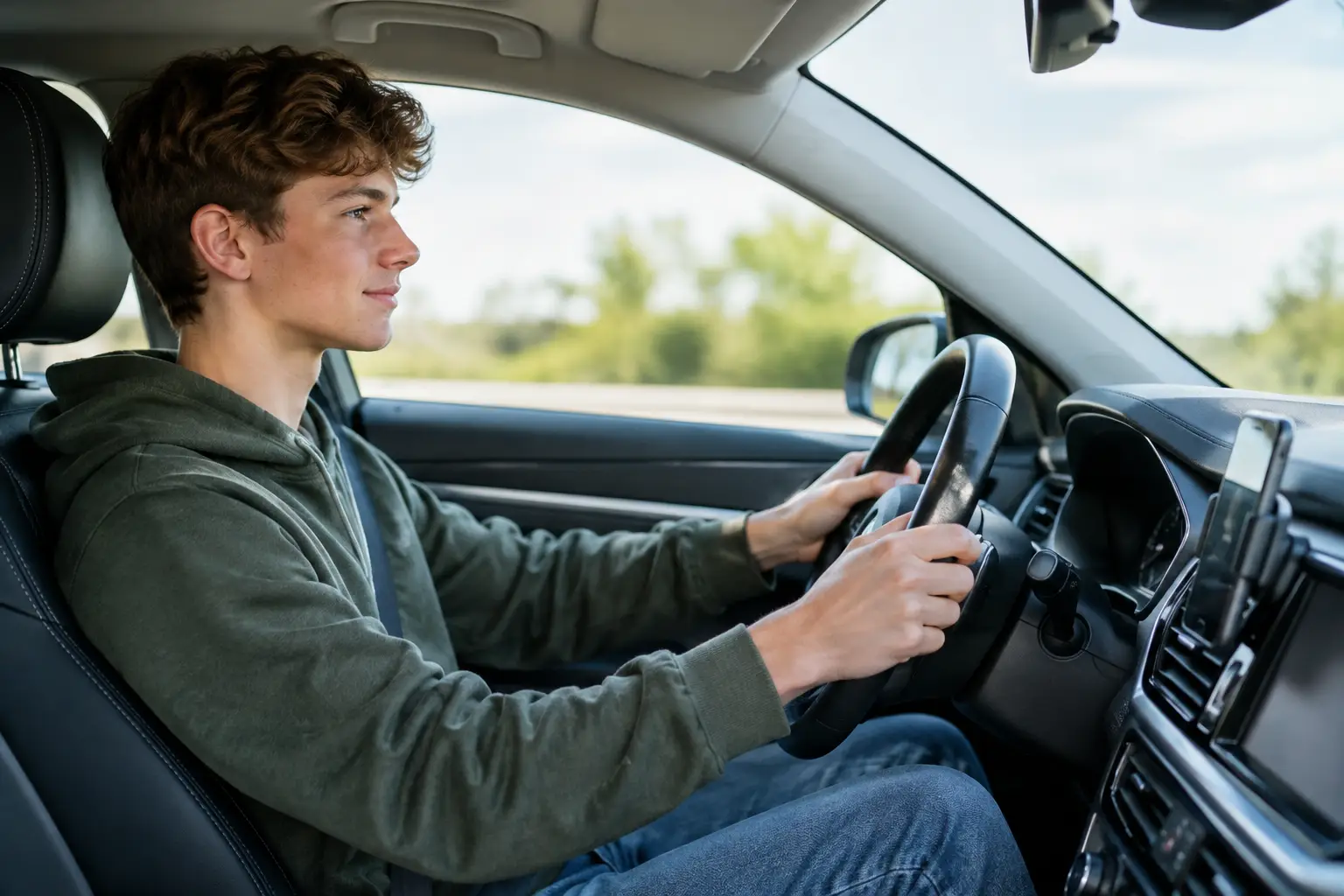
A new driver can pull out of a Torrance parking lot with a backup camera, blind-spot alerts, turn-by-turn directions, and a phone full of safety apps. That does not automatically mean they are ready for every decision the road requires. Teen driving technology can be helpful, especially during the first months of independent driving, but it works best when it reinforces practiced habits instead of replacing them.
For parents, the goal is not to remove every risk with an app or vehicle setting. It is to give a teen clear expectations, enough supervised practice, and the confidence to stay focused when technology is unavailable, incorrect, or distracting.
Where Teen Driving Technology Helps New Drivers
The right features can reduce stress while a new driver is still building awareness. Rearview cameras, for example, can help a teen notice objects behind the vehicle when backing up. Blind-spot monitoring can provide a useful warning before a lane change. Forward-collision alerts and automatic emergency braking may offer an added layer of protection when traffic suddenly slows.
These features are particularly useful in busy South Bay driving conditions, where a student may encounter packed shopping-center parking lots, cyclists, pedestrians, freeway on-ramps, and stop-and-go traffic in the same lesson. A navigation system can also help a teen prepare for an unfamiliar route without handling a phone while moving.
Still, every alert has a limit. A backup camera does not show everything around a vehicle. Blind-spot warnings may not detect every motorcycle, bicycle, or fast-approaching car. Navigation instructions can arrive late or suggest a turn that is unsafe to make. A young driver needs to learn the underlying skills: checking mirrors, turning to look over the shoulder, scanning intersections, managing speed, and making a safe choice when a planned turn is no longer possible.
Teen Driving Technology Should Support, Not Replace, Attention
The most valuable driving technology is often the technology a teen uses less. A phone mounted on the dashboard may be set up for navigation before the vehicle moves, but notifications, music changes, incoming calls, and messages can all pull attention away from the road.
California law places strict limits on phone use for drivers under 18. A minor may not use a wireless telephone or other mobile service device while driving, even with hands-free equipment, except in an emergency. Families should treat that requirement as a starting point, not the entire conversation. A phone should be silenced, put away, or placed in a driving-focus mode before the car leaves the curb.
Parents can make the rule simple: no texting, no scrolling, no replying at red lights, and no searching for a new playlist while driving. If navigation needs to change, the teen should pull over somewhere safe or ask a passenger to handle it. This is not about making driving feel restrictive. It is about protecting the attention needed to spot a child near a crosswalk, brake for stopped traffic, or respond to a driver who makes an unexpected move.
Driver-assist features are not self-driving features
Many newer vehicles offer lane-departure warnings, adaptive cruise control, lane-centering assistance, and other advanced driver-assistance systems. These can be useful tools, but they are not a substitute for an engaged driver with both hands ready to steer and eyes on the road.
A teen should understand what each feature does in the family vehicle and when it may not perform as expected. Lane markings can be faded, rain can affect cameras and sensors, and curves or construction zones can confuse a system. Adaptive cruise control may maintain following distance under certain conditions, but it cannot judge every traffic situation with the care and anticipation of an attentive human driver.
Before a teen relies on an unfamiliar feature, practice it with a parent or qualified instructor in a low-pressure setting. Read the vehicle manual together, then discuss what the system can and cannot see. That conversation can prevent a false sense of security later.
Use Monitoring Tools as a Coaching Tool
Some insurance programs, vehicle apps, and aftermarket devices track hard braking, fast acceleration, speed, phone handling, trip times, and location. For families, these tools can be useful during the transition from supervised practice to solo driving. They can show patterns that a teen may not recognize, such as consistently braking too late or driving at higher-risk hours.
The best approach is transparent. Let the teen know what is being monitored, why it is being used, and how the information will be discussed. A tracker should not become a surprise test or a source of constant criticism. If every trip ends in an argument about a score, a teen may focus on avoiding a bad report rather than learning from the feedback.
Set a regular time to review driving information calmly. Ask what happened before a hard-braking event. Was traffic congested? Did the driver follow too closely? Was there a distraction? The goal is to identify one habit to improve on the next drive. Praise good judgment as well, including the decision to avoid a risky situation or wait for better conditions.
There are trade-offs. Location tracking may help parents feel reassured, particularly when a teen is new to driving alone. At the same time, older teens need trust and reasonable privacy. Each family should decide how long monitoring will be used and what events justify a conversation. Clear expectations are more effective than surveillance without an endpoint.
Build a Car Setup That Reduces Distraction
Before any drive, a teen should complete a short setup routine while parked. Adjust the seat, mirrors, steering wheel, climate controls, and navigation route first. Secure loose items, choose music at a low volume, and make sure the phone is put away. This routine takes less than a minute, yet it removes many distractions that otherwise appear after the vehicle is moving.
Parents should also consider the vehicle itself. A large SUV with many controls may be more difficult for some beginners to judge in parking spaces, while a smaller car may be easier to maneuver but offer less visibility depending on the design. The safest choice depends on the teen, the vehicle, and the kinds of roads they will use. What matters most is that the driver practices regularly in the same vehicle they expect to drive independently.
Technology settings deserve a review, too. Turn off nonessential alerts that create unnecessary noise. Set navigation guidance to a volume that can be heard without competing with conversation or music. If a vehicle has a teen-driver mode that limits volume or provides a report card, use it only if it supports the family’s training plan rather than creating anxiety.
Practice When Technology Is Not Doing the Work
A confident new driver should be able to park using mirrors and a shoulder check, not only a camera. They should be able to merge by judging traffic speed, not by waiting for a sensor alert. They should also know how to proceed safely if a navigation system loses service, sends them toward a closed road, or gives an instruction too late.
During supervised drives, parents can occasionally turn off navigation on a familiar route and ask the teen to plan the next few turns. Practice parking with the camera covered only when it is safe to do so and a supervising adult is present. Ask the teen to identify possible hazards before the vehicle reaches them: a car waiting to pull out, a pedestrian near a corner, or brake lights several vehicles ahead.
Professional behind-the-wheel instruction adds structure to this practice. A patient instructor can help students connect vehicle controls, visual scanning, speed management, and defensive decision-making in real traffic. That foundation matters long after the novelty of a new vehicle feature has worn off.
A Family Agreement Makes Expectations Clear
Before a teen begins driving independently, put the household rules in writing. Include phone use, passenger limits, nighttime driving, freeway driving, bad-weather decisions, and what to do after a minor collision or vehicle problem. California’s provisional license restrictions should be part of the agreement, along with any additional rules the family considers appropriate.
The agreement should also make room for communication. A teen should know they can call for a ride if they are tired, upset, stranded, or uncomfortable with another driver or passenger. The safest decision is not always the one that gets them home on schedule.
Technology can make a new driver more informed and better supported, but safe driving still comes down to attention, judgment, and repeated practice. Give your teen tools that reduce risk, then give them the patient coaching and real-road experience needed to make good choices when those tools cannot make the decision for them.