
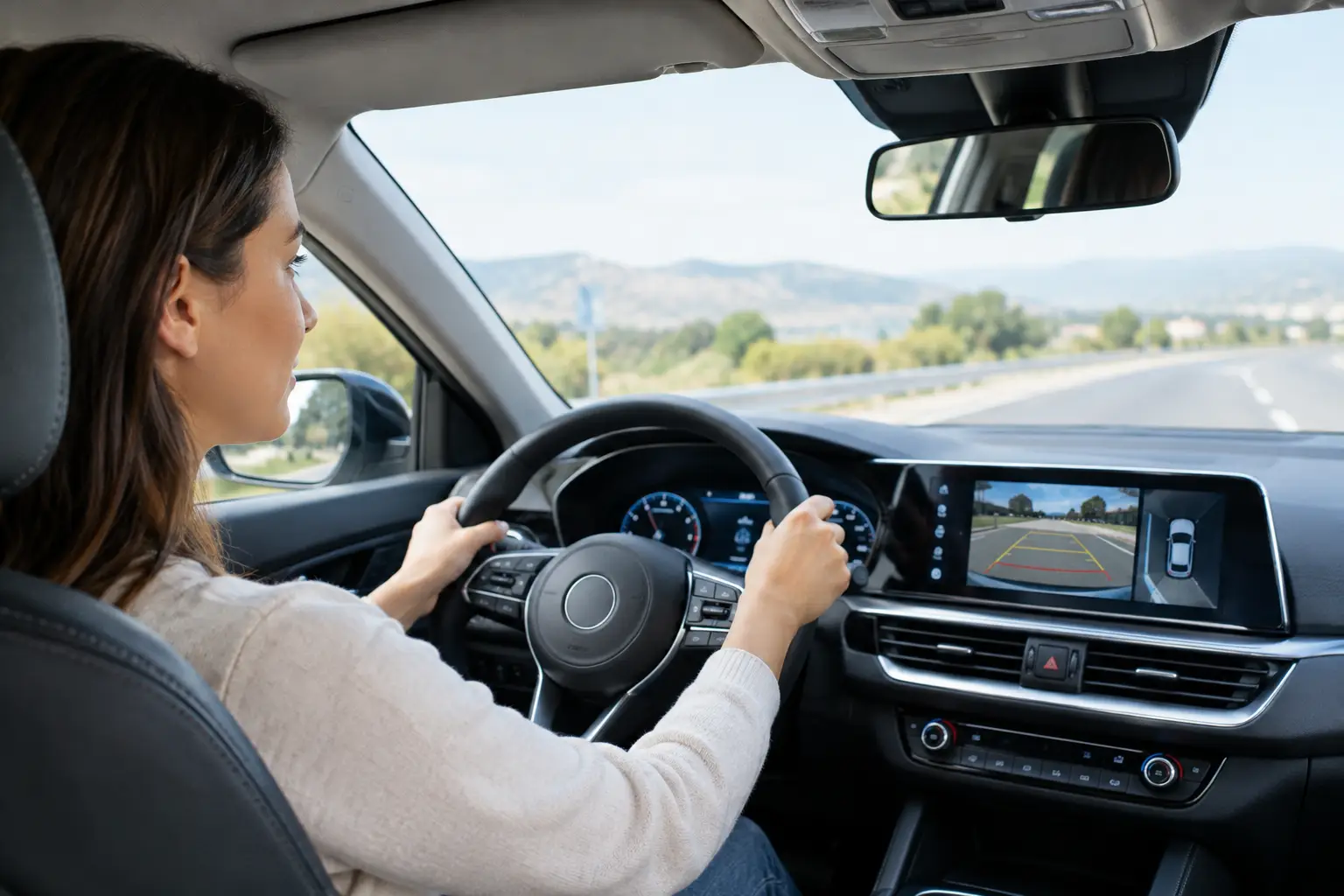
A first car can feel much easier to manage when it has helpful technology, but the best car safety features beginners need are not substitutes for attention, sound judgment, and steady practice. For a new driver learning on busy South Bay streets, merging onto freeways, or preparing for a California DMV road test, the right features can provide an extra layer of awareness while good habits remain in the driver’s hands.
Parents often ask whether advanced safety equipment is worth prioritizing in a family vehicle. In many cases, it is. The most useful systems help a beginning driver see more, brake sooner, and avoid common low-speed mistakes. The key is learning what each feature does, where it has limits, and how to drive safely when it is unavailable.
Start With the Safety Basics That Protect Everyone
Before comparing driver-assistance technology, make sure the vehicle has strong foundational safety equipment. A newer vehicle should have airbags, anti-lock brakes, electronic stability control, a rearview camera, and properly functioning seat belts in every seating position. These are not exciting features, but they matter in the moments when a driver loses traction, brakes hard, or makes an error.
For beginners, vehicle fit also deserves attention. A driver should be able to sit upright with a clear view over the steering wheel, reach the pedals comfortably, and adjust the mirrors without stretching. A large SUV may feel secure because of its size, but it can be harder for a new driver to judge parking spaces, curbs, and nearby vehicles. A smaller or midsize car with good visibility is often easier to learn in.
Best Car Safety Features for Beginners
Automatic Emergency Braking
Automatic emergency braking, often called AEB, is one of the most valuable features for a new driver. Using cameras, radar, or both, the system may warn the driver when it detects a possible front-end collision. If the driver does not react quickly enough, it can apply the brakes or add braking force.
This can be especially helpful in stop-and-go traffic, where beginners may take a moment too long to recognize that traffic has stopped. It may also reduce the severity of a crash if a collision cannot be avoided.
Still, AEB is not permission to follow too closely. Detection can be affected by weather, road conditions, speed, dirt on sensors, and the type of object ahead. New drivers should continue to keep a safe following distance and scan well beyond the car directly in front of them.
Blind-Spot Monitoring
Changing lanes is one of the skills that makes many new drivers nervous. Blind-spot monitoring uses sensors to alert the driver when another vehicle is traveling alongside or slightly behind the car, where it may not appear in the mirrors.
The warning is useful, particularly on the 405 or other crowded multi-lane roads. It can remind a beginner to pause before moving over. But it should reinforce the correct lane-change routine, not replace it: check mirrors, signal early, look over the shoulder, and move only when the lane is clear.
A blind-spot light can miss vehicles in certain situations, and it cannot tell a driver whether it is safe to change lanes overall. Motorcycles, fast-approaching vehicles, and changing traffic patterns still require careful visual checks.
Rearview Camera and Rear Cross-Traffic Alert
A rearview camera gives a driver a better view directly behind the vehicle when backing up. For a beginner, that can make reversing out of a driveway or parking space less stressful. Camera guidelines can also help a driver understand the path of the vehicle as the steering wheel turns.
Rear cross-traffic alert adds another useful warning. When backing out of a parking space, it may detect a car, pedestrian, or cyclist approaching from the side. This is valuable in busy shopping centers and school parking lots, where sight lines are often blocked by larger parked vehicles.
Neither system eliminates the need to turn and look behind the vehicle. Cameras have blind areas, and a small child, low object, or moving pedestrian may not be detected in time. Slow backing, foot ready over the brake, and a full visual check are still the safest approach.
Lane-Departure Warning and Lane-Keeping Assistance
Lane-departure warning alerts the driver if the car begins drifting out of a marked lane without a turn signal. Lane-keeping assistance may provide gentle steering input to help guide the car back toward the center of the lane.
For a driver building freeway confidence, these features can be a useful reminder to stay focused and maintain lane position. They are also helpful during longer drives, when fatigue can make a driver less precise.
However, lane markings in real life are not always clear. Construction zones, faded paint, sharp curves, glare, and rain can limit how well these systems work. A new driver should never assume the car will steer itself through traffic. Hands stay on the wheel, eyes stay on the road, and attention stays on the driving task.
Adaptive Cruise Control
Adaptive cruise control can maintain a selected speed while adjusting the vehicle’s pace to help preserve distance from traffic ahead. On a long, steady freeway drive, it may reduce some of the workload of repeatedly adjusting the accelerator.
This feature is generally better for a driver who already has basic freeway skills. A complete beginner may find it distracting to monitor a system they do not yet understand. It also does not make difficult traffic decisions, choose a safe gap for merging, or respond perfectly to sudden lane changes.
If a new driver uses it, they should first practice on an open road with an experienced adult or instructor nearby. They need to know how to cancel the system quickly, brake normally, and take full control at any moment.
Tire-Pressure Monitoring and Stability Control
Tire-pressure monitoring may seem less advanced than a camera or collision warning, but it is highly practical. Underinflated tires can affect braking, steering, fuel use, and handling. When a warning light appears, it should lead to a tire-pressure check, not be ignored until the next service appointment.
Electronic stability control helps reduce skidding by detecting when the vehicle is not traveling in the direction the driver intends. It can reduce engine power or brake individual wheels to help the car regain stability. This is especially meaningful for inexperienced drivers who may overcorrect or brake abruptly in a turn.
These systems support safe driving, but they cannot overcome worn tires, excessive speed, or aggressive steering. Good maintenance and smooth vehicle control remain part of every driver’s responsibility.
Features That Can Distract New Drivers
More technology is not always better. Large touchscreens, complicated menus, app notifications, and entertainment controls can pull attention away from the road. A beginner benefits from a vehicle where essential controls, such as defrosters, lights, wipers, and climate settings, are easy to find without looking down for long.
Parents can help by setting up navigation, music, seat position, and mirrors before the vehicle begins moving. A phone should be silenced and put away. California’s hands-free laws do not make a phone conversation risk-free, especially for an inexperienced driver who is still learning to manage traffic, signs, speed, and vehicle position at the same time.
How to Practice With Safety Technology
The best way to use these features is to learn them one at a time. Read the owner’s manual, identify the warning sounds and dashboard symbols, and practice in low-pressure settings before relying on a system in traffic. A driver should know whether a feature is turned on, how to adjust it, and when it may not work as expected.
During professional behind-the-wheel lessons, instructors can help students build the habits technology is meant to support: checking mirrors, maintaining space, braking smoothly, scanning intersections, and making safe lane changes. At South Bay Driving School, the goal is not simply to get through a road test. It is to help drivers develop repeatable decisions they can use after they earn a license.
Choose Help, Not a False Sense of Security
When selecting a car for a teen or adult beginner, prioritize features that improve visibility, reduce common collision risks, and encourage awareness. Automatic emergency braking, blind-spot monitoring, a rearview camera, rear cross-traffic alert, and lane-departure warnings can all be worthwhile additions when they are used correctly.
The safest feature in any vehicle is still an attentive driver who slows down when conditions change, leaves enough room to react, and is willing to wait rather than make a rushed decision. Technology can provide a helpful second set of eyes. Patient practice teaches a driver what to do with the information those eyes provide.