
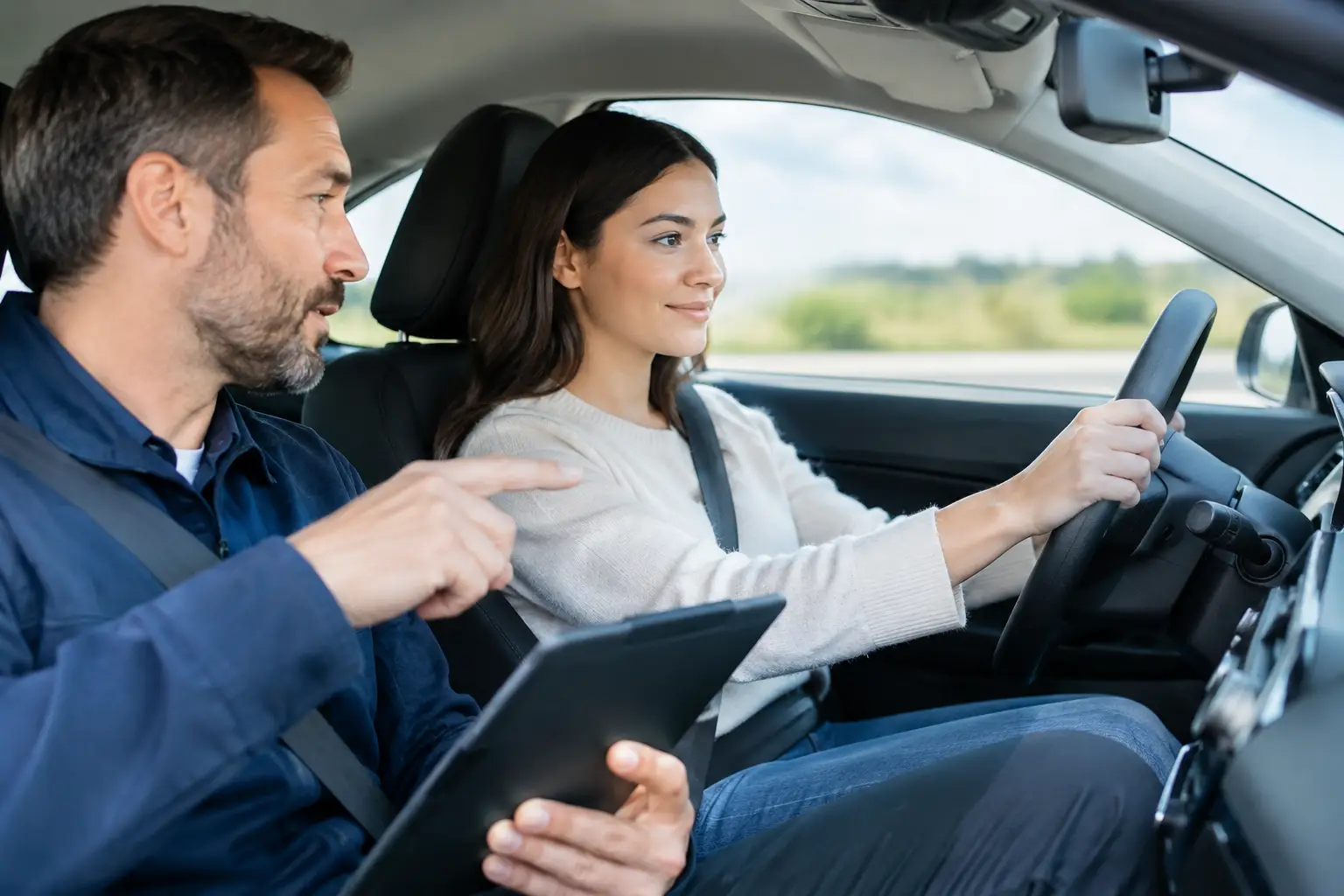
A learner can pass a written test, recognize every road sign, and still feel overwhelmed the first time traffic closes in at a busy South Bay intersection. That gap between knowing the rules and using them calmly is shaping today’s driver training trends. For teens, adult beginners, returning drivers, and concerned parents, the goal is no longer simply getting a license. It is developing judgment, vehicle control, and habits that hold up when the road becomes unpredictable.
The most useful changes in driver education are practical. They give students more ways to learn the information, more individualized time behind the wheel, and better preparation for the situations they will actually face in California.
Driver Training Trends Are Becoming More Personalized
The traditional idea of a standard lesson plan has limits. Two students may be the same age and have logged the same number of practice hours, yet need very different instruction. One may be comfortable steering and braking but nervous around faster traffic. Another may feel relaxed on neighborhood streets but struggle with parking, lane changes, or judging gaps at intersections.
Personalized instruction is one of the driver training trends that matters most because it lets the lesson focus on the student rather than the clock. A patient instructor can identify where hesitation starts, explain the reason behind a mistake, and create repeatable practice opportunities without rushing the learner.
For a teen, that may mean spending extra time scanning ahead and maintaining following distance. For an adult who has not driven in years, it may mean rebuilding comfort with turns, mirrors, and traffic flow before moving onto busier roads. For a senior driver, the focus may be on updated traffic patterns, defensive space management, and confidence at complex intersections.
Progress should be measured by consistency, not by whether a student had one good lesson. A safe driver checks mirrors before changing lanes every time, comes to complete stops, adjusts speed for conditions, and knows when to wait rather than force a decision.
Online Education Is Useful, but Road Practice Still Leads
Online driver education has made the classroom side of licensing more convenient. Students can complete lessons around school, work, sports, and family schedules rather than needing to attend a fixed in-person class. Parents can also see more clearly where their teen is in the education process before the permit and behind-the-wheel stages begin.
That convenience does not replace hands-on training. A video can explain a right-of-way rule, but it cannot teach a new driver how it feels to judge an unprotected left turn when oncoming vehicles are approaching. It cannot correct a driver who brakes too late, drifts within a lane, or overlooks a pedestrian preparing to cross.
The best approach combines both. Online education gives learners a foundation in California traffic laws, signs, and safe-driving principles. Private behind-the-wheel lessons turn that knowledge into physical skills and sound decision-making. At home, supervised practice helps reinforce what was taught professionally.
Parents do not need to become driving instructors, but they can support the process by practicing calmly and discussing specific goals after each drive. Short, focused drives are often more productive than a long trip filled with corrections.
The Value of Practice With a Clear Purpose
Practice works best when each session has a purpose. Instead of simply driving around, a student might work on smooth stops, controlled right turns, parallel parking, lane changes, or entering a busy roadway safely. This helps the learner notice improvement and prevents the same weak habit from becoming automatic.
A good progression starts in lower-pressure areas, then gradually adds traffic, speed, and more complex decisions. Moving too quickly can create anxiety. Staying on quiet streets forever can leave a student unprepared. The right pace depends on the learner, but the goal remains the same: steady exposure with calm coaching.
Defensive Driving Is Moving Beyond Memorized Rules
California drivers share the road with pedestrians, cyclists, scooters, delivery vehicles, buses, motorcycles, and drivers who may be distracted or impatient. As a result, effective training now places more emphasis on defensive driving rather than simply teaching students how to perform a maneuver for the DMV.
Defensive driving means looking farther ahead, keeping a safe following distance, checking intersections even when the light is green, and leaving room for other people’s mistakes. It also means understanding that having the right-of-way does not guarantee another road user will yield.
This is especially relevant in communities where students encounter busy commercial corridors, residential streets with parked cars, school zones, and coastal traffic. A learner needs more than the ability to operate the vehicle. They need to anticipate what could happen next.
Technology has made distraction awareness another essential part of this training. New drivers have grown up with constant phone notifications, navigation prompts, and in-car screens. Learning to set directions before driving, silence notifications, and keep attention outside the vehicle is a safety skill, not a minor reminder.
DMV Test Preparation Is Becoming More Real-World Focused
A DMV road test is an important milestone, but it is not the finish line. Students who focus only on passing can become overly concerned with memorizing a route or performing a maneuver under ideal conditions. A stronger preparation plan teaches the skills behind the test: observation, speed control, braking, turns, lane position, backing, and safe decision-making.
Road-test preparation is most effective when it includes an honest assessment of readiness. If a student consistently misses mirror checks, rolls through stops, or loses focus during lane changes, more practice is usually more valuable than rushing into a test appointment. Delaying a test can feel disappointing, but it may save stress, money, and a preventable failure.
A practice drive before the test can also help students manage nerves. Familiarity with the sequence of starting the vehicle, responding to instructions, making safe turns, and correcting minor errors can make the experience feel manageable. No driver needs a perfect drive. They need to demonstrate safe, controlled driving.
More Learners Are Seeking Training for Specific Needs
Driver education is no longer viewed only as a teen service. Adult beginners may need a supportive place to start after years of relying on public transportation or family members. Returning drivers may want a refresher after a long break, a move to a more traffic-heavy area, or a change in confidence following an accident.
There is also growing interest in manual-transmission instruction. While automatic vehicles remain the standard, some learners want manual skills for a personal vehicle, travel, work, or the satisfaction of understanding how the vehicle responds. Manual training requires patience because students are coordinating the clutch, accelerator, brake, and shifting at once. The reward is better awareness of vehicle control, but it is not necessary for every driver.
Senior instruction is another area where individualized support matters. Some mature drivers are safe and experienced but want help adapting to newer vehicle features, changing road conditions, or reduced comfort in heavy traffic. Respectful instruction should build on existing experience rather than treating a refresher as a failure.
Choosing What Matters Over What Looks Impressive
New apps, vehicle safety features, online courses, and scheduling tools can all improve the training experience. But no technology can substitute for an attentive instructor and a learner who practices deliberately. Backup cameras do not replace looking over the shoulder. Blind-spot alerts do not replace mirror checks. Navigation does not replace reading the road.
Families choosing a driving school should look for clear instruction, patient communication, and lessons that match the student’s level. Convenience matters too, especially when coordinating school schedules and parent work commitments, but safety should remain the deciding factor.
For more than 35 years, South Bay Driving School has seen that confidence grows when students are given a clear path, enough time to practice, and instruction that treats mistakes as opportunities to improve. The best trend is not a new feature or a faster route to a license. It is training that helps a new driver make the next safe decision, one trip at a time.