
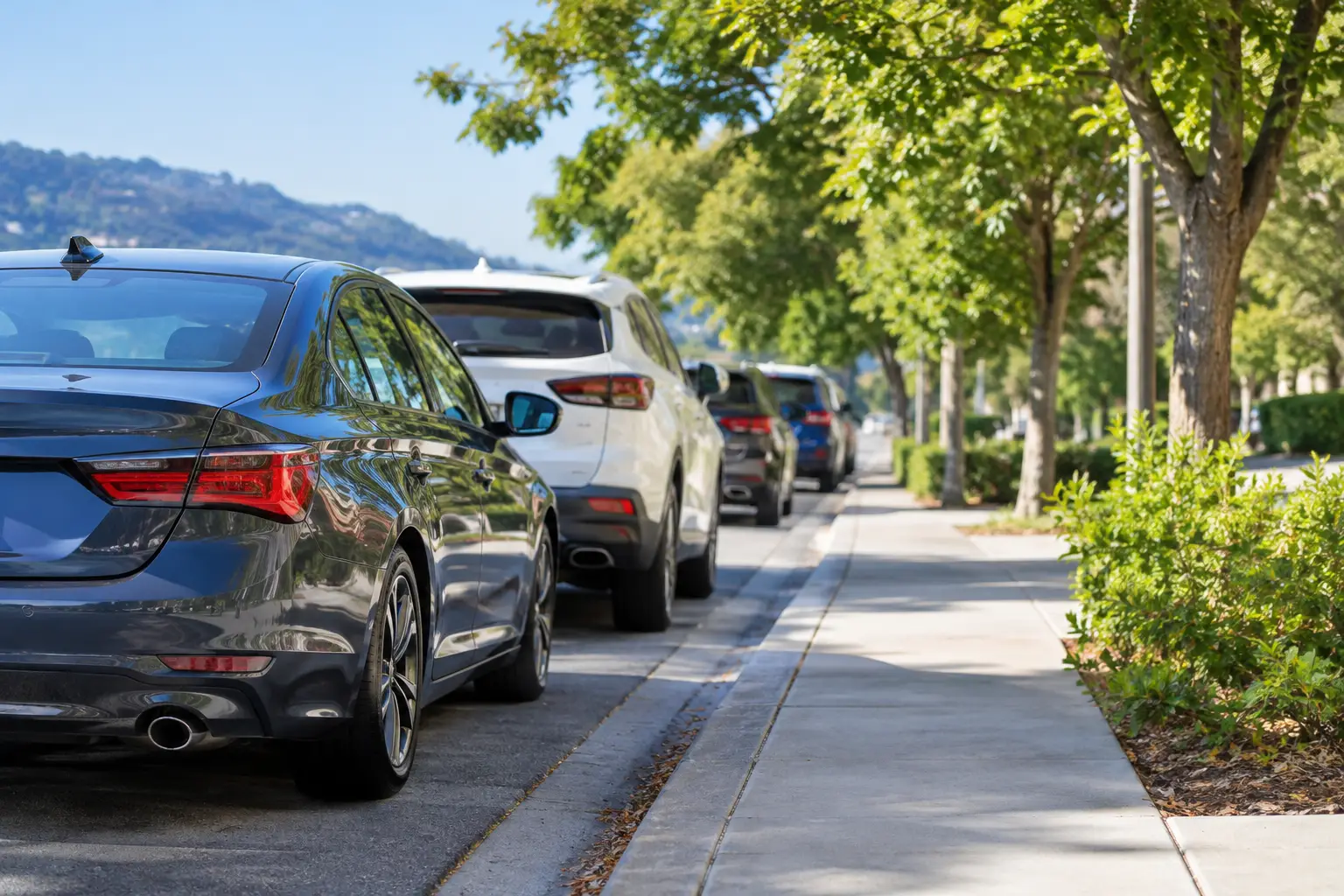
A curb can tell you more than a parking sign at first glance - if you know how to read it. For a new driver, the California curb parking rules guide is not just about avoiding a ticket. It is about building the observation habits that help you park legally, leave space for pedestrians, and make safe decisions during a DMV drive test.
Curb parking rules can change from one block to the next, especially around schools, beaches, shopping areas, and busy South Bay streets. The safest approach is simple: slow down, read the curb color, look for posted signs, and check the area around your vehicle before you park.
California Curb Parking Rules Guide: Start With Curb Colors
Painted curbs communicate restrictions quickly, but they are not an invitation to make assumptions. Always read nearby signs as well. A sign may identify specific days, hours, permit requirements, loading limits, or exceptions that affect the painted area.
California drivers should recognize these four common curb colors:
- Red curb: No stopping, standing, or parking. Do not pull over here to wait for someone, check your phone, or unload passengers. Red zones often appear near fire hydrants, corners, bus areas, and driveways where clear access is necessary.
- Yellow curb: Commercial loading zone. Passenger vehicles may generally stop only for the time posted to load or unload passengers or freight, but local signs control the exact rule. Do not assume a yellow curb is regular parking.
- White curb: Passenger loading or unloading zone. You may stop briefly to pick up or drop off passengers, usually for the posted time limit. Staying in the vehicle does not make it legal to wait longer than allowed.
- Green curb: Short-term parking zone. The time limit should be posted or marked. Once the allowed time ends, move your vehicle rather than hoping enforcement will overlook it.
A blue curb is reserved for vehicles displaying a valid disability placard or license plate. Parking there without proper authorization can bring a significant fine and creates a real barrier for someone who needs accessible parking.
Unpainted curb does not automatically mean unrestricted parking. A posted sign, meter, driveway, street-cleaning schedule, permit zone, or state law may still prohibit parking. Treat the curb as one clue, not the entire answer.
Know Where California Law Prohibits Parking
Some locations are off-limits whether or not the curb is painted. These rules protect sight lines, emergency access, and the predictable flow of traffic. They also come up often during driving lessons and road tests because they show whether a driver is scanning beyond the open space directly in front of the car.
Do not park in front of a public or private driveway. Even if you expect to be gone for only a minute, blocking a driveway can prevent a resident, visitor, or emergency vehicle from getting through. Avoid parking in an alley, on a sidewalk, in a crosswalk, or in a bicycle lane unless signs specifically allow it.
Keep clear of intersections. California law generally prohibits parking within 20 feet of a crosswalk, whether the crosswalk is marked or unmarked. At an intersection with a curb extension, the restricted distance can be 15 feet from the curb line. These spaces may look convenient, but parking there can hide pedestrians from turning drivers.
Fire hydrants need room as well. Do not park within 15 feet of a hydrant, unless you are a licensed driver sitting in the front seat and ready to move the vehicle if necessary. In practice, the safest choice is to leave the space entirely clear.
You also cannot park alongside a vehicle that is already stopped, parked, or standing at the curb. This is commonly called double parking. It blocks traffic, creates a hazard for cyclists, and can force other drivers to make sudden lane changes.
Other prohibited places include railroad tracks, freeway areas where stopping is not permitted, tunnels, bridge approaches, and spaces reserved for emergency vehicles or transit. When a location feels unusually tight, heavily signed, or designed for another purpose, keep moving until you find a clearly legal space.
Park in the Direction of Traffic
On a two-way road, park with the right-hand wheels within 18 inches of the right curb and facing the same direction as traffic on that side of the street. Parking against the direction of travel may seem harmless on a quiet residential street, but it requires you to drive on the wrong side of the road to enter or leave the space.
On a one-way street, California rules may allow parking on either side when it can be done safely, but posted signs and markings still apply. For newer drivers, it is wise to take an extra moment to identify whether the street is truly one-way before choosing the left curb.
When parking next to a curb, pull in parallel and finish close enough that your vehicle is not creating an unnecessary obstacle. Before opening the door, check mirrors and look over your shoulder for bicycles, motorcycles, pedestrians, and passing vehicles. This simple check prevents the kind of door-opening crash that can happen on busy streets in Torrance, Redondo Beach, or other South Bay communities.
Hill Parking Is a Safety Skill, Not a Memorization Trick
Parking on a hill requires more than shifting into park. Your wheel position should help keep the vehicle from rolling into traffic if the parking brake fails.
When parked downhill next to a curb, turn your front wheels toward the curb. When parked uphill next to a curb, turn your front wheels away from the curb. If there is no curb, turn the wheels toward the edge of the road so the vehicle would roll away from traffic rather than into it.
Set the parking brake every time you park on a hill. For vehicles with an automatic transmission, place the vehicle in park after securing the brake. For manual-transmission drivers, use the parking brake and leave the vehicle in the appropriate gear. A parked vehicle should be stable before you remove your foot from the brake pedal.
Watch for Signs That Override Your Expectations
Many parking mistakes happen because a driver sees an open curb and stops looking. Signs may set street-cleaning restrictions, rush-hour no-parking periods, residential permit rules, school-zone limits, construction restrictions, or temporary event controls.
Read the full sign, including arrows. An arrow can show that a restriction applies only before or after the sign, or it can cover an entire section of curb. Pay attention to the day and time. A space that is legal on a Saturday afternoon may be restricted on a weekday morning.
Meters and pay stations require the same care. Paying a meter does not make an otherwise prohibited space legal, and an expired meter can still result in a citation. Before walking away, confirm that you are within the marked space, have followed payment instructions, and will return before the time limit expires.
How Curb Parking Is Judged on the DMV Test
During a DMV drive test, an examiner is watching your process as much as your final parking position. You should signal before pulling toward the curb, check mirrors and blind spots, slow smoothly, and avoid interfering with traffic. If a space is questionable, choose another one rather than forcing the maneuver.
After parking, secure the vehicle and follow the examiner's instructions. When pulling back into traffic, signal, check your mirrors, look over your shoulder for the blind spot, and yield to approaching vehicles, cyclists, and pedestrians. A clean curb-parking maneuver is calm, controlled, and observant.
For nervous drivers, practice helps turn these steps into a routine. Start on a quiet street with legal, open curb space. Practice identifying signs before you pull over, then work on positioning the vehicle close to the curb without touching it. South Bay Driving School instructors help students build these habits at a pace that supports confidence and safe decision-making.
A Quick Check Before You Walk Away
Before leaving your vehicle, take a final look: Is the curb color permitted for your purpose? Did you read the signs and arrows? Are you clear of a driveway, crosswalk, hydrant, intersection, and bike lane? Is the vehicle facing the correct direction, close to the curb, and secured with the parking brake when needed?
That brief pause can prevent a costly citation, but its bigger value is awareness. Safe drivers do not treat parking as the moment driving ends. They treat it as the final decision in a trip - one that should leave the street safer and more accessible for everyone else.