
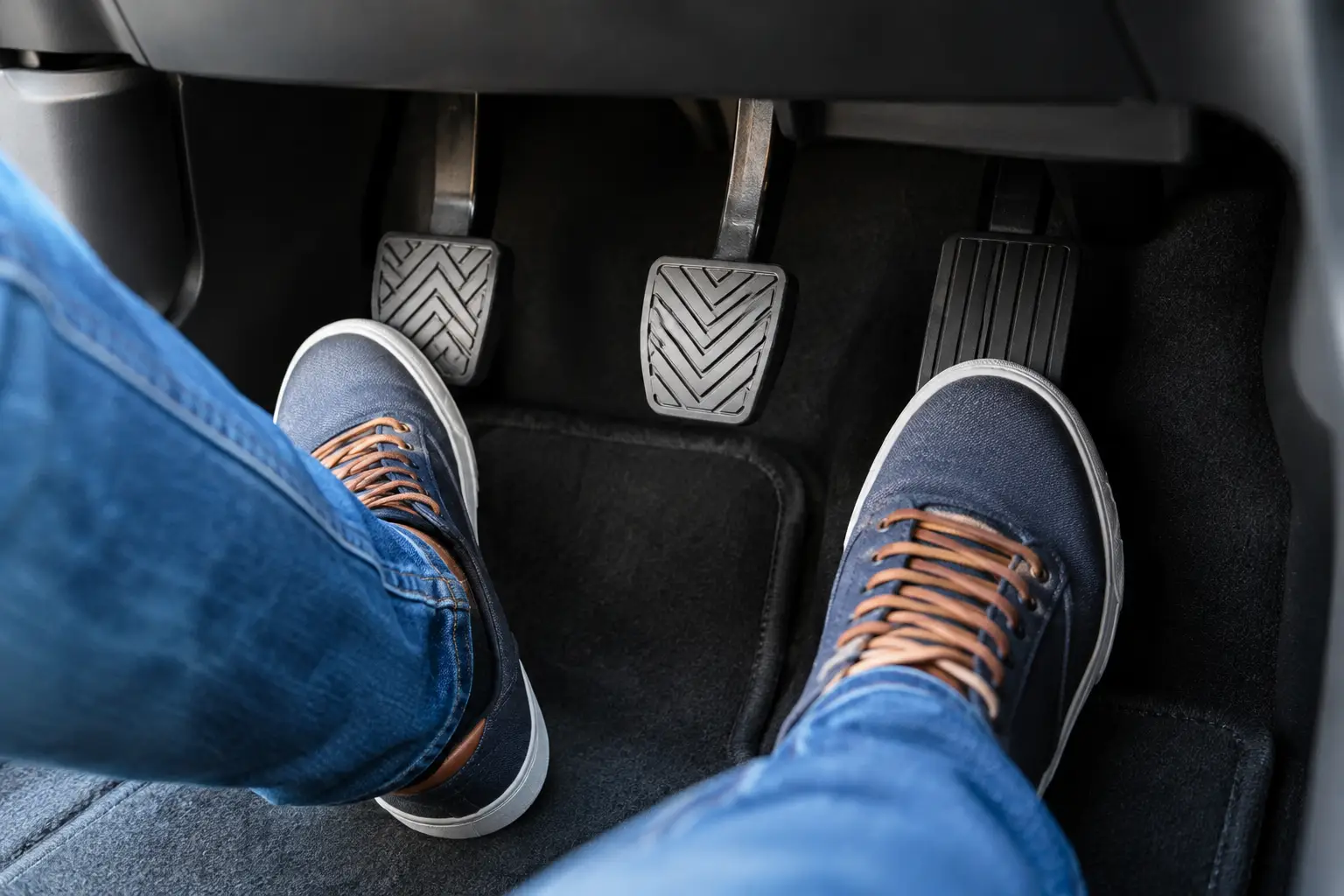
A sudden stop in a parking lot, a busy left turn, or a driver behind you honking can make even a careful driver tense up. In that moment, pedal confusion can happen when the foot intended for the brake presses the accelerator instead. Learning how to prevent pedal confusion is less about quick reflexes and more about building a driving position and set of habits that stay reliable under pressure.
For teen drivers, returning drivers, and older adults, this is a skill worth practicing deliberately. Pedal errors are uncommon, but when they occur at low speeds near homes, storefronts, pedestrians, or parked cars, the consequences can still be serious. Patient, repeated practice makes the right response more automatic.
Start With a Safe Driving Position
Pedal control begins before the vehicle moves. If you are sitting too far away, leaning forward, or reaching for the pedals with your toes, you have less control over which pedal your foot contacts. Adjust the seat before every drive, especially when sharing a vehicle with family members.
Your right heel should rest comfortably on the floor in front of the brake pedal. From that stable position, you should be able to pivot your foot between the accelerator and brake without lifting your whole leg. Your knee should remain slightly bent when pressing the brake firmly. If your leg is fully extended, move the seat closer. If your knees feel cramped or your foot is crowded against the pedals, move it back slightly.
Adjust the steering wheel too. You should be able to sit upright with your back against the seat, not lean toward the wheel to reach it. A stable seating position helps keep your attention on traffic and reduces awkward movements when you need to brake quickly.
Check Your Footwear Before You Drive
Shoes can affect pedal feel more than many drivers realize. Bare feet, socks, flip-flops, loose sandals, heavy work boots, and very high heels can slip, catch, or make it harder to tell where your foot is placed. The safest choice is a secure, low-profile shoe with a sole that gives you a clear feel for the pedal.
If you are leaving the beach, playing a sport, or changing out of work shoes in the car, take a moment to put on suitable driving shoes before shifting into gear. It is a small step that can prevent a rushed decision later.
Use One Foot for Both Pedals
In an automatic vehicle, use your right foot for the accelerator and brake. Your left foot should rest on the designated footrest, away from the pedals. This habit helps prevent two problems: pressing both pedals at once and accidentally using the left foot when startled.
Keep your right heel near the floor and pivot from the ankle. Press the accelerator with the right side or ball of your foot, then return to the brake with a controlled pivot when slowing or stopping. Avoid hovering your foot over the accelerator or holding it in an awkward position. The goal is not to make every movement stiff or exaggerated. It is to create one repeatable motion your body can use without guessing.
Drivers learning a manual transmission need to use the left foot for the clutch, but the right foot should still operate only the brake and accelerator. Because manual driving involves more foot movement, it is especially helpful to practice the pedal layout while the car is parked and the engine is off.
Make Braking Your Default in Slow-Speed Areas
Many pedal-confusion incidents occur where a driver is moving slowly but has many things to process: parking lots, driveways, garage entrances, school drop-off areas, and drive-through lanes. These places can feel low-risk because speeds are low, yet people, shopping carts, curbs, and parked vehicles may be only a few feet away.
As you enter one of these areas, reduce speed early and cover the brake. Covering the brake means moving your right foot off the accelerator and holding it lightly over the brake pedal when you expect to slow or stop. Do not rest your foot on the brake while cruising, but use this technique when a hazard is likely and an immediate stop may be needed.
For example, when backing out of a parking space, look over your shoulder, release the brake gradually, and keep your foot positioned to brake again. There is rarely a reason to rush in reverse. If visibility is limited, stop and reassess rather than adding accelerator input.
Pause Before Selecting Drive or Reverse
Gear-selection mistakes and pedal mistakes can happen together when a driver is distracted. Before moving from Park into Drive or Reverse, hold the brake firmly, confirm the gear on the display, check your surroundings, and then move slowly. This short routine is particularly valuable in unfamiliar cars, rental vehicles, and vehicles with electronic shifters that work differently from the one you usually drive.
Do not rely only on a backup camera or parking sensor. These tools support your observation, but they do not replace looking around the vehicle and controlling speed with the brake.
What to Do If You Feel Unsure About a Pedal
If your foot does not feel correctly placed, do not try to solve the problem while continuing forward. Take your foot off the accelerator, brake smoothly if needed, and come to a complete stop in a safe location. Then reset your position. Check your seat distance, footwear, and right-foot placement before proceeding.
When a driver becomes startled, the natural instinct may be to push harder with the foot already in contact with a pedal. That is why calm, intentional practice matters. Teach yourself the sequence: lift off the accelerator, move to the brake, press firmly, and keep steering straight whenever possible.
If you ever press the accelerator by mistake, take your foot off it immediately and apply steady, firm pressure to the brake. Keep both hands on the wheel and focus on bringing the vehicle to a stop. Do not shift into Park while the car is moving. Once stopped, shift to Park, take a breath, and assess the situation before driving again.
Reduce Distractions That Lead to Rushed Decisions
Pedal confusion is not only a foot-placement issue. It can be more likely when attention is divided. A ringing phone, an argument in the car, navigation directions, a drink spilling, or pressure from another driver can pull focus away from basic vehicle control.
Set up navigation, music, mirrors, and climate controls before you begin moving. In a complicated parking lot or during heavy traffic, let nonessential tasks wait. If a passenger is making you feel rushed, it is appropriate to say that you need quiet for a moment.
Parents can help teen drivers by avoiding a running commentary while the teen is parking or merging. Clear directions given early are useful. Last-second commands such as “Brake!” can increase panic when a new driver is already trying to process traffic. Afterward, talk through what happened and practice the situation again in a quiet area.
Practice Pedal Control Until It Feels Familiar
The best way to build confidence is through structured repetition, beginning in a low-pressure environment. An empty section of a parking lot, when legally available and free of pedestrians, is useful for practicing smooth starts, controlled stops, and the transition from accelerator to brake. A trained instructor can also help identify issues with seat position, foot movement, braking pressure, and attention habits before they become ingrained.
Start with the engine on, vehicle in Park, and identify each pedal without looking down. Then practice holding firm brake pressure, as you would before shifting into gear. When ready to move, practice short, straight drives at very low speeds: accelerate gently, lift fully off the accelerator, pivot to the brake, and stop smoothly. Repeat until the movement feels predictable.
As your skill improves, practice in realistic settings such as residential streets, parking spaces, and intersections. The purpose is not to make driving feel stressful. It is to make safe responses feel familiar when traffic becomes more demanding. At South Bay Driving School, personalized behind-the-wheel lessons can give new, returning, and senior drivers a calm setting to practice these habits with patient guidance.
When Extra Support Makes Sense
Some drivers benefit from targeted refresher training. This may include a driver who has not driven for years, a senior adjusting to changes in mobility, a teen who feels anxious in parking lots, or someone switching between very different vehicles. There is no downside to asking for help with a specific skill. A few focused practice sessions can be more productive than repeatedly avoiding the situations that cause worry.
Talk with a driving instructor or healthcare professional if you notice reduced leg strength, numbness in your feet, difficulty moving between pedals, delayed reactions, or medication side effects that affect alertness. The right next step depends on the cause. It may be a vehicle adjustment, different footwear, a refresher lesson, or a conversation about whether driving conditions should be limited.
Safe pedal use is built one calm, repeatable movement at a time. Give yourself enough time to set up properly, slow down before tight spaces, and stop whenever you need to reset. Confidence grows when your habits leave room for careful decisions.