
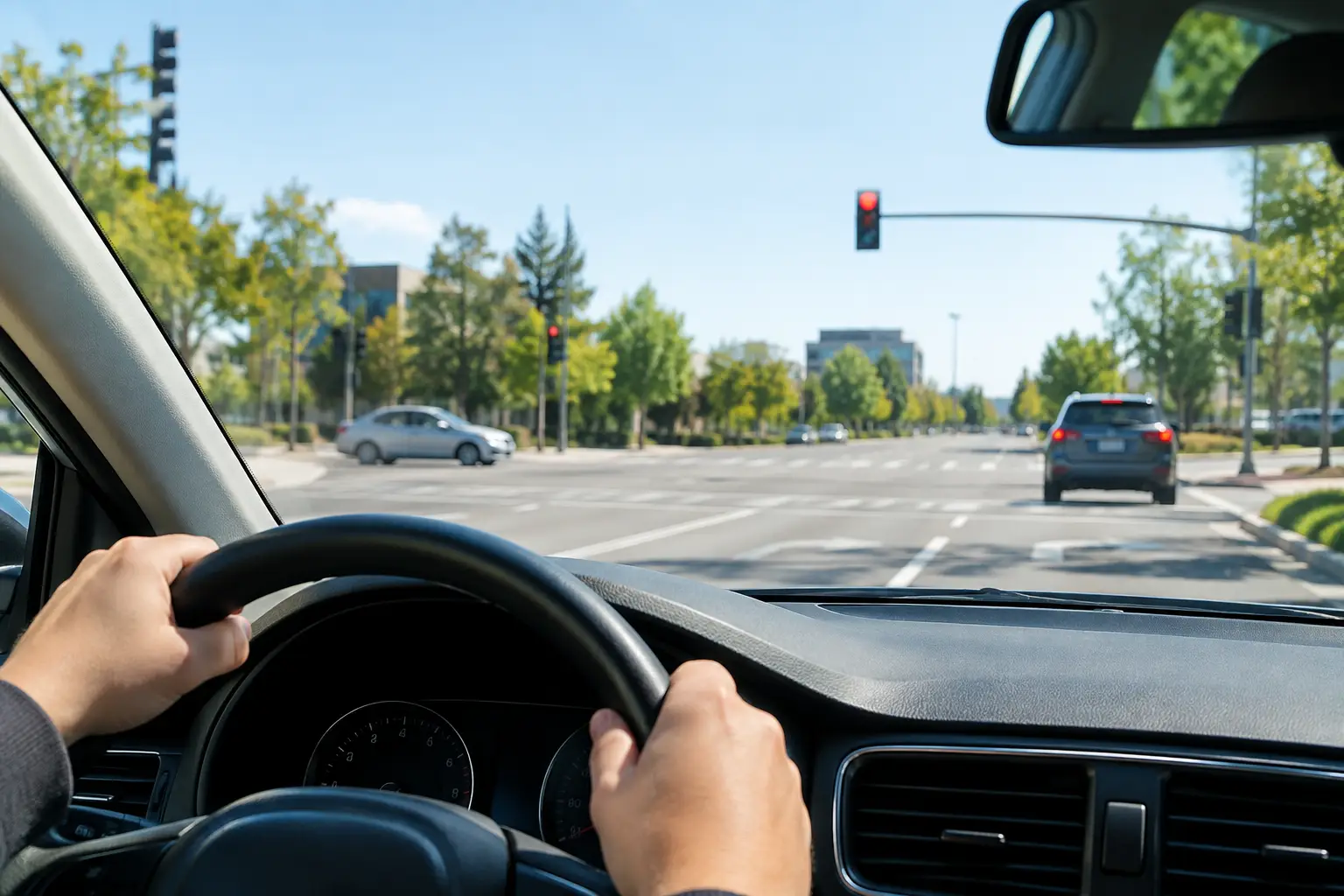
An unprotected left turn can make a new driver feel as if every car is moving too fast. You may be waiting in the intersection, watching oncoming traffic, checking for pedestrians, and wondering whether the light will change before you go. Learning to navigate unprotected left turns is less about taking chances and more about using a steady routine that gives you time, space, and a clear decision.
For teen drivers, returning drivers, and parents practicing with a new driver, this skill deserves focused attention. Left turns require you to yield to several road users at once, and the safest choice is not always the fastest one.
What Makes an Unprotected Left Turn Different?
An unprotected left turn is a left turn made without a green arrow. You may have a solid green light, but oncoming vehicles generally have a green light too. That means you must yield to oncoming traffic that is close enough to create a hazard, as well as pedestrians and bicyclists who are legally crossing your path.
A flashing yellow arrow also allows a left turn, but it is a yield situation. The signal is telling you that you may turn only after checking that the path is clear. A red arrow means stop and wait. Do not treat a solid green light as permission to turn immediately just because traffic behind you is waiting.
This distinction matters at busy South Bay intersections, where traffic can include fast-moving through lanes, people in crosswalks, buses, cyclists, and drivers entering late in the signal cycle. The correct turn is the one you can complete without forcing anyone else to brake, swerve, or hurry.
How to Navigate Unprotected Left Turns Step by Step
A repeatable process reduces panic. Before you reach the intersection, move into the correct left-turn lane early when one is provided. Use your turn signal well in advance, check your mirrors, and make a smooth lane change only when there is adequate space. Last-second lane changes create unnecessary risk and make it harder to focus on the turn itself.
As you approach the intersection, reduce speed enough to assess the scene. Look for signal signs, arrows, lane markings, crosswalks, and any vehicle already turning. If there is a green arrow, follow the arrow and still scan the crosswalk before turning. If there is no protected arrow, prepare to yield.
Position Your Vehicle Correctly
When waiting for a gap, keep your wheels pointed straight ahead. This is one of the most valuable habits for new drivers. If another vehicle strikes you from behind while your wheels are turned left, your vehicle could be pushed into oncoming traffic.
At many intersections, you may enter the intersection after the light turns green and wait for a safe opening, provided there is room to clear the intersection. Pull forward only far enough to position yourself for the turn, usually near the center of the intersection. Keep your vehicle straight, leave room for traffic turning from the opposite direction, and do not block crosswalks.
Some intersections have signs or markings that direct drivers to wait behind the limit line. Follow those controls. If traffic is backed up beyond the far side of the intersection, do not enter until you can complete the turn without being trapped in the intersection.
Search for More Than a Gap Between Cars
A safe gap is not simply an empty space. You need enough time to turn, straighten your vehicle, and reach a safe speed in the new lane before oncoming traffic arrives. Estimate the speed of approaching vehicles, not just their distance. A car that looks far away can close the distance quickly on a wide road.
Your visual search should include oncoming cars, motorcycles, bicycles, pedestrians, and vehicles that may be turning right from the opposite side. Motorcycles can be difficult to judge because of their smaller size. Never pull out based on the assumption that another driver will slow down, turn, or stop for a yellow light.
If you hesitate because you are uncertain, wait. The driver behind you may become impatient, but that driver cannot see every detail of your situation and does not control your vehicle. A missed gap costs a few seconds. A poor decision can cause a collision.
Turn Into the Correct Lane
Once the path is clear, accelerate smoothly and complete the turn without cutting across lanes. In most ordinary turns, enter the lane closest to the center line or median on the road you are entering, then change lanes later when it is safe and legal. Check the intersection markings and signs, since some locations use multiple turn lanes with specific lane assignments.
Continue checking for pedestrians as you turn. A pedestrian may begin crossing after you have decided to go, especially during a signal change. Your eyes should move from the oncoming lane, to the crosswalk, to your intended lane. Avoid staring at just one vehicle or looking only where you want the car to go.
What to Do When the Light Turns Yellow or Red
The signal changing while you are waiting is a common source of anxiety. If you have legally entered the intersection to wait for a gap, remain calm. Yield to oncoming traffic and pedestrians, then complete your left turn when the path is clear. Do not back up. Reversing in an intersection can surprise drivers behind you and create a new hazard.
Oncoming traffic should stop for its red signal, but do not rush into the turn the instant your light changes. Look for drivers who may enter late, especially if they are approaching quickly. Make one final check of the crosswalk before proceeding.
If you are still behind the limit line when the light turns yellow, do not enter the intersection unless you can safely complete the turn. Stop if you can do so smoothly. Trying to beat a red light is never a safe way to handle an unprotected left turn.
Common Mistakes to Avoid
New drivers often make left turns harder by focusing on the wrong thing. They watch the driver behind them instead of traffic ahead, inch too far into a crosswalk, or turn their wheels left while waiting. Others accept a gap that works only if they accelerate aggressively, which is not a dependable plan.
Another mistake is assuming that a turn signal guarantees what another driver will do. A vehicle with a right signal may continue straight, turn late, or have a signal that was never canceled. Wait until the vehicle begins turning and its movement clearly creates a safe gap before relying on it.
Avoid entering an intersection when you cannot see around a large truck, SUV, or bus. A vehicle can hide an approaching motorcycle or car. Wait for better visibility rather than guessing.
Practice Builds Better Judgment
Gap judgment improves through guided repetition. Start at lower-speed intersections during lighter traffic, where you can practice lane position, visual scanning, and smooth steering without feeling rushed. As your confidence grows, practice on wider streets and busier intersections with an experienced instructor or licensed adult who can help you talk through what you see.
During practice, name the hazards before you turn: oncoming vehicle, pedestrian at the corner, bicycle near the curb, or limited view around a truck. Saying what you see helps turn scanning into an active habit rather than a quick glance. It also helps parents understand whether a teen is waiting for the right reason.
For a DMV drive test, examiners look for safe observation, proper yielding, controlled speed, and correct lane use. They are not looking for a driver who takes every small opening. A deliberate decision to wait for a safer gap demonstrates sound judgment.
At South Bay Driving School, behind-the-wheel lessons give students time to practice challenging intersections at a pace that supports real confidence. The goal is not to eliminate every nervous feeling at first. It is to give each driver a clear routine they can use when traffic gets busy.
The next time an unprotected left turn feels intimidating, slow down your decision-making rather than your awareness. Position correctly, keep your wheels straight, scan every conflict area, and wait for a gap you can complete comfortably. Safe driving is often the quiet choice to wait one more moment.