
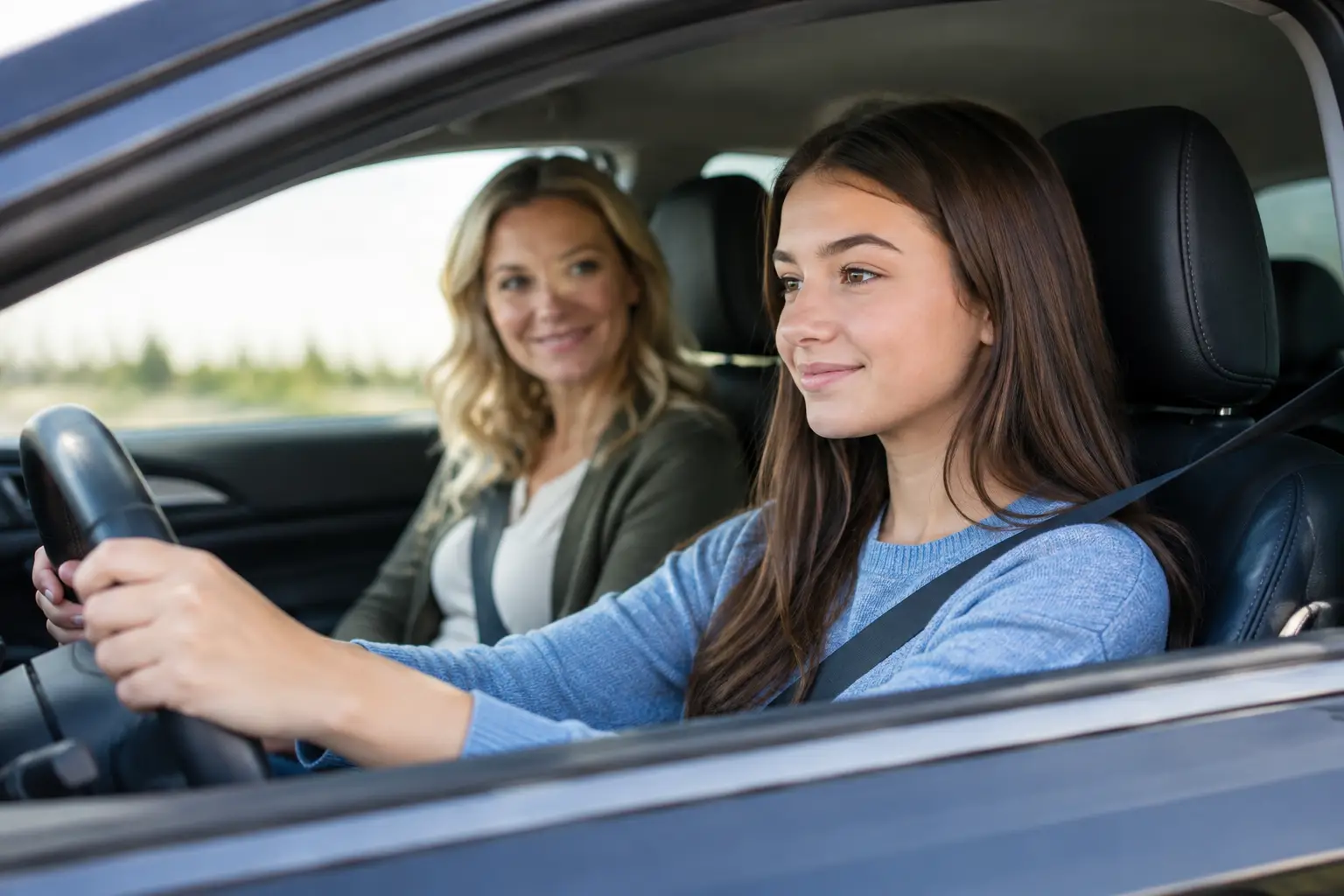
A teen’s first time behind the wheel often feels very different from the permit test. They may know the rules, but judging the space around the vehicle, checking mirrors without losing focus, and making a calm left turn in traffic take practice. Teen lesson packages create a structured way to build those skills over time instead of trying to fit all driving instruction into a few rushed sessions before the DMV test.
For parents, a package also creates a clearer plan. It combines the required steps of California driver training with professional coaching, scheduled practice, and a realistic progression from quiet streets to more demanding driving situations. The goal is not simply to pass a test. It is to help a new driver make safe, repeatable decisions when an instructor or parent is no longer in the passenger seat.
What Teen Lesson Packages Should Include
The right package depends on where a student is in the licensing process. A complete beginner needs a different starting point than a teen who has already practiced with a parent and needs help preparing for the DMV road test. That is why a good program should be built around the student’s current abilities, not a fixed script.
Most teen packages bring together driver education and behind-the-wheel instruction. California teens generally need to complete an approved driver education course before receiving a learner’s permit. They must also complete behind-the-wheel training with a licensed instructor, practice with a qualified adult, hold their permit for the required period, and meet DMV testing requirements before earning a provisional license.
Professional lessons are especially valuable because they turn broad rules into habits. A student may understand that they should scan an intersection, for example, but an instructor can teach them when to begin scanning, what hazards to look for, and how to adjust their speed before a problem develops.
Driver Education Gives the Rules Context
Online driver education is a convenient way for busy students to study traffic laws, signs, right-of-way rules, distracted-driving risks, and California licensing responsibilities. It gives teens the knowledge base they need for the permit test, but it should not be treated as the finish line.
Good education connects those rules to everyday decisions. Why is a complete stop necessary even when an intersection appears empty? When should a driver yield rather than assume another vehicle will stop? How does following distance change in rain, at night, or on a crowded South Bay street? Understanding the reason behind a rule makes it easier to remember under pressure.
Behind-the-Wheel Lessons Build Judgment
In-car lessons are where students learn vehicle control and traffic awareness at the same time. Early sessions may focus on seating position, steering, braking, lane position, turns, and mirror use. As confidence grows, lessons can introduce lane changes, multi-lane roads, parking, residential hazards, busy intersections, and freeway driving when the student is ready.
That pace matters. Sending a nervous beginner into dense traffic too soon can make driving feel overwhelming. Staying only on familiar residential streets, however, can leave a teen unprepared for the situations they will eventually face. A patient instructor adjusts the route and difficulty level while still moving the student forward.
Why a Package Is Better Than Isolated Lessons
One lesson can reveal a student’s starting point. A series of lessons gives the instructor time to reinforce corrections, watch for patterns, and measure progress. This is particularly helpful for teens who need more time with a specific skill, such as smooth braking, lane changes, backing, or judging gaps at intersections.
Packages also help families plan ahead. Rather than waiting until the permit is close to expiring or the DMV test is already scheduled, parents can arrange instruction around school, sports, work, and family commitments. Regular practice intervals usually work better than several lessons crammed into one week because students have time to absorb feedback and practice safely with a parent or guardian between appointments.
There is also a practical financial benefit. Bundled education and training packages can be more affordable than purchasing every component separately. Still, the lowest-priced option is not automatically the best value. Parents should look at what is included, whether the school provides experienced instructors, how lessons are paced, and whether the program supports the student through the actual licensing milestones.
Choosing the Right Number of Lessons
California requires a minimum amount of professional behind-the-wheel instruction, but the minimum is not necessarily the amount every teen needs. Some students are comfortable with vehicle control quickly but need help anticipating traffic. Others understand road rules well and still need additional time building confidence in real driving conditions.
A teen with no prior driving experience may benefit from a more complete package that includes driver education, the required professional lessons, and additional practice or DMV test preparation. A student who has already completed driver education and has consistent supervised practice may need a smaller package focused on skill gaps and test readiness.
Parents should be cautious about measuring progress only by how comfortable a teen says they feel. Confidence is useful when it comes from good habits, but overconfidence can hide missed mirror checks, late braking, incomplete stops, or poor scanning. A qualified instructor can offer a more objective view of whether the student is ready to drive independently and whether more practice would be worthwhile.
What Teens Practice Before the DMV Test
The DMV road test checks basic control, observation, traffic-law compliance, and safe decision-making. It does not require perfection, but it does require a student to demonstrate that they can operate the vehicle responsibly without coaching.
A well-designed package prepares teens for the skills that commonly cause trouble during a road test: complete stops, proper turns, speed control, lane changes, backing in a straight line, parking, and awareness of pedestrians and surrounding traffic. More importantly, it teaches students to recover safely if something unexpected happens. A driver who misses a turn should continue calmly and legally, not make a sudden lane change or unsafe correction.
DMV road-test preparation should also address the vehicle itself. Teens need to know how to adjust mirrors and seats, use turn signals, identify basic controls, and complete a pre-drive safety check. If a family plans to use its own car for the test, it should be properly registered, insured, and in safe operating condition. Requirements can change, so families should confirm current DMV rules before the appointment.
How Parents Can Support the Process
Professional instruction works best alongside calm, consistent practice at home. Parents do not need to copy an instructor’s exact teaching style, but they can support the same fundamentals: eyes moving, hands steady, speed appropriate, space maintained, and decisions made early.
Try to keep practice drives purposeful. One outing may focus on smooth stops and turns, while another focuses on parking or recognizing hazards near schools and shopping centers. Short, regular drives are often more productive than long drives that leave a new driver mentally tired.
It also helps to avoid turning every drive into a critique. Give one or two useful observations after the trip, then let the teen process them. If a parent and student are both feeling tense, a professional lesson can reset the experience and provide neutral feedback.
For families in Torrance and nearby South Bay communities, pickup and drop-off service can make that consistent practice schedule easier to manage. South Bay Driving School uses personalized lessons to meet students where they are, whether that means building a beginner’s comfort from the first lesson or refining skills before the DMV test.
A Safer Start Has Lasting Value
A driver’s license is an exciting step toward independence, but the early months of driving are also when habits become permanent. Teen lesson packages give students room to learn without being rushed, make corrections before they become patterns, and approach the DMV test with preparation rather than panic.
The best package is one that matches the teen’s experience, the family’s schedule, and the level of support the student truly needs. When lessons are patient, structured, and grounded in real road conditions, a teen leaves with more than a passing score. They leave with a safer way to make decisions every time they take the wheel.