
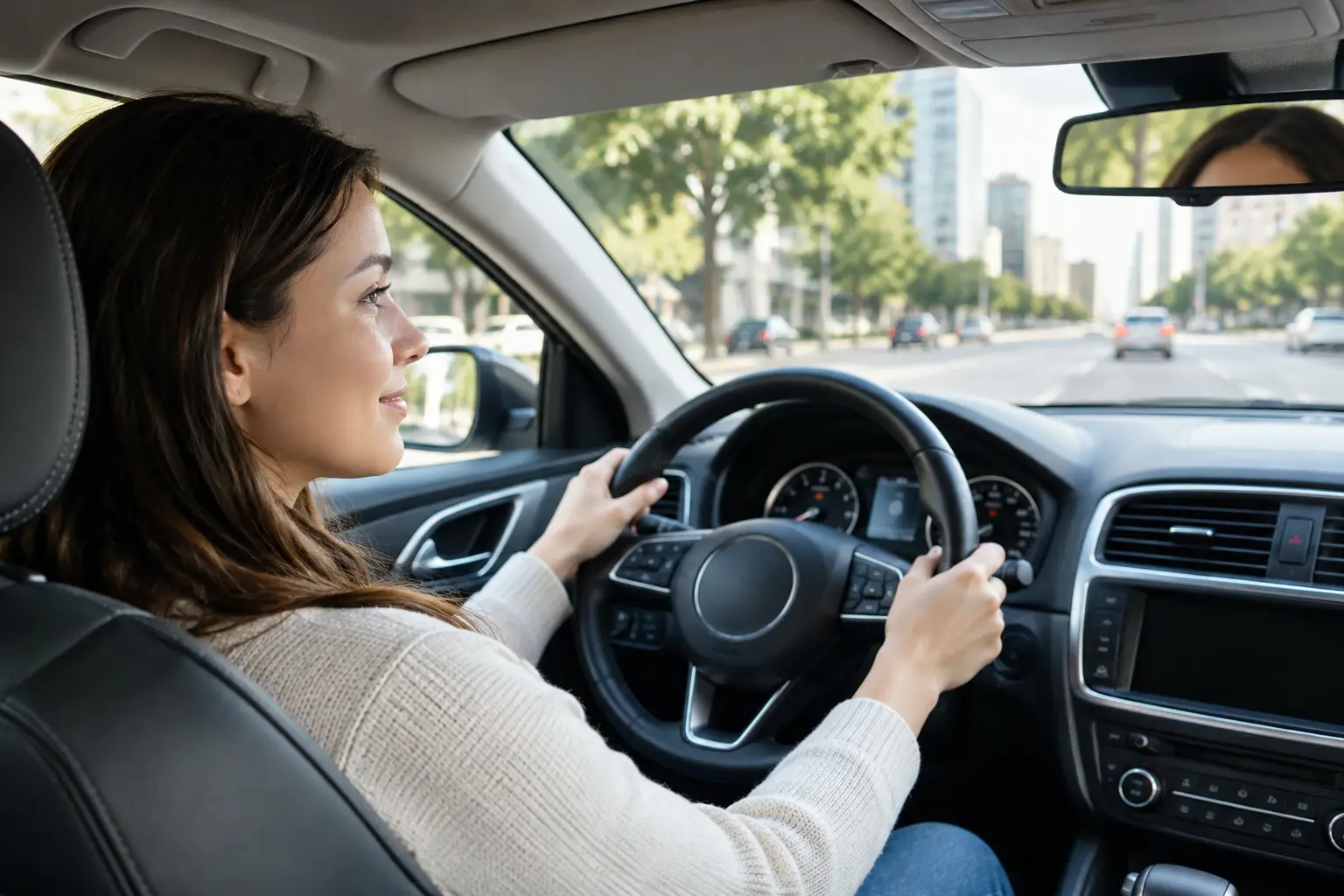
A green light on a busy Torrance street does not always mean it is time to go. A pedestrian may still be in the crosswalk, a car may be waiting to turn left, or traffic ahead may leave no room beyond the intersection. That is why the five skills for city driving are less about quick reactions and more about noticing what is developing early enough to make calm, safe choices.
City streets ask a lot of new drivers. Speeds can change block by block, parked cars limit visibility, and other road users may move unpredictably. With patient practice, these situations become familiar rather than overwhelming. The goal is not to rush through traffic. It is to drive smoothly, leave yourself options, and make decisions that protect everyone around you.
1. Scan intersections before you enter
Intersections create many of the highest-risk moments in city driving because several paths cross in a small space. A driver who only watches the vehicle directly ahead can miss a late pedestrian, a cyclist beside the curb, or a car preparing to turn across traffic.
As you approach an intersection, look well ahead and take in the full picture: traffic signals, lane arrows, crosswalks, pedestrians, vehicles waiting to turn, and cars entering from side streets. Check the space on the other side before proceeding. Even with a green light, do not enter if stopped traffic would leave your vehicle blocking the intersection.
This habit matters at both large boulevards and quiet neighborhood corners. At a four-way stop, come to a complete stop behind the limit line or crosswalk, then determine who arrived first. If two vehicles arrive at the same time, yield to the vehicle on your right. When another driver seems uncertain, patience is usually safer than trying to force the right-of-way.
Look through the turn, not only at the signal
When making a right or left turn, reduce speed early and look where you intend to travel. Keep checking the crosswalk until the turn is complete. Pedestrians may step out after you first look, particularly near schools, shopping areas, transit stops, and busy South Bay beach streets.
A useful practice goal is to say the possible hazards quietly in your mind: “crosswalk clear,” “car turning,” or “bike lane.” This helps new drivers turn observation into a repeatable routine instead of relying on luck or last-second braking.
2. Manage space in changing traffic
City traffic often compresses without warning. A delivery vehicle stops, a rideshare passenger opens a door, or brake lights appear around the next curve. Safe drivers create space before they need it.
Maintain a following distance that gives you time to respond, even when traffic is moving slowly. It can be tempting to follow closely because other drivers may fill an open gap, but tailgating removes your ability to brake gradually. Leave more room in rain, at night, on unfamiliar streets, or whenever your view ahead is blocked.
Space also matters beside your vehicle. Avoid driving for long periods directly next to another car when possible. If that driver changes lanes suddenly, you want an escape path. On narrow streets lined with parked cars, position the vehicle to allow room for an opening door while staying aware of oncoming traffic.
Speed control is part of this skill. The posted limit is not always the best speed for conditions. Near a crowded crosswalk, a school zone, or a street with frequent driveways, easing off the accelerator gives you more time to see and respond. Smooth speed changes also make your driving easier for others to predict.
3. Change lanes with a complete visual check
A turn signal tells other drivers what you plan to do. It does not prove the lane is clear. In dense traffic, safe lane changes depend on checking mirrors, looking over your shoulder, and moving only when there is enough room.
Start by checking your rearview mirror for the traffic pattern behind you. Then check the side mirror in the direction you intend to move, signal early, and briefly turn your head to check the blind spot. If a vehicle, motorcycle, bicycle, or scooter is beside you, wait. A quick shoulder check is especially important near freeway entrances, multilane streets, and areas with bike lanes.
Once you decide the space is safe, move gradually into the lane while keeping your speed steady. Avoid drifting across lanes or making several lane changes at once. If you realize too late that you need to turn, continue safely and find another route. Missing a turn is inconvenient. Cutting across traffic is dangerous.
New drivers sometimes focus so intensely on the lane change that they stop watching what is ahead. Keep your eyes moving between the lane you are entering and the traffic in front of you. This is one reason coached behind-the-wheel practice is valuable: an instructor can help you build the sequence until it feels natural.
4. Share the road with pedestrians, cyclists, and parked cars
City driving means sharing limited space with people who are much less protected than a vehicle occupant. California drivers need to give pedestrians and cyclists time and room, even when traffic behind them feels impatient.
Before turning right, check for a cyclist traveling straight through the intersection. Before turning left, look carefully for pedestrians in the crosswalk and for people approaching it. When passing a cyclist, leave safe space and do not crowd them toward parked vehicles or the curb. Their route may shift suddenly to avoid a pothole, debris, or an opening car door.
Parked cars deserve attention, too. Watch for brake lights, a driver sitting in the front seat, wheels beginning to turn, or a door that may open into your path. In residential areas, expect children, pets, and pedestrians to appear between vehicles. Reducing speed early is one of the best defenses against hazards you cannot fully see.
This skill requires patience. Another road user may be moving more slowly than you would prefer, but trying to squeeze past rarely saves meaningful time. Leaving a respectful buffer protects them and gives you a larger margin for error.
5. Use low-speed control for parking and tight spaces
Many learners feel comfortable driving straight but tense up when parking, pulling into a narrow space, or backing out near other vehicles. These situations are not tests of speed. They are tests of control and observation.
Keep your speed very low, use gentle steering inputs, and look in the direction the vehicle is moving. When backing, check mirrors and turn your head to look through the rear window when appropriate. Use a backup camera as an aid, not as your only source of information. Cameras can miss people, low objects, and activity outside their view.
For parallel parking, break the task into small steps: position beside the vehicle ahead, check for traffic and pedestrians, back slowly while steering into the space, then straighten and adjust. It is normal to make corrections. A careful extra adjustment is safer than forcing the vehicle into place in one motion.
The same approach applies to parking lots and driveways. Slow down at aisle intersections, expect someone to reverse unexpectedly, and avoid relying on another driver’s wave or assumption. If you cannot see clearly, pause until you can.
Build city-driving confidence one decision at a time
Confidence in traffic does not come from being aggressive or knowing every street by memory. It grows when you repeatedly recognize hazards, make measured decisions, and see that you can handle them safely. Teen drivers, adult beginners, and returning drivers often improve fastest when practice is paced and focused on one real-world skill at a time.
For South Bay drivers, regular practice on familiar local streets can turn busy intersections, lane changes, and parking into manageable routines. Give yourself permission to slow down, take the safer option, and keep learning from each drive. Those habits will serve you long after the DMV road test is over.