
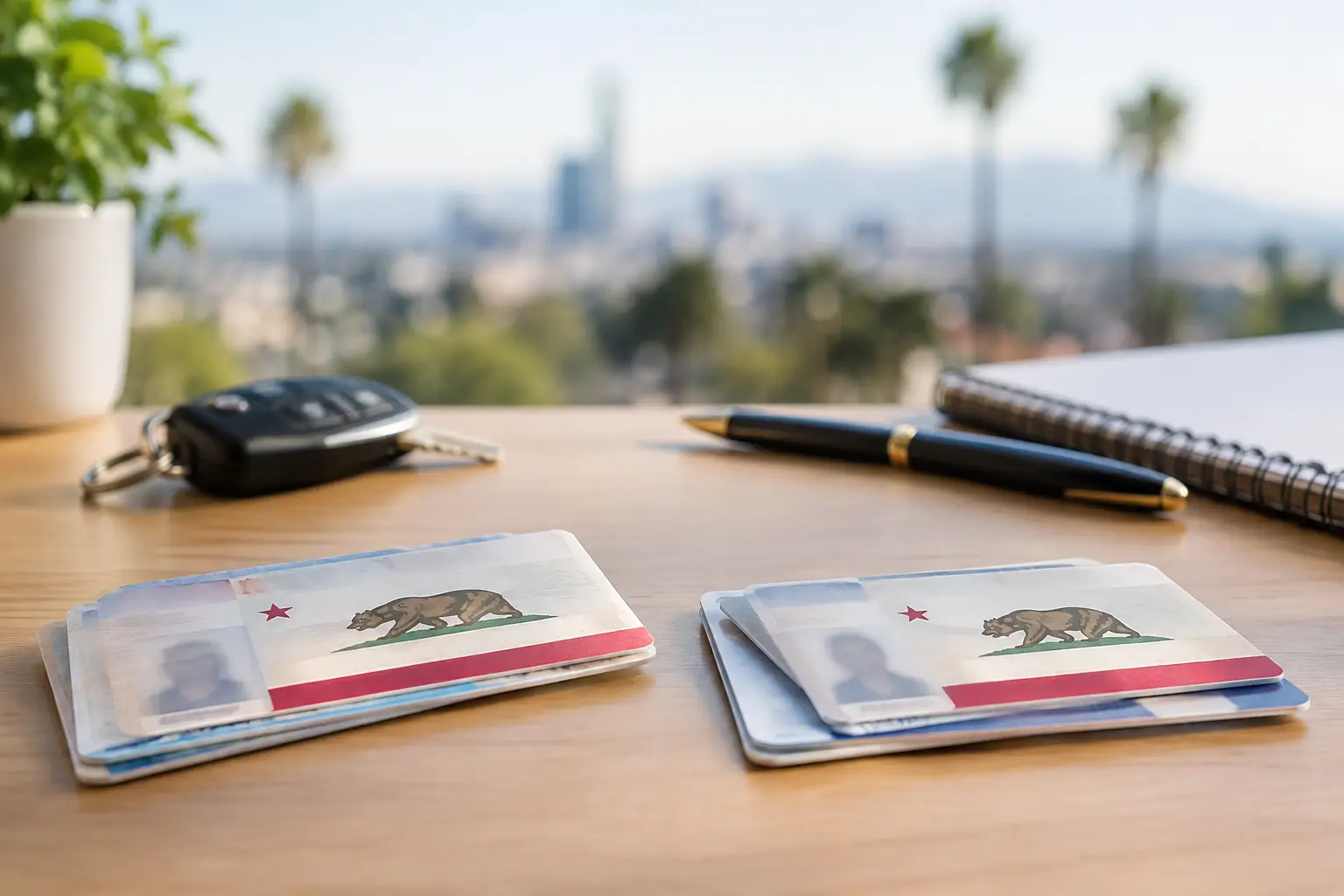
A learner’s permit and a provisional license are both major steps toward independent driving, but they give a new driver very different responsibilities. Understanding the permit versus provisional license distinction helps teens and parents plan lessons, practice hours, and the DMV road test without rushing the learning process.
For South Bay families, this is more than paperwork. A permit is the protected learning stage, when a new driver builds habits with an experienced adult in the passenger seat. A provisional license is the next stage: more freedom, along with restrictions designed to reduce the risks that come with driving alone.
Permit versus provisional license: the basic difference
A California instruction permit allows a teen to practice driving, but not to drive independently. The permit holder must be supervised by a qualified licensed driver who is seated close enough to take control of the vehicle if needed. That supervising driver may be a parent, guardian, driving instructor, spouse, or another California-licensed adult age 25 or older.
A provisional driver’s license allows a driver under 18 to drive alone after passing the DMV road test. It is a real driver’s license, but it carries temporary restrictions during the first 12 months. These limits address two situations that can be especially challenging for newly licensed teens: late-night driving and carrying young passengers.
The simplest way to remember it is this: a permit is for learning under supervision. A provisional license is for beginning independent driving with guardrails still in place.
What a California learner’s permit allows
Most teens can apply for a California instruction permit at age 15 1/2, provided they meet the DMV’s education requirements. For applicants under 17 1/2, that generally means completing driver education or being enrolled in an approved driver education program. The DMV also requires an application, identity and residency documents, a vision screening, and a passing score on the knowledge test.
Receiving a permit does not mean a teen is ready for busy streets, freeway merging, or the road test. It means they can begin developing those skills safely and gradually.
During the permit period, practice should progress at the driver’s pace. A nervous beginner may start in an empty parking lot or quiet residential area, focusing on steering, braking smoothly, signaling, and understanding vehicle size. From there, supervised practice can move to neighborhood intersections, multi-lane roads, parking lots, left turns, and eventually freeway driving when the student is ready.
California requires teen permit holders to complete at least 50 hours of supervised driving practice, including 10 hours at night. They must also complete at least six hours of professional behind-the-wheel instruction with a licensed driving school before taking the road test. These are minimums, not a finish line. Some students need more time, especially if they practice infrequently or feel anxious in traffic.
A good practice log should reflect real driving conditions, not just easy trips around the block. A new driver benefits from experience in daylight and darkness, changing traffic conditions, parking situations, lane changes, hills, and routes that require planning ahead.
The permit stage is where habits are built
The permit stage can feel slow to a teen who is eager to drive alone. But the skills built here are the ones that make independent driving safer later. Consistent mirror checks, complete stops, safe following distance, speed control, and calm decision-making cannot be crammed into a single week before the DMV test.
Professional instruction can be especially helpful because an instructor can identify patterns a parent may not notice, such as braking too late, turning too wide, missing visual checks, or becoming overwhelmed at complex intersections. The goal is not simply to pass a test. It is to help the student make repeatable safe choices after the instructor is no longer in the car.
What changes with a provisional license?
A teen may qualify for a provisional license at age 16 if they have held their instruction permit for at least six months, completed the required driver training and practice hours, and passed the DMV road test. A parent or guardian must generally certify the required practice hours for a minor applicant.
Once licensed, the teen can drive without a supervising adult. However, for the first 12 months, California’s provisional license restrictions apply. The driver may not drive between 11 p.m. and 5 a.m. unless a qualifying exception applies. They also may not transport passengers under age 20 unless accompanied by a parent, guardian, licensed California driver age 25 or older, or a certified driving instructor.
There are limited exceptions for situations such as school activities, employment, medical needs, and immediate family needs. These exceptions generally require supporting documentation, such as a signed note. Families should review current DMV guidance before relying on an exception, since a verbal explanation after a traffic stop may not be enough.
These rules can be frustrating when friends are making plans or a teen has an early shift at work. Still, they reflect a practical safety concern. Distractions, nighttime visibility, peer pressure, and unfamiliar routes can make a new driver’s first year much more demanding. The restrictions end when the driver turns 18 or after the required provisional period has passed, depending on the situation.
A practical timeline for teen drivers
The licensing process works best when families allow enough time between each milestone. First comes driver education and preparation for the DMV knowledge test. Next comes the permit and a steady schedule of supervised driving lessons and home practice. After the required six-month permit period, professional instruction hours, and supervised practice are complete, the teen can schedule the DMV road test.
Trying to compress this process often creates stress. A student who drives only once every few weeks may technically hold a permit for six months but still lack the judgment needed for independent driving. On the other hand, a teen who practices consistently can arrive at the road test feeling familiar with traffic patterns, vehicle controls, parking, and common DMV instructions.
For families in Torrance and nearby South Bay communities, local practice should include the kinds of conditions the student is likely to face after licensing: busy commercial corridors, residential streets with pedestrians, school zones, parking lots, and coastal traffic. Familiarity with a route is helpful, but true readiness means being able to drive safely when the route, weather, or traffic changes.
What if the driver is 18 or older?
The terms can be confusing because adults may also need an instruction permit before taking a DMV road test. An adult permit holder still needs qualified supervision while practicing and cannot drive alone on the permit. However, once an adult passes the road test, they receive a regular driver’s license rather than a provisional license with teen restrictions.
Adults often bring different needs to the learning process. Some are complete beginners, while others drove years ago in another state or country and need a California-focused refresher. They may need extra work on freeway driving, parallel parking, defensive driving, or confidence in dense traffic. The right number of lessons depends on experience and comfort level, not age alone.
Do not let the DMV test set the only standard
Passing the DMV road test is an achievement, but it is not a guarantee that every driving situation will feel easy. A provisional driver may pass the test and still need guided experience with freeway entrances, nighttime driving, rain, unfamiliar destinations, or busy parking areas.
Before scheduling the test, parents and students should ask practical questions. Can the student maintain a safe speed without reminders? Do they consistently check mirrors and blind spots? Can they make safe lane changes, handle unprotected left turns, park accurately, and recover calmly from a missed turn? Do they understand that arriving late is safer than making a rushed decision?
If the answer to several of these questions is no, more practice is usually the better choice. South Bay Driving School’s behind-the-wheel lessons are designed to give students patient, individualized coaching so that their license reflects real readiness, not just a completed checklist.
The permit period is an investment in confidence. Give a new driver enough supervised miles, honest feedback, and time to learn. When they move from a permit to a provisional license, they will be better prepared to protect themselves, their passengers, and everyone sharing the road.