
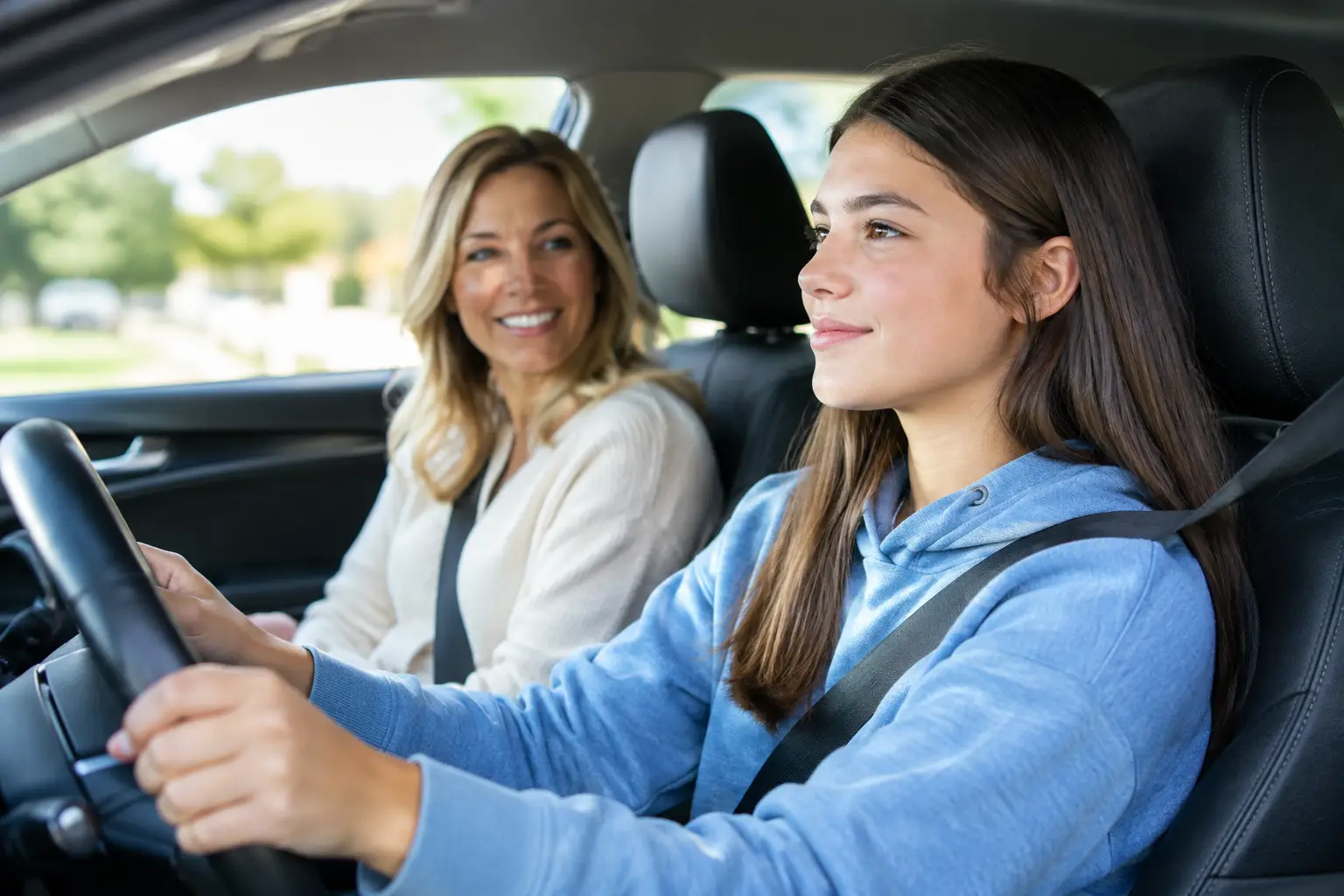
A teenager can know every answer on a permit test and still feel overwhelmed at a busy South Bay intersection, merging onto the freeway, or making a left turn with impatient traffic behind them. That gap between knowing the rules and using them calmly is at the center of today’s teen driver trends. For parents, the goal is not simply getting a license quickly. It is helping a new driver develop judgment that holds up when the road gets complicated.
Teen Driver Trends Are Changing the Learning Process
Many teens are starting later than previous generations. Some are balancing demanding school schedules, sports, part-time jobs, and college preparation. Others are nervous about traffic, insurance costs, or the responsibility that comes with driving. Waiting is not necessarily a problem, but it can mean a learner has fewer months of regular practice before a DMV road test.
The result is often an uneven experience. A teen may be comfortable driving around familiar neighborhood streets but have limited experience with higher-speed roads, parking lots, lane changes, nighttime driving, or unfamiliar routes. A driver’s license requires basic skill, but safe independent driving requires exposure to many different situations over time.
Parents can help by treating practice as a gradual process rather than a final rush before the test. Short, consistent drives usually build more confidence than one long session every few weeks. The right pace depends on the student. Some teens are ready to add new challenges quickly, while others benefit from repeating the same skills until they feel natural.
Phones Still Create the Biggest Distraction Risk
Teenagers have grown up with phones within reach, so putting one away while driving can feel less natural than it sounds. Notifications, music choices, navigation prompts, and group chats can all pull attention away from the road. Even a brief glance can affect following distance, speed control, and awareness of pedestrians or changing traffic signals.
California’s rules limit phone use for younger drivers, but families should build habits that go beyond compliance. Before the car moves, the phone should be silenced and placed where it cannot become a temptation. Navigation should be set in advance. If a route changes or a message feels urgent, the driver should pull over safely before responding.
This is a useful place for parents to lead by example. A teen will notice whether the adults around them answer calls at red lights, scroll at stop signs, or reach for a phone while merging. The family standard should be simple: driving gets full attention.
Technology Helps, but It Does Not Replace Attention
Newer vehicles may have backup cameras, blind-spot alerts, lane-departure warnings, parking sensors, and automatic emergency braking. These features can add a valuable layer of protection, especially for a new driver. They are not a substitute for checking mirrors, turning to look over the shoulder, maintaining space, and scanning ahead.
A backup camera, for example, helps show what is directly behind the vehicle. It does not eliminate the need to look around for cross traffic, pedestrians, bicycles, or objects outside the camera’s view. A blind-spot warning can alert the driver, but the driver still needs to confirm that a lane is clear before moving over.
Teens should practice in the vehicle they will drive most often and learn where its safety features help, where they have limits, and how to respond without panic. Technology should support good decisions, not make drivers less engaged.
Confidence and Anxiety Both Need a Plan
Not every teen driver is eager to get behind the wheel. Some are excited but overconfident. Others understand the rules yet become tense when traffic builds. Both reactions deserve patient instruction.
Overconfidence can show up as driving too fast for conditions, following too closely, or assuming other drivers will behave predictably. Anxiety can lead to hesitation at intersections, late braking, missed turns, or freezing when several decisions are needed at once. Neither issue is solved by criticism from the passenger seat.
A structured lesson plan gives teens a way to improve one skill at a time. Early sessions may focus on steering, braking smoothly, mirror use, and basic turns. As control improves, the driver can work on lane changes, busy intersections, freeway entry, parking, and more demanding traffic conditions. Repetition creates familiarity, and familiarity helps reduce stress.
Professional instruction can be especially useful when a parent and teen are stuck in a pattern of tense practice drives. A patient instructor provides consistent feedback and a neutral environment, while parents can continue reinforcing the same safe habits between lessons.
Real-World Practice Matters More Than Familiar Routes
A common mistake is practicing only on the same quiet roads. Familiarity can make a learner look more advanced than they are because they already know where the stop signs, turns, and traffic patterns are. Independent driving requires a teen to read the road in places they have never been.
A complete practice plan should gradually include residential streets, commercial areas, multilane roads, parking lots, freeway ramps when appropriate, and routes with pedestrians and cyclists. In the South Bay, that may mean preparing for changing traffic around schools, coastal congestion, wide boulevards, and busier intersections in Torrance, Redondo Beach, or Carson.
Weather and time of day also matter. Bright sun can reduce visibility. Evening driving changes depth perception and makes pedestrians harder to see. Wet roads require gentler braking and more following distance. These situations should be introduced thoughtfully, not all at once.
The DMV Test Is a Milestone, Not the Finish Line
The DMV road test matters, and preparation should include the maneuvers and observations a student will be expected to demonstrate. That includes smooth stops, controlled turns, proper lane position, scanning, speed management, parking skills, and safe decision-making.
Still, passing the test is not the same as being prepared for every driving situation. California’s provisional license restrictions for drivers under 18 are designed to reduce higher-risk conditions during the first year of independent driving. Families should view those restrictions as a starting point for thoughtful boundaries, especially around late-night driving, teen passengers, and unfamiliar destinations.
A useful family conversation goes beyond, “Did you pass?” Ask how the drive felt, what was difficult, and what situations the teen wants more practice with. A newly licensed driver may still need guided experience on freeways, at night, or in heavier traffic. Continued practice protects the progress they have made.
How Parents Can Support Safer Teen Driving
Parents do not need to be perfect driving coaches. They do need to be consistent. Agree on a few nonnegotiable habits: wear a seat belt before the vehicle moves, put the phone away, keep a safe following distance, scan intersections, and slow down when conditions call for it.
Keep feedback specific and calm. “Start braking earlier next time” is more helpful than “You are too close.” If a practice drive becomes stressful, it is reasonable to stop somewhere safe, reset, and return to an easier skill. Pressure rarely produces better judgment.
It also helps to separate practice from errands when possible. A teen who knows they are being rushed to an appointment may focus on pleasing the passenger instead of learning. A planned practice drive gives both the learner and parent room to pay attention to the road.
South Bay Driving School has seen for more than 35 years that capable drivers are built through patient instruction, repeated practice, and clear expectations. Every teen learns at a different pace, but every teen benefits from a plan that puts safety before speed.
The best outcome is not a teenager who can simply complete a road test route. It is a young driver who knows when to slow down, when to wait, when to ask for help, and how to make safe choices long after the instructor or parent is no longer in the passenger seat.