
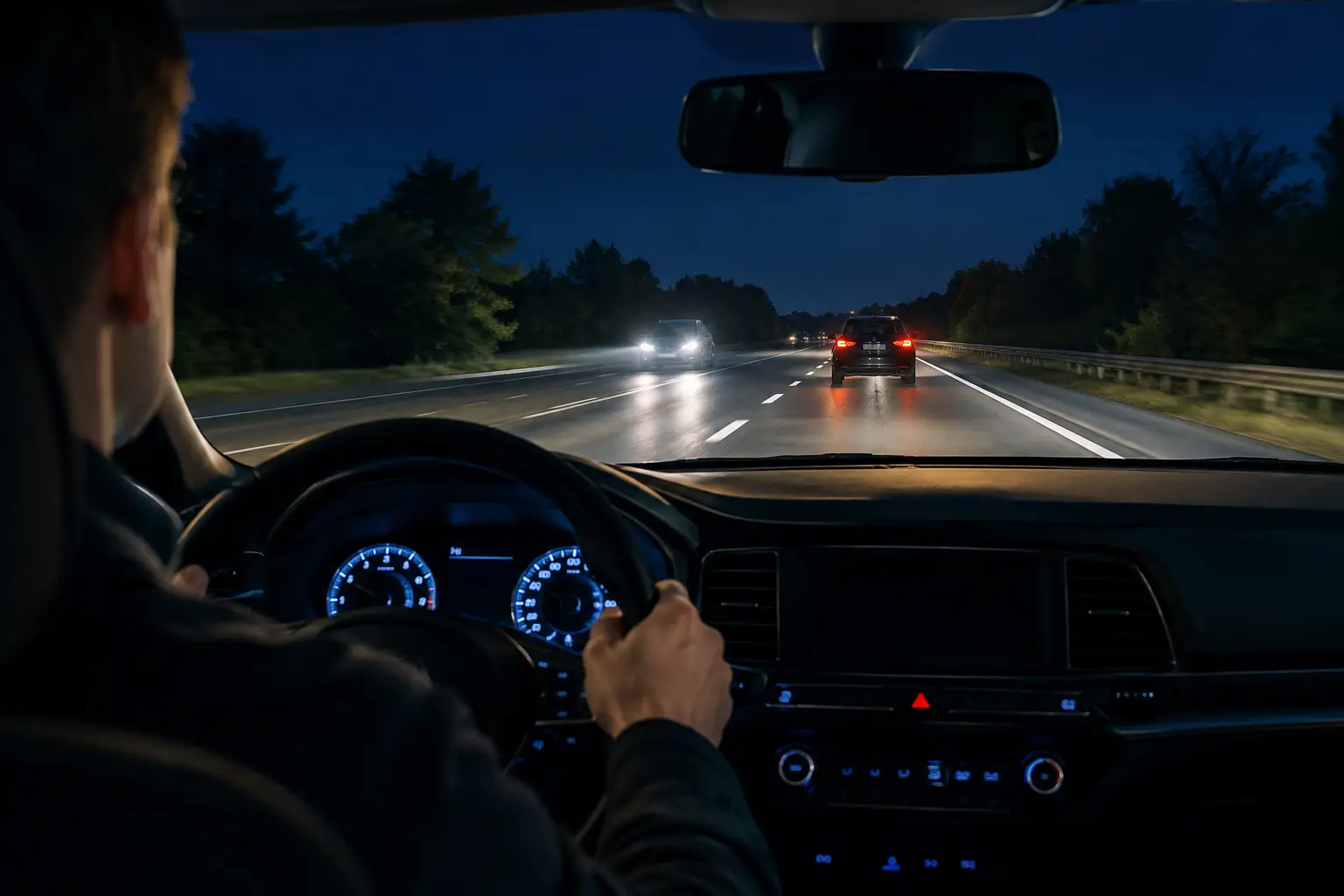
A familiar South Bay route can feel completely different after dark. Headlights compress the road ahead, glare from oncoming traffic can hide lane markings, and pedestrians may appear only at the edge of your vision. Learning to improve nighttime driving visibility is not about trying to see farther than conditions allow. It is about preparing your vehicle, using your eyes effectively, and giving yourself enough time and space to respond safely.
For new drivers, nighttime practice should be gradual and intentional. For returning and senior drivers, a few practical adjustments can make driving after dark feel more comfortable and controlled.
Start With a Vehicle You Can See Out Of
Clear visibility begins before the engine starts. A clean windshield makes a larger difference at night than many drivers expect. Fine film on the inside of the glass, road dust on the outside, and streaks left by old wipers can spread headlight glare across your field of vision. What looks like a small smudge in daylight can become a bright haze after sunset.
Clean both sides of the windshield regularly, along with the rear window, side windows, mirrors, backup camera, and headlight lenses. Use a proper automotive glass cleaner and a clean microfiber cloth so you are removing residue rather than moving it around. If your wiper blades chatter, skip, or leave streaks, replace them before the next rainy evening.
Headlights deserve the same attention. Dirt, oxidation, and moisture inside a headlamp assembly can reduce the usable light reaching the road. If the plastic lenses look cloudy or yellow, have them restored or replaced. Also check that both low beams, high beams, brake lights, turn signals, and license plate lights work properly. A burned-out bulb is more than an inconvenience. It can reduce your ability to see or make it harder for other road users to recognize your vehicle.
Check Headlight Aim, Not Just Brightness
Brighter bulbs are not always the answer. Headlights that are aimed too high can create dangerous glare for oncoming drivers, while lights aimed too low may leave you with too little warning of a curve, obstacle, or pedestrian. An improperly aimed headlight may also make you believe you need to drive faster or use high beams more often than is safe.
If your vehicle has recently had front-end work, a collision, suspension changes, or a headlight replacement, ask a qualified technician to check the headlight aim. Keep the trunk and back seat from being overloaded as well. A heavily loaded rear end can tilt the front of the vehicle upward and direct low beams into other drivers' eyes.
Set Up Your Seating and Mirrors Before You Move
Good nighttime visibility depends on where you sit. Adjust your seat so you can press the pedals fully while maintaining a comfortable bend in your knees. Sit upright enough to look well beyond the hood, with your head restraint positioned behind the middle of your head. A reclined position may feel relaxed, but it reduces control and can make it harder to scan the road effectively.
Adjust the rearview mirror for a full view out the back window. Most rearview mirrors have a nighttime setting that reduces glare from vehicles behind you. Use it when headlights are distracting, but remember that the dimmed setting also makes objects behind you less visible. Your side mirrors should be positioned to reduce blind spots, not angled so far inward that they mainly show the sides of your own vehicle.
Avoid placing phone mounts, air fresheners, parking passes, or other objects where they block part of the windshield. Even a small obstruction can hide a person stepping into a crosswalk, especially on a dark street.
Use Your Eyes Differently at Night
Night driving requires a wider, more deliberate visual routine. Do not stare directly at oncoming headlights. Instead, look toward the right edge of your lane or use the painted lane line, curb, or roadside reflectors as a reference while the vehicle passes. This helps limit glare without causing you to look away from the roadway.
Keep your eyes moving. Scan far ahead for changing traffic patterns, then check the area closer to your vehicle, mirrors, intersections, sidewalks, and crosswalks. In neighborhoods around Torrance, Redondo Beach, and other South Bay communities, drivers should be especially alert for pedestrians, cyclists, dog walkers, and vehicles pulling away from the curb. Dark clothing, uneven lighting, and parked cars can make them difficult to spot early.
Look through turns rather than only at the pavement in front of the vehicle. Your hands naturally follow your eyes, so looking toward the path you want to travel supports smoother steering. This is particularly helpful on dimly lit curves and when turning at an intersection with limited street lighting.
Give Your Eyes Time to Recover From Glare
Glare can temporarily reduce your vision even after a bright vehicle has passed. Avoid looking at the source of the light, and do not respond by speeding up to get through the uncomfortable moment. Maintain a steady speed or slow gradually if needed, while keeping your vehicle centered in the lane.
Interior light matters, too. Turn down overly bright dashboard displays if your vehicle allows it. A bright screen can make the road outside seem darker and can pull your attention away from traffic. Keep phone screens off and out of your hands. Navigation should be set before departure, with audio directions used when possible.
Slow Down Enough to Stop Within What You Can See
At night, the safest speed is often below the posted limit. The speed limit is set for favorable conditions, but darkness reduces how far ahead you can identify a hazard. Your vehicle must be able to stop within the distance illuminated by your headlights, allowing for reaction time and braking distance.
This matters most on unlit roads, during rain, and near construction zones. Wet pavement reflects lights and can make lane lines, potholes, and standing water harder to judge. Fog can be even more deceptive because high beams reflect off the moisture and create a wall of light. In fog, use low beams, reduce speed, increase following distance, and avoid sudden movements.
Leave more room behind the vehicle ahead than you would during the day. A longer following distance gives you time to see around its taillights, respond to braking, and avoid feeling pressured to make quick decisions. If another driver follows too closely, do not brake-check or speed up. Create more space ahead and let the driver pass when it is safe.
Use High Beams With Courtesy and Good Judgment
High beams can significantly improve your view on dark, open roads, but they are not appropriate everywhere. Use them only when there is no nearby oncoming traffic and when you are not closely following another vehicle. Switch back to low beams promptly when approaching or following others, including on divided roads where glare can still affect drivers across the median.
High beams are not a solution for rain, fog, snow, or heavy mist. In those conditions, the extra light can reflect back toward you and make visibility worse. Low beams are the better choice because they direct light lower onto the roadway.
New drivers should practice changing between low and high beams while parked first. Know where the control is, how the indicator appears on the instrument panel, and how to return to low beams without taking your attention off the road.
Plan Night Trips to Reduce Pressure
When you are building confidence, choose your nighttime practice carefully. Begin on familiar streets with working streetlights and lighter traffic. Drive with a licensed, calm supervisor or instructor, and focus on one or two skills at a time, such as maintaining lane position, judging following distance, or approaching intersections.
Before leaving, check the weather, fuel level, route, and vehicle lights. Build in extra time so you do not feel rushed. If you miss a turn, continue safely and reroute when practical. Sudden lane changes and last-second turns are harder to manage at night, particularly for a driver who is still gaining experience.
For drivers preparing for a California DMV road test, nighttime practice still has value even when the test itself occurs during daylight. It develops better scanning habits, smoother speed control, and a stronger understanding of how visibility affects safe decisions.
When Night Vision Changes, Take It Seriously
If glare, halos around lights, headaches, or difficulty seeing road signs are new or getting worse, schedule an eye exam. Vision changes can happen gradually, and a current prescription may make a meaningful difference. Clean glasses regularly, since scratches and residue can increase glare just as a dirty windshield does.
Do not push through fatigue. Tired eyes and a tired brain process information more slowly, which is especially risky when visibility is limited. If you are struggling to focus, yawning repeatedly, or drifting in your lane, the safe choice is to stop in a secure location and rest.
Nighttime driving becomes more manageable through repetition, preparation, and patient decision-making. Start with clear glass, properly working lights, a calm pace, and enough following distance. Each careful drive builds the habits that help you see more, react earlier, and arrive with greater confidence.