
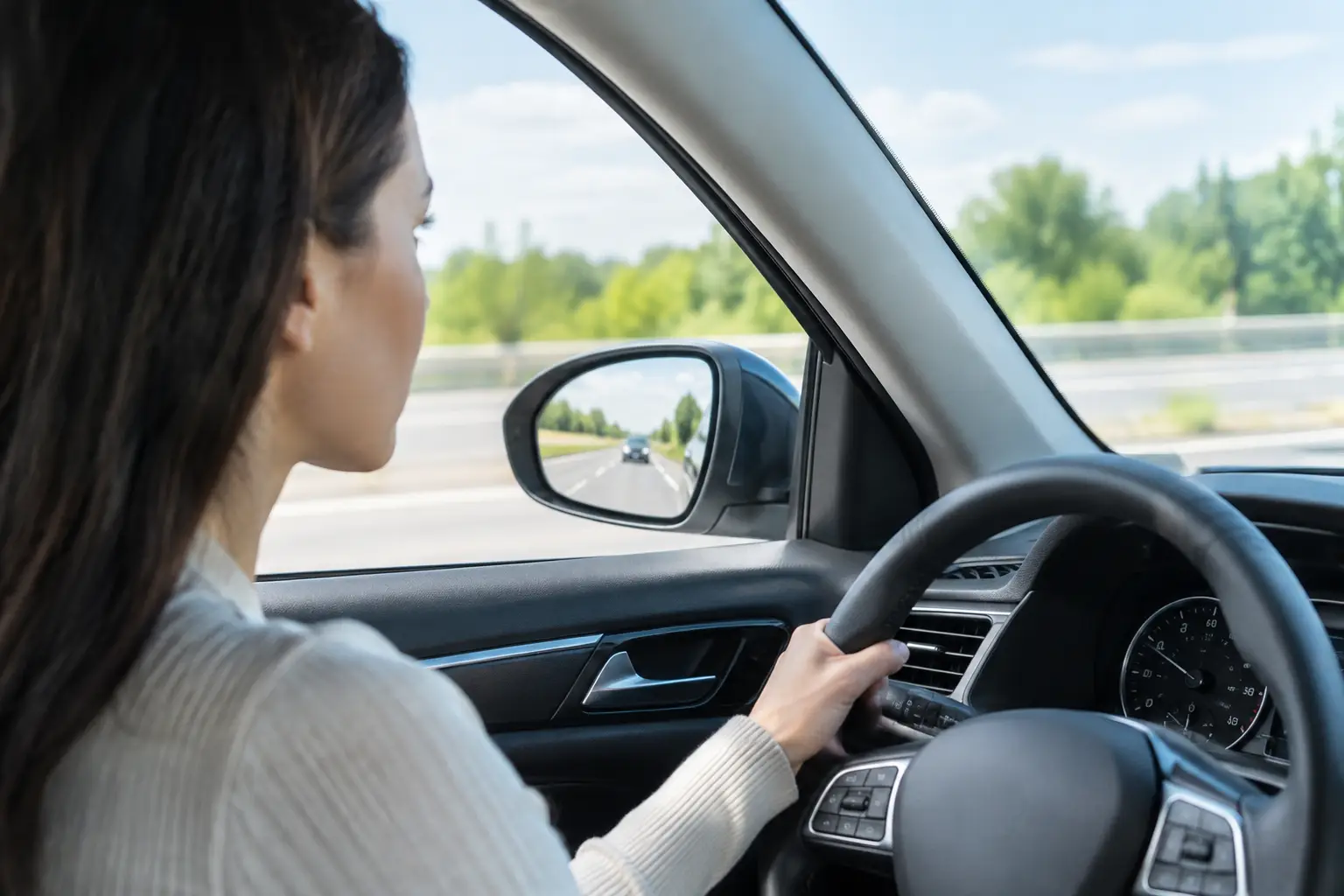
A lane change can feel simple until traffic is moving quickly beside you on the 405, a motorcycle is filtering through a gap, or a car has been traveling quietly just outside your mirror view. Learning to manage blind spot checks is not about making one dramatic head turn. It is about building a short, repeatable observation routine that keeps your attention on the road while helping you move only when the space is truly clear.
For new drivers, this skill often feels awkward at first. Parents may see a teen look over a shoulder and worry that the car will drift. Adult learners may hesitate so long that an opening disappears. With patient practice, blind spot checks become controlled, quick, and natural - an essential part of safe driving and DMV road-test readiness.
What a Blind Spot Check Actually Covers
Your mirrors show a great deal, but they cannot show every area around your vehicle. The blind spots are the areas beside and slightly behind the car that are hidden from your rearview and side mirrors. A vehicle, bicycle, motorcycle, or pedestrian can occupy one of these spaces even when your mirrors appear clear.
A blind spot check is a brief glance over the appropriate shoulder to confirm that no road user is beside your vehicle before you change position. It supplements mirror use; it never replaces it. The goal is to gather the information you need without staring away from the road ahead.
In California, drivers should be especially alert for motorcycles, cyclists, and fast-changing freeway traffic. In the South Bay, lane changes can happen quickly around busy interchanges, multi-lane boulevards, and coastal routes shared by cars, bikes, and pedestrians. Good habits matter because conditions can change between your first mirror check and the moment you begin to move.
How to Manage Blind Spot Checks in the Right Order
The safest routine is simple: look ahead, check mirrors, signal, check mirrors again, glance over your shoulder, then move only if the lane is open. Keep looking ahead often throughout the process. A blind spot check should take a moment, not several seconds.
Start by checking your rearview mirror for traffic behind you and your side mirror for vehicles approaching in the lane you want to enter. Turn on your signal early enough to communicate your intention. Other drivers may make room, maintain their pace, or reveal that they plan to change lanes too.
Next, make a quick shoulder check toward the lane you are entering. For a move to the left, glance over your left shoulder. For a move to the right, glance over your right shoulder. Then return your eyes forward and make a smooth, gradual lane change if the space remains clear.
The order matters. Signaling before the shoulder check gives nearby drivers information. Checking mirrors before turning your head helps you understand what traffic is doing around you. Looking forward again before moving protects you from missing a sudden brake light, stopped traffic, or a pedestrian ahead.
Keep the Vehicle Straight During the Check
Many beginning drivers unconsciously pull the steering wheel in the direction they turn their head. This is normal during early practice, but it needs attention. Keep both hands positioned for control, maintain a steady speed when appropriate, and use a short glance instead of rotating your whole upper body.
Practice first on quiet streets with an instructor or experienced supervising driver. Choose a straight roadway with light traffic, signal for a lane change when it is safe, complete the visual sequence, and notice whether the vehicle remains centered. Repetition helps the movement become calm rather than rushed.
If you feel yourself drifting, do not force the lane change. Stay in your lane, re-center the car, and try again later when conditions allow. Missing an opening is safer than making a hurried move.
When You Need a Blind Spot Check
Lane changes are the most familiar situation, but they are not the only time blind spots matter. Before pulling away from a curb, look for approaching vehicles, bicycles, and pedestrians. Before moving into a bike lane area for a right turn, check carefully for cyclists traveling alongside you. Before merging onto a freeway, assess mirror traffic and use a shoulder check before entering the lane.
You should also look over the appropriate shoulder before backing. Mirrors and a backup camera are useful tools, but they do not replace direct observation. When reversing, look behind the vehicle through the rear window whenever possible while using mirrors and the camera to support your view.
Turning right deserves special care in neighborhoods, shopping areas, and near schools. A cyclist can approach from behind on the right, and a pedestrian may step into a crosswalk as you prepare to turn. Slow down, scan the intersection, and do not assume a clear side mirror means the area is clear.
Adjust Your Mirrors, but Do Not Rely on Them Alone
Proper mirror adjustment reduces the size of blind spots and makes your checks more efficient. Set the rearview mirror to frame as much of the rear window as possible. Adjust side mirrors outward so you see only a small edge of your own vehicle, if any, along the inside edge of each mirror.
Drivers sometimes point side mirrors too far inward because they want to see the side of the car. That view may feel reassuring, but it duplicates what the rearview mirror already shows and leaves more space hidden beside the vehicle. A wider setting provides a better view of adjacent lanes.
Still, even well-adjusted mirrors have limits. Mirror settings vary by driver height, vehicle size, and seating position. A compact car, SUV, and pickup can each create different viewing challenges. The shoulder check remains necessary because it verifies what the mirrors cannot fully show.
Common Mistakes That Make Checks Less Safe
One common mistake is checking only once and assuming the scene will stay the same. Traffic is active. A motorcycle may close the distance, a driver may accelerate, or a vehicle may enter your blind spot after your first glance. Check mirrors again just before moving and make the shoulder check your final confirmation.
Another mistake is signaling and immediately changing lanes. A signal communicates an intention; it does not create a safe opening or give a driver permission to move over. Wait for a clear space, then complete your check sequence.
Some drivers also slow down suddenly while deciding whether to change lanes. On a freeway, unexpected braking can create a risk for traffic behind you. If you cannot safely make the move, continue in your current lane and find another opportunity. On the other hand, do not accelerate aggressively just to reach a gap. Match traffic as safely as conditions allow.
Finally, avoid treating technology as a substitute for judgment. Blind-spot monitoring systems can alert you to nearby vehicles, but they may not detect every motorcycle, bicycle, pedestrian, or rapidly changing traffic situation. Alerts are helpful backup information. Your mirrors, direct observation, and decision-making are still the foundation.
Blind Spot Checks on the DMV Road Test
During a California DMV road test, an examiner is looking for safe, observable driving habits. They need to see that you check mirrors, signal appropriately, look over your shoulder before a lane change or merge, and maintain control of the vehicle while doing it.
Do not exaggerate the movement so much that you lose sight of the road for too long. A clear, deliberate shoulder glance is enough. Pair it with smooth steering, proper speed, and an appropriate following distance. If traffic is too heavy for a safe lane change, it is better to communicate that you recognize the condition than to force the maneuver.
Road-test preparation works best when the habit is already familiar. Rather than memorizing a sequence the day before the test, practice it on every appropriate lane change during supervised driving. A patient instructor can point out whether your checks are timely, whether your signal is early enough, and whether you are holding a steady lane position.
Build Confidence One Safe Decision at a Time
Nervous drivers sometimes believe confidence means moving quickly. In reality, confident driving means making measured decisions with enough time to observe, signal, and respond. You do not need to take every opening. You need to recognize the safe ones.
South Bay Driving School teaches these habits through paced, personalized behind-the-wheel instruction because drivers learn them best in real traffic, with calm guidance and repeated practice. The goal is not simply to complete a shoulder check for a test. It is to develop a habit that protects you, your passengers, and everyone sharing the road.
The next time you prepare to change lanes, give yourself permission to slow the decision down mentally: mirrors, signal, shoulder check, forward view, smooth move. With practice, that brief routine becomes one of the most dependable safety habits you carry into every drive.