
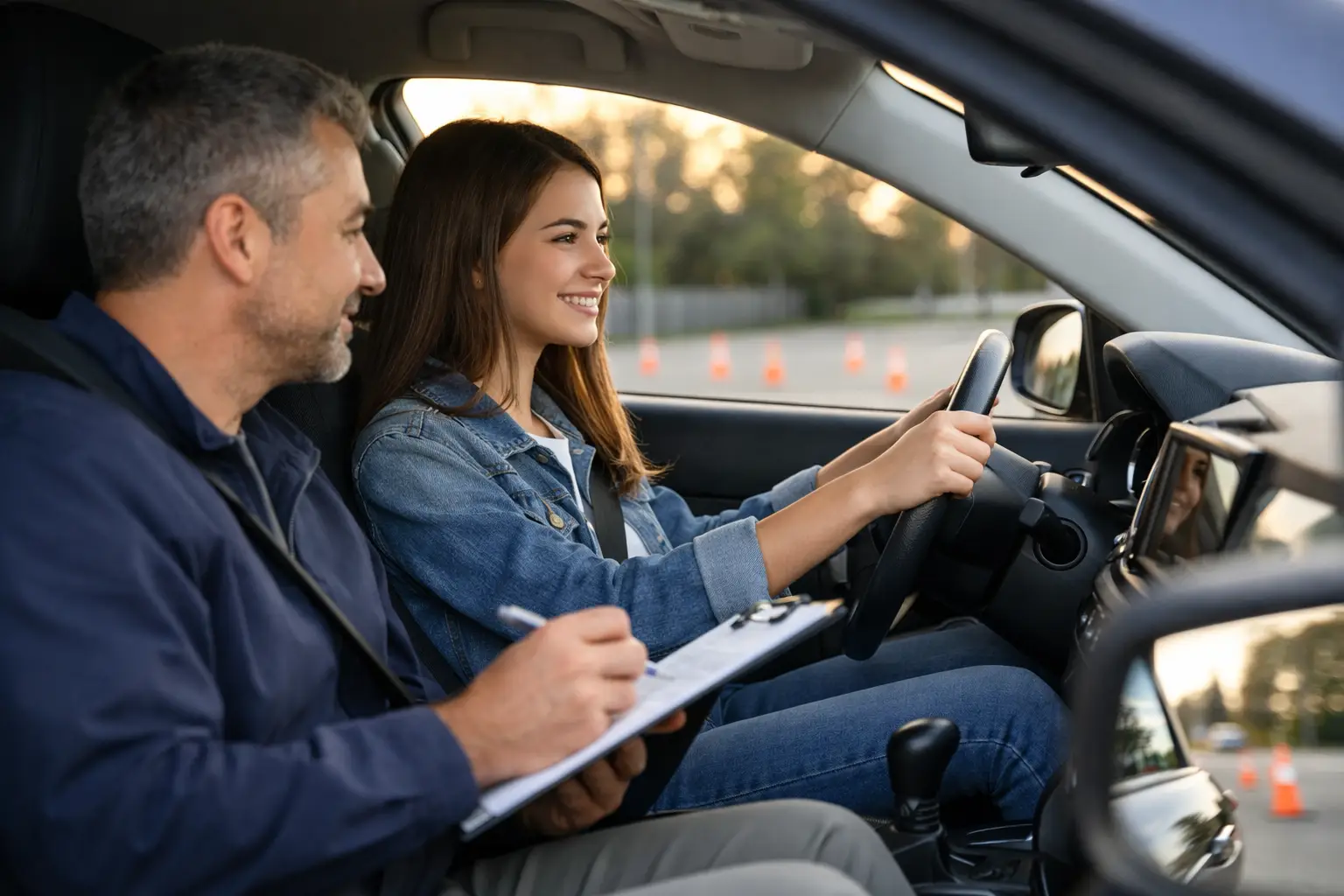
A passed DMV road test is a meaningful milestone, but it is only one measure of teen licensing outcomes. For families, the better question is whether a new driver can make calm, safe decisions after the examiner leaves the passenger seat. That means controlling the vehicle smoothly, checking surroundings consistently, handling busy intersections, and knowing when not to rush.
For a teenager, earning a license often represents freedom. For a parent, it can bring a mix of pride and understandable concern. Good driver education and behind-the-wheel instruction help close that gap by giving new drivers a structured way to build skill before they begin making everyday decisions on their own.
What Teen Licensing Outcomes Should Really Mean
A licensing outcome should not be reduced to pass or fail. A student may pass a road test on the first attempt and still need more experience with freeway merging, night driving, heavy traffic, or unfamiliar routes. Another student may need a second test attempt but become a more thoughtful and confident driver because they used the extra practice to correct specific habits.
The strongest outcomes include three connected results: meeting California licensing requirements, demonstrating safe driving on the DMV road test, and developing habits that continue after licensing. The first two are immediate goals. The third is the one that matters every time a teen drives to school, work, practice, or a friend’s home.
This is why a paced learning plan is more valuable than simply collecting practice hours. Hours matter, but what happens during those hours matters just as much. A student who repeats the same quiet neighborhood route may gain comfort with steering and stopping, yet still feel unprepared for a protected left turn, a crowded parking lot, or a lane change on a busy South Bay street.
The Skills Behind Better Teen Licensing Outcomes
Safe driving is built from repeatable routines. Before a student can make sound decisions in traffic, basic vehicle control must become familiar enough that they are not using all of their attention simply to steer, brake, or maintain position in a lane.
Vehicle Control Creates Room for Good Decisions
Beginning drivers often concentrate so hard on the vehicle that they miss important information around them. They may brake late because they are still looking at the car ahead, drift within the lane while checking mirrors, or turn too wide at an intersection. Patient instruction helps students connect hand position, speed control, braking pressure, scanning, and turn setup into a coordinated process.
This early work is not glamorous, but it reduces stress later. When smooth starts, stops, and turns feel more natural, a teen has more attention available for traffic signs, pedestrians, bicyclists, and other drivers.
Observation Must Become a Habit
A common challenge for new drivers is looking without truly seeing. They may glance in a mirror but fail to notice a vehicle approaching quickly from behind. They may watch a green light but overlook a pedestrian entering the crosswalk. Strong instruction teaches a consistent visual routine: look well ahead, check mirrors regularly, scan intersections, and complete appropriate blind-spot checks before moving laterally.
This is particularly valuable in the greater Torrance and South Bay area, where a single drive may include residential streets, busy commercial corridors, school zones, cyclists, and freeway entrances. Learning to adjust attention to changing conditions is more useful than memorizing one route.
Judgment Matters More Than Perfect Parking
Parking, backing, and curbside maneuvers are important road-test skills. Still, judgment is the larger safety issue. Teens need practice choosing safe gaps, responding to yellow lights without panic, maintaining space from the vehicle ahead, and slowing down before a situation becomes difficult.
A confident driver is not the driver who takes every opening. It is the driver who can recognize when waiting is safer. This can be a hard lesson for teens who feel pressure from traffic behind them, but it is one of the most valuable habits they can carry into independent driving.
Why Consistent Practice Works Better Than Last-Minute Cramming
Some families schedule lessons only when the permit test or road test is close. A focused DMV preparation lesson can be helpful, especially for reviewing common test areas, but it cannot replace gradual skill development. Driving requires coordination, attention, and decision-making under changing conditions. Those abilities improve through repetition over time.
A productive schedule usually starts with low-pressure practice. Students first learn controls, basic turns, stopping, lane position, and residential driving. As they become steadier, practice can expand to larger intersections, multilane roads, parking, backing, and more complex traffic patterns. The pace should reflect the student, not a calendar date.
Some teens are ready to progress quickly. Others need more time to become comfortable before adding traffic complexity. Neither situation is a failure. Rushing a nervous student can make them focus on avoiding mistakes rather than understanding how to recover from them. On the other hand, keeping a capable student on only familiar streets for too long can limit growth. The right balance is steady challenge with clear coaching.
Practice with a parent or guardian is often essential, and professional lessons can make that time more productive. An instructor can identify patterns that family members may not recognize, such as incomplete stops, late mirror checks, steering through turns, or hesitation at uncontrolled intersections. Then the family can reinforce the same skills between lessons.
Road-Test Preparation Without Teaching to the Test
DMV road-test preparation should help students understand what safe driving looks like under evaluation. It should not encourage them to perform a memorized routine for a short test and abandon it afterward.
A well-prepared student knows how to set up the vehicle, use mirrors, make safe lane changes, approach intersections correctly, obey signs and signals, manage speed, and complete required maneuvers with control. They also understand that an examiner is observing their awareness throughout the drive, not just whether they can execute a turn or park near a curb.
Mock road-test practice can be useful because it reveals how a teen responds when they must drive independently and listen to directions. It may expose small issues that do not stand out during a relaxed lesson: forgetting a blind-spot check, braking too firmly, missing a speed sign, or allowing nerves to interrupt a routine. These are correctable issues when there is enough time before the test.
Parents can support road-test readiness by avoiding the temptation to coach every second from the passenger seat. During some practice drives, let the teen make ordinary decisions while you observe. Save feedback for a safe stopping point and focus on one or two specific habits. Too many corrections at once can make a new driver feel overwhelmed.
How Families Can Measure Real Readiness
A teen may be ready for a road test when they can drive a variety of familiar and less familiar routes without constant reminders. They should be able to explain what they are watching for, respond safely to changing traffic, and recover calmly from small errors. Missing a turn is not a safety problem if the student continues driving legally and finds a safe place to reroute.
Readiness also includes attitude. A teen who understands that driving is a responsibility, not simply a privilege, is more likely to make safer choices when friends are in the car or traffic becomes frustrating. Families should talk openly about phone distraction, passenger distractions, speeding, seat belt use, and the value of calling for help when a driver does not feel safe to continue.
After licensing, the learning should continue. Short drives in daylight can gradually lead to more challenging situations as experience grows. California’s provisional license rules also place limits on new teen drivers, and families should review the current rules together before a teen begins driving independently. Those restrictions are not obstacles to freedom. They give new drivers time to gain experience with fewer high-risk distractions.
South Bay Driving School has seen for more than three decades that students make their best progress when instruction is patient, specific, and connected to real driving conditions. The goal is not to make every teen feel fearless. It is to help them become prepared enough to drive thoughtfully, even when conditions are unfamiliar.
A driver’s license is a starting point. Give your teen the practice, feedback, and time needed to make the first months of independent driving safer for everyone sharing the road.