
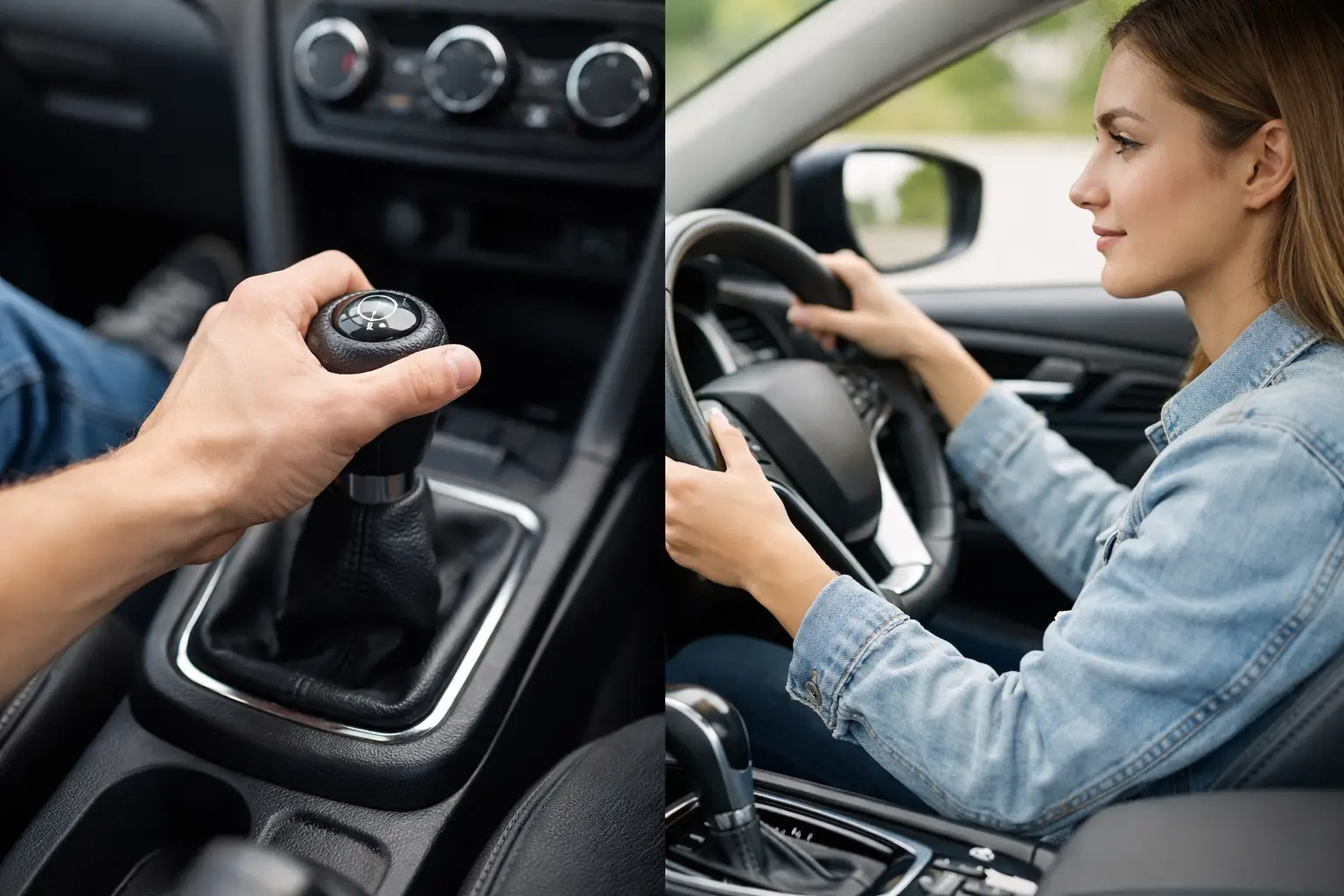
A green light on a busy South Bay street can feel very different depending on the vehicle beneath you. In a manual car versus automatic car decision, the best choice is not about proving which transmission is better. It is about choosing the vehicle that helps you build safe habits, stay calm in traffic, and drive confidently after your lessons are over.
For many new drivers and parents, an automatic is the practical starting point. For others, learning a manual creates options that matter for a family vehicle, work, travel, or personal goals. Both can produce capable drivers when instruction is paced properly and focused on awareness, judgment, and control.
Manual Car Versus Automatic Car: Start With Your Real Driving
Think first about where and how you expect to drive. A teen who will practice in the family’s automatic SUV, commute through Torrance traffic, and take the DMV road test in that vehicle may benefit most from learning automatic. There is already plenty to manage: mirrors, lane position, intersections, pedestrians, cyclists, freeway entrances, and other drivers who do not always signal their intentions.
An automatic transmission removes clutch and gear selection from the early learning process. With the right foot controlling both the brake and accelerator, a beginner can devote more attention to scanning far ahead, maintaining a safe following distance, and making smooth decisions. That simpler vehicle operation can be especially reassuring for nervous beginners, returning adult drivers, and seniors who want a focused skills refresher.
Manual transmission may be a strong fit when there is a clear reason to learn it. Perhaps your household owns a manual vehicle, you expect to borrow or purchase one, or you want the flexibility to drive different cars in the future. Some students also enjoy the active involvement of choosing gears and learning how engine speed, speed control, and road conditions work together.
The right answer can change with the driver. A student who learns quickly and has regular access to a manual car may find manual lessons worthwhile. A student who needs a license soon and will only drive automatics may make faster, less stressful progress in an automatic. Neither choice is a measure of intelligence or driving ability.
What Manual Driving Adds to the Learning Process
A manual vehicle requires the driver to coordinate three pedals, a gear selector, and the clutch. To start moving, the driver gradually releases the clutch while applying measured accelerator pressure. The timing becomes natural with practice, but it is a new physical skill that deserves patient repetition in a low-pressure setting.
Early manual lessons often include finding the clutch engagement point, starting and stopping smoothly, shifting up and down at appropriate speeds, and handling hills without rolling backward. Stalling is common while learning. It is not dangerous when the student knows how to respond calmly: brake if needed, place the vehicle in neutral, restart, and continue when it is safe.
Manual driving can encourage students to pay close attention to vehicle feedback. They learn to listen to engine sound, feel changes in speed, and select a gear that suits the situation. That awareness can be useful, but it does not replace the broader skills that make someone safe on the road. A driver must still scan intersections, check mirrors, manage space around the vehicle, and follow California traffic laws.
The main trade-off is mental workload. In stop-and-go traffic, on steep streets, or when approaching a complicated intersection, a manual driver has more tasks to coordinate. With practice, these actions become more automatic. Until then, lessons should progress from quiet streets to busier roads only after the student can consistently control the car without becoming overloaded.
Why Automatic Cars Work Well for Most Beginners
Automatic cars let new drivers concentrate on the road sooner. There is no clutch pedal and no need to choose gears during normal driving. That can make starting from a stop, merging, turning, and managing slow traffic easier in the first stages of instruction.
This does not mean automatic driving is effortless. Smooth braking, gradual acceleration, proper steering control, speed management, and observation still take practice. An automatic vehicle can also make it easier for a student to become overconfident because the car feels familiar quickly. A good lesson keeps the emphasis on decision-making, not just operating the controls.
For parents, matching lessons to the vehicle available at home usually makes practice more productive. Students build consistency when the pedal feel, mirrors, vehicle size, and controls are similar from one drive to the next. If a teen will practice in an automatic at home, automatic instruction can create a clearer path from professional lessons to supervised family practice.
Automatic vehicles are also widely available for road-test use and daily transportation in the Los Angeles area. That availability matters when scheduling lessons, arranging practice time, and preparing for a DMV appointment.
Safety Depends More on Habits Than Transmission
The safest transmission is the one a driver can operate without losing attention from the roadway. An experienced manual driver can handle dense traffic safely. An experienced automatic driver can do the same. Problems arise when a driver is still struggling with the controls and begins to neglect scanning, speed control, or right-of-way decisions.
For a beginner, safety-focused instruction should build skills in stages. First comes basic control in a calm environment. Then the driver practices turns, stops, lane changes, parking, and communication with other road users. More demanding situations, such as freeway driving or heavy traffic, belong later in the process when the student has reliable routines.
Students learning manual should not rush past the fundamentals to get to higher-speed roads. If downshifting, hill starts, or smooth stopping still require intense concentration, more practice on quieter streets is the safer choice. The goal is not to avoid a stall at all costs. The goal is to develop calm recovery skills and protect attention for the road ahead.
Cost, Convenience, and Long-Term Flexibility
Automatic cars are usually easier to find for lessons, road tests, rentals, and everyday driving. They can be a practical choice for students who have limited practice time or need to prepare for a license within a specific timeframe. For many families, that convenience outweighs the benefit of learning a second transmission type right away.
Manual cars may cost less in some used-car situations, although vehicle price, condition, fuel economy, maintenance history, insurance, and reliability matter far more than transmission alone. A lower purchase price is not a good reason to choose manual if no one can confidently teach or supervise practice in that vehicle.
Long-term flexibility is the strongest case for manual training. Once a driver is comfortable with a manual transmission, they can generally operate a wider range of vehicles. Still, the skill should be maintained. A person who learns manual once but does not drive one for years may need a short refresher before driving in unfamiliar traffic or on hills.
California Road-Test Planning
Before choosing a transmission for the DMV road test, make sure the vehicle is safe, registered, insured, and familiar to the student. The driver should know where the defroster, headlights, turn signals, windshield wipers, parking brake, and hazard lights are located. A road test measures much more than getting the vehicle moving.
For standard California licensing, DMV rules, vehicle classifications, and any restrictions should be confirmed directly before the test. Commercial licensing and certain vehicle types can involve different transmission rules. A driving instructor can help a student select an appropriate practice vehicle and prepare for the control checks and driving tasks expected on test day.
If you plan to test in a manual car, allow enough time to make shifting and stopping feel dependable before the appointment. Test-day nerves can make a skill that is only partly learned much harder. If your immediate goal is a first license and your regular vehicle is automatic, testing in a familiar automatic may be the more sensible plan.
Choose the Vehicle That Supports Consistent Practice
A useful decision often comes down to four questions: Which vehicle will you drive most often? Who can supervise your practice? How much time do you have before your DMV test? And does learning manual serve a real need now, rather than just a future possibility?
Students who want both skills do not have to treat the choice as permanent. Many begin in an automatic to establish safe road habits and prepare for licensing, then add manual-transmission lessons when they are ready. Others start with manual because it is the vehicle available at home and continue building confidence through regular practice.
South Bay Driving School approaches either path with the same priorities: patient instruction, repeatable habits, and practical preparation for real roads. The best lesson plan meets the driver where they are, then adds challenge at a pace that keeps learning productive.
Choose the transmission that gives you enough room to think, observe, and make safe decisions. Confidence grows when the car’s controls stop competing for your attention and the road begins to make sense.