
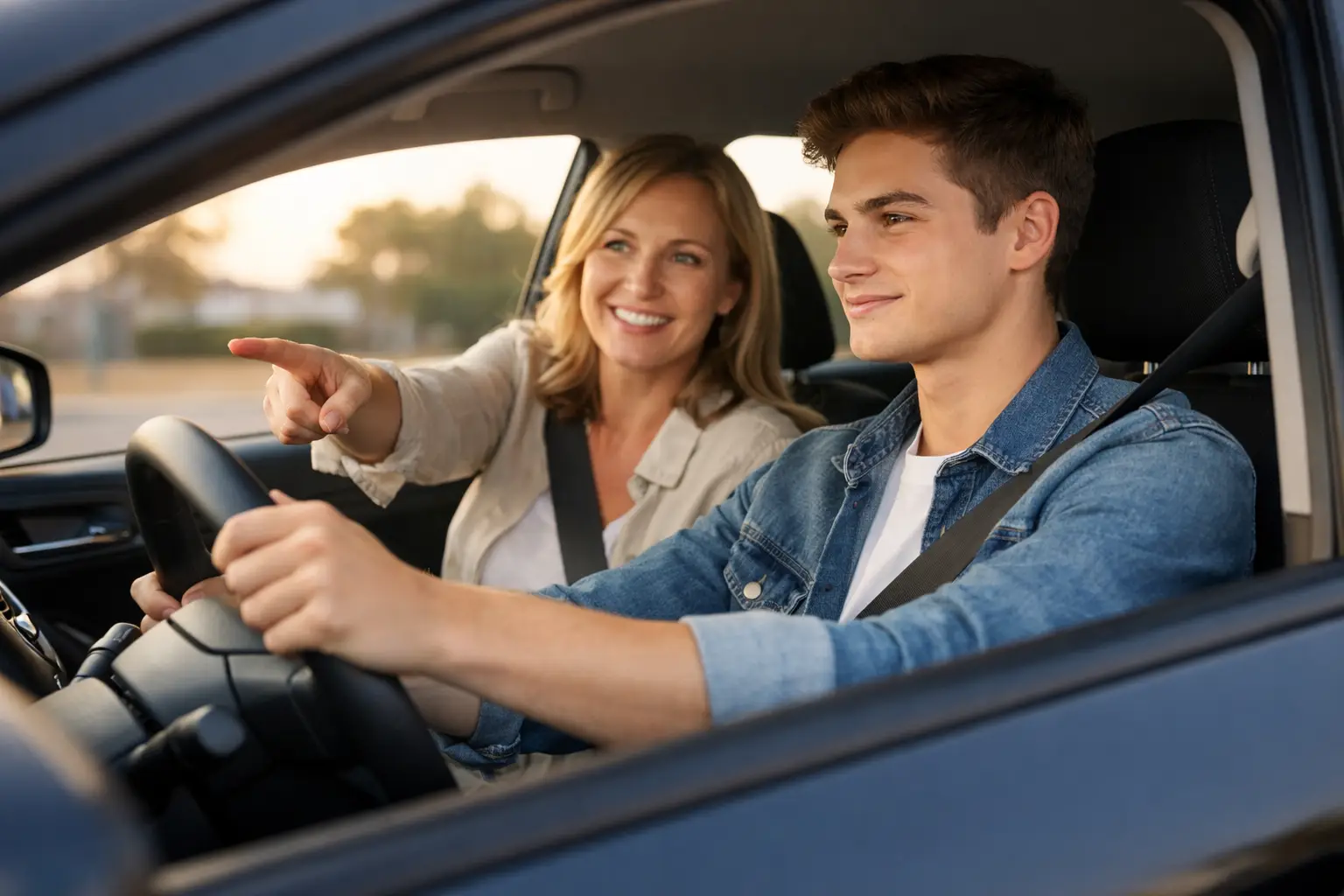
The first time your teen pulls away from the curb, the lesson is not only about steering, braking, or checking mirrors. It is also about whether they can stay calm when a car appears suddenly, a passenger speaks up, or they make a small mistake. How parents teach new drivers can shape those habits long after a learner receives a California license.
Parents bring something valuable to practice driving: consistent time, familiar routes, and a personal investment in their child’s safety. The challenge is creating lessons that feel calm and purposeful rather than tense, random, or overly focused on passing a test. A clear plan helps a new driver build confidence without skipping the skills that protect them on busy South Bay roads.
Start With a Shared Plan for Practice
Before the first practice session, agree on what the drive will cover. A learner who expects to work on smooth stops in a quiet neighborhood should not be surprised with a trip onto a crowded boulevard. Small, specific goals help parents give useful feedback and help teens recognize their progress.
Early drives should be short and held in low-pressure locations with good visibility and light traffic. Empty parking areas and quiet residential streets are useful for learning vehicle controls, steering, braking, turning, backing, and parking position. Once those actions become more natural, practice can move to busier intersections, lane changes, multi-lane roads, and nighttime conditions.
A parent should also decide in advance when to end a session. Fatigue, frustration, and sensory overload can make even a capable learner less safe. Fifteen focused minutes may teach more than an hour of driving after everyone is irritated.
Set expectations before the car moves
At the beginning of each session, take a minute to review the route, the skill being practiced, and the kind of coaching the student wants. Some new drivers need directions well before a turn. Others learn better when the parent allows enough time to identify the next decision independently.
Keep the ground rules simple: phones stay away, music stays low or off, everyone wears a seat belt, and the learner follows California permit restrictions. Parents should review current DMV requirements together rather than relying on memory or advice from friends. That shared understanding prevents avoidable confusion about supervised practice and licensing milestones.
How Parents Teach New Drivers Without Adding Pressure
The passenger seat can feel like a second instructor’s chair, but a parent’s role is different. The most effective coaching is calm, brief, and delivered early enough for the student to act on it. Saying, “Check the mirror and begin slowing now,” is more helpful than reacting sharply after the car reaches the intersection too fast.
Try to describe the action, not the student. “Your turn started a little wide” gives the learner something concrete to correct. “You are not paying attention” may make them defensive without showing them what to do differently.
It also helps to give one instruction at a time. A new driver may be managing speed, steering, mirrors, signs, pedestrians, and traffic signals all at once. Too many commands can create panic. If an immediate safety issue arises, be direct and clear, then discuss what happened after the vehicle is safely parked.
Praise should be specific, too. Instead of saying “good job,” point out the behavior: “You spotted that pedestrian early and began braking smoothly.” Specific feedback teaches the student which decisions to repeat.
Let mistakes become lessons
Safe mistakes are part of learning. A new driver may brake too abruptly, misjudge a parking space, select the wrong lane, or forget to signal until reminded. When the situation is under control, ask what they noticed and what they would change next time.
This approach develops judgment rather than dependence. If a parent always identifies every hazard and supplies every answer, the teen may drive well only when someone is beside them. The long-term goal is a driver who scans ahead, recognizes risk, and makes safe choices independently.
Not every error should receive equal attention. Correct dangerous habits first, including incomplete stops, speeding, missed mirror checks, following too closely, and distracted driving. Minor issues, such as an imperfect parking angle, can wait until the learner is no longer managing a more urgent skill.
Build Skills in Real Conditions, One Layer at a Time
A driver who can circle a quiet block is not automatically ready for a freeway entrance or a busy commercial parking lot. Road readiness comes from gradually practicing in varied conditions. The order depends on the student’s confidence, coordination, and prior experience.
After basic vehicle control is reliable, include routes that require controlled right and left turns, stop signs, traffic lights, lane changes, and parking. Then add the conditions many new drivers find stressful: heavier traffic, dusk, rain, road construction, pedestrians, cyclists, and drivers who behave unpredictably.
In the Torrance area and surrounding South Bay communities, that may mean preparing for wide multi-lane streets, school-zone traffic, coastal fog, and busy parking lots. These are not reasons to rush a learner. They are reasons to practice with a plan, at times when the student can focus on one new challenge at a time.
Parents should resist the temptation to turn every family errand into an advanced lesson. A grocery store trip during peak traffic can be useful later, but it may be a poor first experience with crowded parking lots. Match the route to the day’s objective and the learner’s current ability.
Know When Professional Instruction Helps
Practice with family and professional lessons work best together. A trained instructor provides a neutral environment, a vehicle equipped for instruction, and feedback shaped by teaching many beginners through the same difficult transitions. For some families, that neutral voice can reduce tension and help a teen absorb corrections more easily.
Professional training is especially helpful when a parent and teen are stuck in the same argument, when the learner remains anxious after basic practice, or when a family needs help preparing for California DMV road-test expectations. It can also give parents a clearer sense of which skills to reinforce at home.
South Bay Driving School can complement family practice with personalized behind-the-wheel instruction that builds from basic control to real-road confidence. A parent does not need to teach every skill alone. The most useful partnership is one where the instructor introduces and refines techniques, while family practice makes those techniques familiar and repeatable.
Prepare for the DMV Test, but Teach Beyond It
The DMV road test is an important milestone, yet passing it should not be the only goal. A new driver needs habits that hold up when they are tired after school, navigating an unfamiliar area, or driving with friends in the car. Test preparation should reinforce those habits, not replace them with memorized maneuvers.
As the test approaches, practice the fundamentals that are often evaluated: safe observation, smooth speed control, complete stops, correct signaling, lane position, backing, and appropriate turns. Encourage the learner to narrate what they see when helpful. Saying, “There is a crosswalk, a car waiting to turn, and a parked truck blocking my view,” strengthens hazard awareness.
Avoid scheduling a high-pressure practice session immediately before the test if it tends to increase anxiety. A calm review, adequate rest, and a reminder to drive the way they have practiced are often more valuable. Confidence should come from preparation, not from pretending nerves will not exist.
The best gift a parent can give a new driver is not a perfect practice record. It is a steady learning environment where caution is normal, questions are welcome, and improvement happens one drive at a time. That foundation can stay with them well beyond the day they earn their license.