
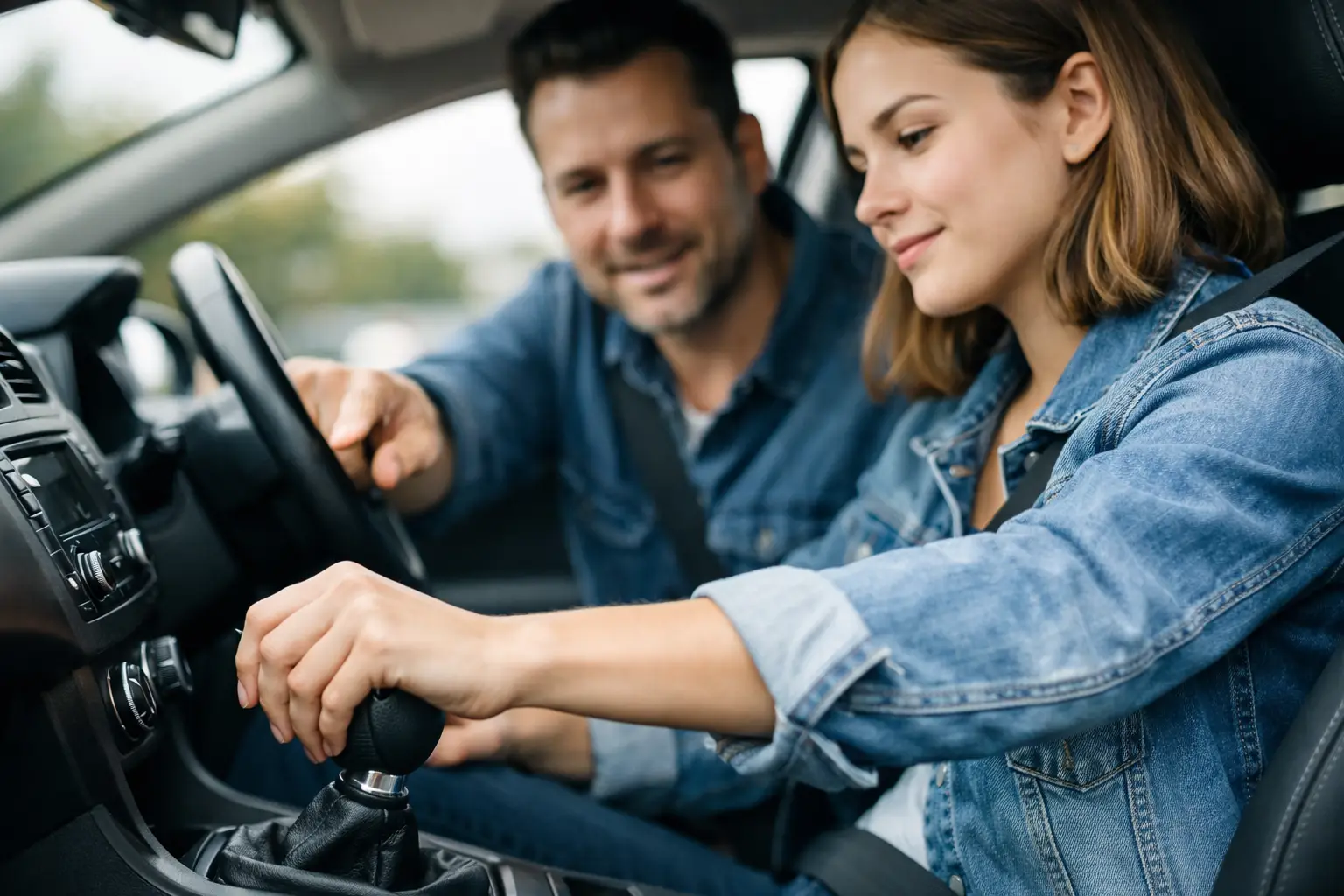
A manual driving guide should make the first few lessons feel less intimidating, not more complicated. Learning to drive a stick shift asks your feet, hands, and attention to work together in a new way. At first, stalls and jerky starts are normal. With patient practice in the right setting, those separate movements become a repeatable routine that helps you drive smoothly, safely, and confidently.
For many South Bay learners, manual transmission lessons are not just about operating a different kind of car. They are about preparing for a family vehicle, a job requirement, travel, or the simple satisfaction of having another useful driving skill. The goal is not to rush through the gears. The goal is to stay aware of traffic, protect the vehicle, and make calm decisions on real roads.
Start With the Controls Before Starting the Car
A manual car has three pedals: the clutch on the left, brake in the middle, and accelerator on the right. Your left foot operates only the clutch. Your right foot moves between the brake and accelerator, just as it would in an automatic vehicle.
Before driving, adjust the seat so you can press the clutch pedal all the way to the floor without stretching or lifting your back from the seat. Set the mirrors, fasten your seat belt, and identify the gear pattern on the shift lever. Most cars use a five- or six-speed pattern, with reverse located separately to prevent accidental selection.
With the engine off, practice moving the shifter into first, second, third, and reverse while keeping the clutch pressed. This simple exercise helps you understand the lever’s movement before you add traffic, engine noise, and the pressure of getting moving.
Know What the Clutch Does
The clutch temporarily separates the engine from the wheels. Pressing it lets you change gears or bring the vehicle to a stop without stalling. Releasing it reconnects power to the wheels.
The key skill is finding the engagement point, often called the bite point. This is the small range where the clutch starts to transfer power and the car wants to move forward. Every vehicle feels a little different, which is why learning by touch and sound matters more than memorizing one exact foot position.
How to Start Moving Without Stalling
Begin in a quiet, level parking area with an experienced instructor or qualified supervising driver. Keep the brake engaged, press the clutch fully, and place the shifter in first gear. Release the parking brake when you are ready to move.
Slowly lift the clutch until you feel the vehicle begin to pull forward. Pause briefly at that engagement point, then add a small amount of accelerator while continuing to release the clutch smoothly. Once the clutch is fully released, rest your left foot on the floor, not on the pedal.
A stall happens when the clutch comes up too quickly or the engine does not have enough power. It can feel embarrassing, especially at a stoplight, but it is a normal part of learning. Stay calm: press the clutch and brake, shift to neutral, restart the vehicle if needed, and begin again. A safe recovery is more valuable than trying to force a rushed start.
Many beginners make the opposite mistake and hold the clutch partly down for too long. This is called riding the clutch. It can cause extra wear and make the vehicle harder to control. Use the clutch for starting, stopping, and shifting, then release it fully whenever the car is moving in gear.
Manual Driving Guide: Shifting Up and Down Smoothly
You generally shift up as the car gains speed and the engine sound becomes higher. The correct timing depends on the vehicle, road grade, traffic, and how much acceleration you need. Rather than staring at the speedometer for a single number, learn to notice engine sound, vehicle response, and the need for power.
To shift up, ease off the accelerator, press the clutch fully, move the shifter to the next gear, and release the clutch gradually as you return to the accelerator. At first, perform each step slowly and clearly. With practice, the motion becomes coordinated and smooth.
Downshifting is useful when slowing for a turn, driving downhill, or needing more pulling power on an uphill road. Brake early and gently to reduce speed, then select the lower gear that fits your new speed. Do not downshift into a gear that is too low for the vehicle’s speed, as that can make the car lurch and place unnecessary strain on the engine.
When coming to a complete stop, brake progressively. Press the clutch before the engine begins to struggle at very low speed, then shift into neutral once stopped. Keep the brake applied and select first gear only when you are ready to move again.
Hill Starts Need a Separate Practice Plan
Starting on a hill is one of the most common concerns for manual drivers. The challenge is preventing the car from rolling backward while you coordinate the clutch and accelerator. This is not a skill to practice for the first time in heavy traffic.
Start on a mild, quiet incline. With the vehicle stopped, keep the brake firmly applied and the clutch pressed. Shift into first gear. Bring the clutch slowly to its engagement point, then add light accelerator pressure. As the car begins to pull forward, release the brake and continue easing off the clutch.
Some vehicles have hill-start assist, which may hold the brakes briefly after you release the pedal. It can be helpful, but do not depend on it as a substitute for good clutch control. If the car has a traditional hand-operated parking brake, an instructor can also teach a controlled parking-brake hill start. The best approach depends on the vehicle and the learner’s comfort level.
Leave extra space behind the vehicle ahead of you on hills whenever possible. That space gives you time to set up safely and reduces the pressure to move before you are ready.
Build Skill in the Right Order
A new manual driver should not begin with busy intersections, steep streets, or freeway traffic. Start with pedal coordination and first-gear movement in a low-stress area. Then practice stopping, starting, turning, and shifting between lower gears. After those basics feel consistent, move to neighborhood routes, busier streets, hills, and eventually freeway driving when appropriate.
This progression matters because manual driving adds a physical task, but safe driving still requires the same core habits as any other vehicle: scanning ahead, checking mirrors, maintaining space, signaling early, and watching for pedestrians, cyclists, and changing traffic conditions. A driver who can shift perfectly but stops looking ahead is not ready for the road.
For teen drivers working toward a California license, practice should also support the broader habits expected on the DMV road test. Smooth acceleration, controlled braking, complete stops, proper lane position, safe turns, and observation are all part of road readiness. California does not require a separate manual-transmission license, but you should learn in a vehicle you can operate safely and confidently.
Common Manual Driving Mistakes and Better Habits
Stalling, over-revving the engine, and shifting at awkward times are expected early on. The better habit is to recognize the cause without becoming frustrated. If the car stalls, the clutch likely came up too fast. If the engine races loudly without gaining speed, the clutch may still be partly engaged. If the vehicle jerks during a shift, slow down the clutch release and match it with gentler accelerator input.
Avoid looking down at the shifter. Learn the gear pattern while parked so your eyes can stay on the road. Avoid coasting downhill in neutral or with the clutch pressed, too. Keeping the car in an appropriate gear gives you better control and helps the engine assist with speed management.
Do not use a manual-transmission lesson as an excuse to practice in difficult conditions before you are ready. Heavy rain, dense traffic, unfamiliar roads, and steep grades can wait. Confidence grows from successful repetitions, not from being overwhelmed.
When Professional Instruction Helps
A patient instructor can shorten the learning curve by giving you a safe place to make mistakes and immediate feedback on clutch timing, gear choice, traffic awareness, and hill starts. This can be especially helpful for adults returning to driving, teens who are nervous about stalling, or learners who have only practiced briefly with family.
South Bay Driving School provides personalized manual-transmission instruction for learners who want structured practice without pressure. Lessons can focus on the skills that need the most attention, whether that is getting moving smoothly, shifting in traffic, or building confidence on local roads.
Give yourself permission to learn gradually. A smooth manual driver is not someone who never stalls. It is someone who understands the vehicle, recovers safely, and keeps making thoughtful decisions behind the wheel.