
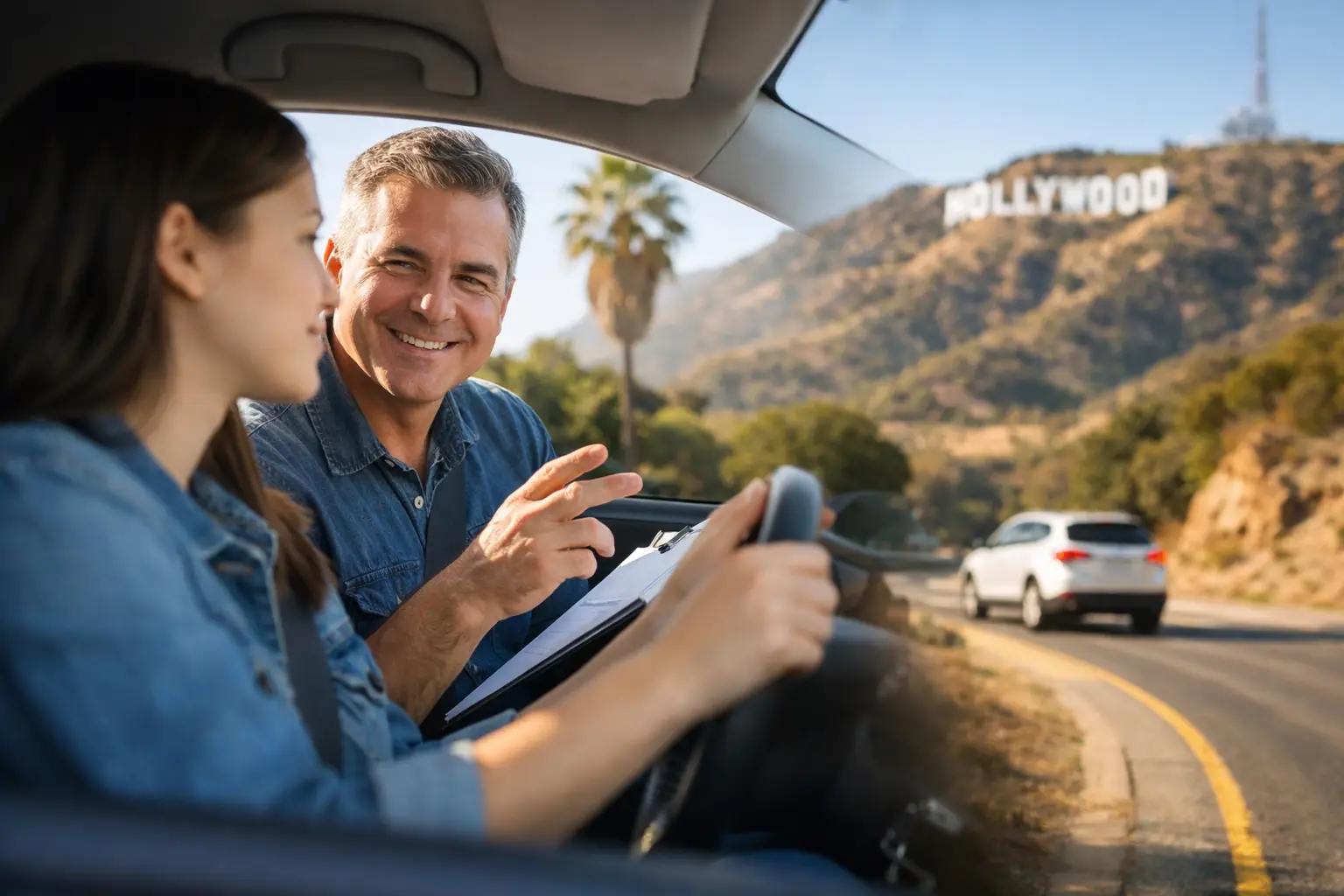
For a Southern California teen eager to start driving, the question is usually not whether they want a license. It is how quickly they can begin. Does California require drivers education? Yes, for most drivers who are under 18 and working toward a provisional license. But driver education is only one part of the process. Families also need to plan for a learner’s permit, professional behind-the-wheel instruction, supervised practice, and the DMV drive test.
Understanding the order matters. Trying to schedule lessons before a teen has the right permit or expecting an online course to replace in-car training can create unnecessary delays. A clear plan helps new drivers build skills at a comfortable pace while meeting California’s licensing rules.
Does California Require Drivers Education for Teens?
California generally requires driver education for applicants under age 18 who want to obtain a provisional driver license. Driver education is classroom or online instruction that covers traffic laws, defensive driving, sharing the road, impaired driving, and the responsibilities that come with holding a license.
A California-approved driver education course includes at least 25 hours of instruction. Many families choose an online course because a student can complete the lessons around school, sports, and family schedules. The course must still meet California requirements, and the student must complete it honestly and receive the proper certificate of completion.
There is one detail that often causes confusion: a teen who is at least 15 1/2 may apply for an instruction permit after completing driver education. In some cases, teens may apply while enrolled and participating in an approved integrated driver education and driver training program. Before enrolling or visiting the DMV, it is wise to confirm the current documentation needed for the specific situation.
Driver education teaches the rules. It does not, by itself, qualify a teen to drive on public roads. That is where a permit, behind-the-wheel training, and supervised practice come in.
Driver Education and Driver Training Are Different
Parents sometimes use these terms interchangeably, but California treats them as separate requirements. Driver education is the 25-hour academic course. Driver training is hands-on instruction in a vehicle with a licensed driving instructor.
Before taking the DMV drive test, a driver under 18 must complete at least six hours of professional behind-the-wheel driver training. Those hours are typically divided into multiple lessons, giving the student time to practice between sessions instead of trying to absorb every skill in a single long day.
The teen must also complete 50 hours of supervised driving practice with a parent, guardian, or another qualified adult. At least 10 of those hours must be at night. Professional lessons are valuable, but they do not replace the 50-hour practice requirement.
This combination is intentional. A student may understand right-of-way rules after an online course but still need patient coaching to judge a left turn, merge onto a busy road, park accurately, or react calmly when traffic changes. Repetition in different conditions turns knowledge into safer driving habits.
A Practical California Licensing Path for Drivers Under 18
The process is easiest when families view it as a sequence rather than a single test to pass. First, the teen completes the required driver education or enrolls in an eligible integrated program. Next comes the DMV knowledge test and the instruction permit application.
Once the teen has a valid instruction permit, they can begin driving with a qualified adult. They should also schedule professional driver training early. Lesson availability can be tighter around school breaks and summer, and spreading lessons over several weeks gives students time to practice skills between appointments.
During the first professional lessons, an instructor typically focuses on vehicle controls, steering, braking, turns, lane position, and safe scanning habits. Later lessons can address busier intersections, lane changes, residential streets, parking, freeway entries when appropriate, and the areas that cause the student the most anxiety.
After completing six hours of professional training and 50 hours of supervised practice, the teen may be eligible for the DMV drive test once they meet the applicable age and holding-period requirements. The DMV will also require proof that the training requirements have been completed.
Passing the test earns a provisional license, not unrestricted driving privileges. For the first 12 months, California places limits on driving between 11 p.m. and 5 a.m. and on transporting passengers under 20 without a qualified adult in the vehicle, subject to certain exceptions. Families should discuss these rules before the license is issued, not after a teen is already planning rides with friends.
What About Drivers Who Are 17 1/2?
California has a limited exception for applicants who are at least 17 1/2 but under 18. They may be able to receive an instruction permit without completing driver education or driver training first. However, they generally cannot take the drive test until they turn 18.
For some students, waiting may make sense. For others, completing driver education and training remains the better choice because it provides structure, practice, and a stronger foundation before they begin driving independently. Skipping a requirement because it is technically optional at that age is not always the same as being ready for the road.
Do Adults Need Driver Education in California?
Drivers who are 18 or older are not required to complete California driver education or the six hours of professional behind-the-wheel training. They still need to pass the DMV knowledge test and drive test, and adult beginners need an instruction permit before practicing.
That said, optional training can be especially useful for adults who have never driven, moved from another country, have let a license lapse, or feel nervous in Los Angeles-area traffic. An adult can learn the rules from a handbook, but a calm instructor can help translate those rules into practical decisions at intersections, on freeways, and in parking lots.
The best amount of instruction depends on the driver. Someone with recent driving experience may only need a road-test refresher. A complete beginner may benefit from a paced series of lessons that builds control and confidence before tackling more complex traffic situations.
Choosing a Driver Education Program That Helps Beyond the Permit
The minimum course requirement is important, but families should look beyond the certificate. A useful program explains how rules apply in real situations: approaching a crosswalk with limited visibility, managing distractions, handling an unprotected left turn, or deciding when it is safer to wait rather than rush.
For behind-the-wheel training, look for a licensed school with clear lesson options, patient instructors, and a plan that matches the student’s starting point. A nervous teen may need extra time with turns and braking before moving to major streets. A student who has practiced extensively with a parent may need targeted help with parking, lane changes, or DMV test habits.
At South Bay Driving School, instruction is designed around that progression, with online driver education and private behind-the-wheel lessons that help students move from permit requirements to real-road confidence. For families in Torrance and nearby South Bay communities, pickup and drop-off options can also make consistent practice easier to schedule.
Common Questions About California Driver Education
Can a parent teach all of the behind-the-wheel hours?
A parent or qualified adult can supervise the required 50 practice hours, but California requires at least six hours of training with a professional driving instructor for drivers under 18. Both forms of practice matter. Professional lessons provide structured coaching, while family practice gives the student more repetition in familiar areas and everyday driving conditions.
Can a teen take the DMV drive test right after six lessons?
Not usually. The six hours of professional training are only one requirement. The student also needs 50 hours of supervised practice, including 10 hours at night, and must meet California’s permit holding-period and age requirements. More practice is often needed if the driver is still hesitant with traffic, parking, or decision-making.
Is online driver education accepted in California?
Yes, an approved online driver education course can satisfy the classroom instruction requirement. The key is choosing a California-approved program and completing every required unit. Keep the completion certificate in a safe place because it may be needed during the licensing process.
A license is a milestone, but the habits a new driver develops before test day matter far longer. Give the process enough time, practice in a variety of conditions, and choose instruction that helps the student make safe decisions even when no one is sitting beside them.