
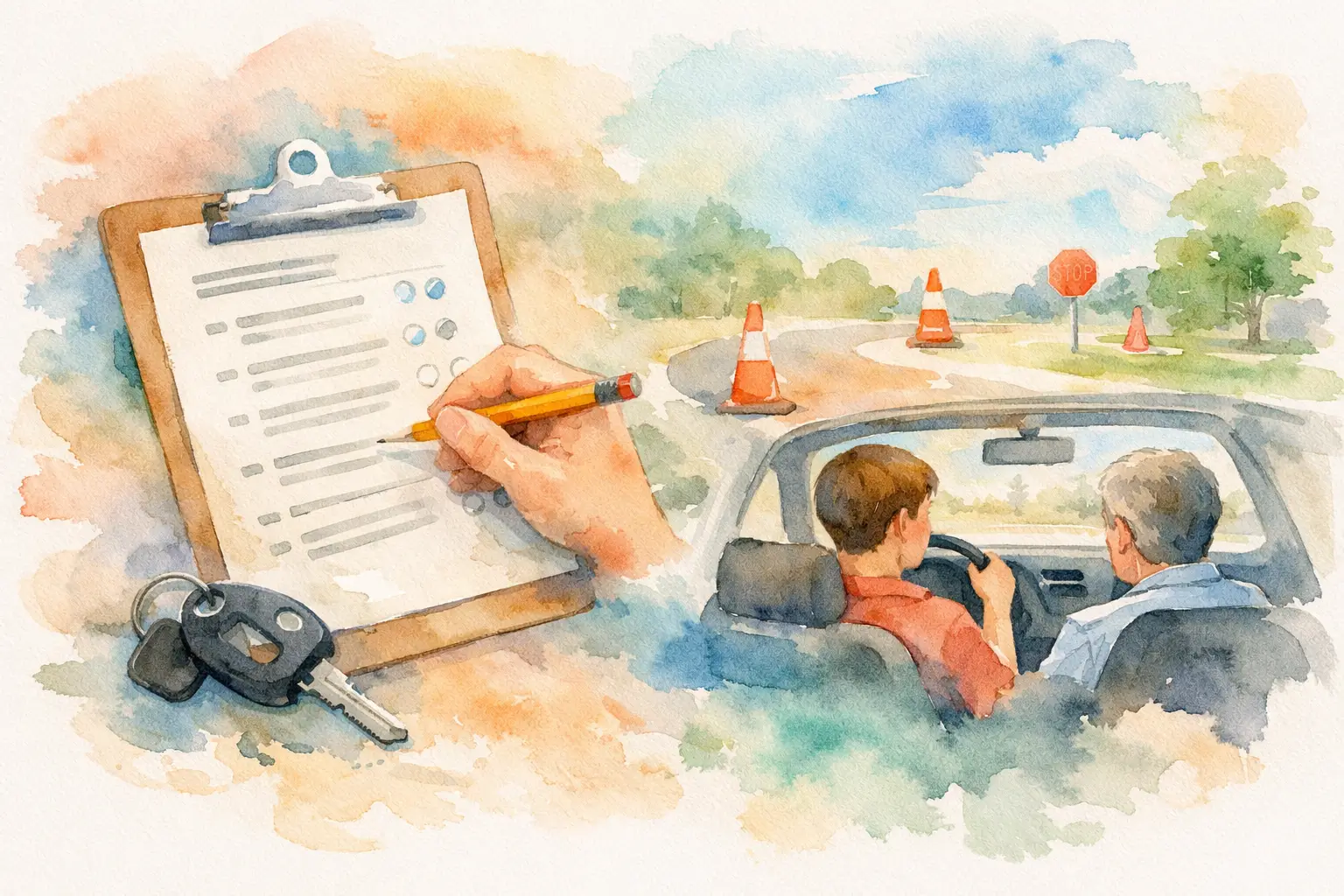
A student can make a clean right turn, check mirrors consistently, and still feel nervous about the DMV. Another may be eager to schedule the road test but repeatedly miss important traffic checks during practice. That is why the difference between a DMV test versus driving assessment matters. One decides whether you meet the licensing standard on a particular day. The other helps identify what to improve before that day arrives.
For teens, adults learning later in life, returning drivers, and concerned parents, understanding the distinction takes some pressure out of the process. A driving assessment is not a second DMV test. It is a practical teaching tool that gives you a clearer, more personal plan for becoming a safe, capable driver.
What the DMV Driving Test Is Designed to Measure
The California DMV behind-the-wheel test is an official licensing examination. Its purpose is not to teach you how to drive or provide a long coaching session. The examiner evaluates whether you can operate a vehicle safely, follow traffic laws, observe conditions around you, and make sound decisions in normal driving situations.
The exact route and maneuvers can vary by office, traffic conditions, and examiner instructions. Still, drivers should expect their performance to be judged in areas such as vehicle control, steering, braking, lane position, turns, intersections, backing, speed management, right-of-way decisions, and observation.
The DMV test is pass or fail. Certain serious safety errors may end the test or result in an automatic failure. Other mistakes may add up as critical errors or deductions. For that reason, knowing the rules is only part of the preparation. Drivers also need habits that hold up when they are nervous, driving an unfamiliar route, or receiving directions from an examiner.
A DMV examiner generally observes and records performance. They are not there to provide detailed instruction during the test. If you pass, you have demonstrated that you meet the minimum standard for a California license. If you do not pass, the result shows that more practice is needed before your next attempt.
What a Driving Assessment Adds Before the Test
A driving assessment is an instructional evaluation, usually completed with a qualified driving instructor. Instead of simply marking errors, the instructor watches how you approach everyday driving tasks and looks for the reasons behind your mistakes.
For example, a driver who brakes too late may not be scanning far enough ahead. A driver who drifts during turns may need better hand positioning, speed control, or a clearer understanding of where to look through the turn. A driver who freezes at a busy intersection may understand the law but need more guided practice judging gaps and making decisions calmly.
That is the central value of an assessment: it turns a vague feeling of being "not ready" into specific, manageable skills to practice. It can also identify strengths. A student may already have good mirror use and smooth braking, allowing lessons to focus on lane changes, freeway entries, or the parts of driving that create the most anxiety.
Unlike the DMV test, an assessment should include feedback. A patient instructor can explain what happened, demonstrate the correct technique when appropriate, and give the driver another chance to perform the skill correctly. The goal is progress, not judgment.
DMV Test Versus Driving Assessment: The Key Differences
The two experiences may look similar from the passenger seat because both involve driving on public roads. Their purpose, timing, and outcome are very different.
A DMV road test is a formal licensing step. It happens after the learner has completed the required preparation and is ready to show independent driving ability. It is short, structured, and scored against DMV standards.
A driving assessment can happen at several points in the learning process. A beginner may use one to establish a starting point. A teen who has practiced with family may use one before professional lessons begin. An adult returning to driving after years away may want an assessment to rebuild confidence without assuming they need to start from the beginning.
The outcome is different as well. The DMV provides a result: pass or fail, along with information about errors. An assessment provides a plan. It may recommend additional lessons, more practice in lower-traffic areas, a review of California rules, or targeted work on a specific skill such as left turns, parking, freeway driving, or defensive scanning.
Neither replaces the other. An assessment cannot guarantee a DMV pass because traffic, routes, nerves, and test-day conditions are never identical. But it can reduce surprises by uncovering weaknesses before they become test-day errors.
When an Assessment Is Especially Helpful
An assessment is useful whenever a driver and family are unsure what kind of help is needed. It is particularly valuable for students who have received informal practice but have not had an instructor evaluate their habits. Family members often teach with care and good intentions, but they may not notice every missed mirror check, incomplete stop, late signal, or unsafe assumption at an intersection.
It can also help drivers who have failed a road test. A failed test does not automatically mean someone is a poor driver. Sometimes the issue is a small but repeatable habit, such as failing to look over the shoulder before moving into a bike lane or allowing the vehicle to roll slightly at a stop. A focused assessment can separate a one-time nervous mistake from a pattern that needs correction.
For senior drivers and adults returning after an accident, illness, long break, or move to a busier area, the right assessment should feel respectful. The goal is not to question a person's independence. It is to identify practical ways to make current driving safer and more comfortable.
In South Bay communities, drivers may need confidence with busy multilane roads, pedestrian activity near beaches and shopping areas, school-zone awareness, and changing traffic speeds. Local practice can help, but safe habits matter more than memorizing a particular route.
How to Use Assessment Feedback Productively
The most useful assessment feedback is specific. "Practice more" is not enough. A driver should leave knowing what to practice, why it matters, and what correct performance looks like.
If your instructor says observation needs work, ask which checks were missed and when they should occur. If turns need improvement, work on approaching at an appropriate speed, selecting the correct lane, checking for pedestrians and cyclists, and looking toward the intended path of travel. If lane changes are the concern, practice the complete sequence until it becomes consistent: mirrors, signal, blind-spot check, space judgment, smooth movement, and cancellation of the signal.
Avoid trying to fix everything in one drive. A new driver already manages steering, pedals, signs, traffic, and decision-making at once. Concentrating on one or two priorities per practice session is usually more effective. Repetition in calm conditions builds the habits that are needed when traffic becomes more demanding.
Parents can support this process by keeping practice conversations calm and concrete. Instead of saying, "You need to be more careful," try, "At the last intersection, we needed a full stop before checking for cross traffic. Let's practice that at the next few stop signs." Specific coaching gives a student something they can repeat.
Preparing for the DMV Without Treating It Like a Performance
Drivers often become tense when every practice drive feels like a mock test. Test preparation does matter, but the safest approach is skill-first. Build reliable habits before worrying about whether a route resembles the DMV route.
Make sure the vehicle is legal, safe, and familiar to operate. Practice adjusting the seat, mirrors, and controls before moving. Review the current DMV requirements and bring the required documents to the appointment. On the road, focus on the same fundamentals an instructor would reinforce: look well ahead, maintain space, follow signs and signals, communicate your intentions, and do not rush decisions.
A professional road-test preparation lesson can be helpful close to the appointment because it combines a realistic evaluation with coaching. However, a lesson the day before the test cannot replace weeks or months of steady practice. Confidence comes from knowing that you have handled the same core skills correctly many times.
The DMV test is one important milestone, but safe driving continues long after the examiner asks you to pull back into the parking lot. Use an assessment as an honest check-in, practice the skills that need attention, and arrive at your test knowing you are prepared to make thoughtful decisions on the road.