
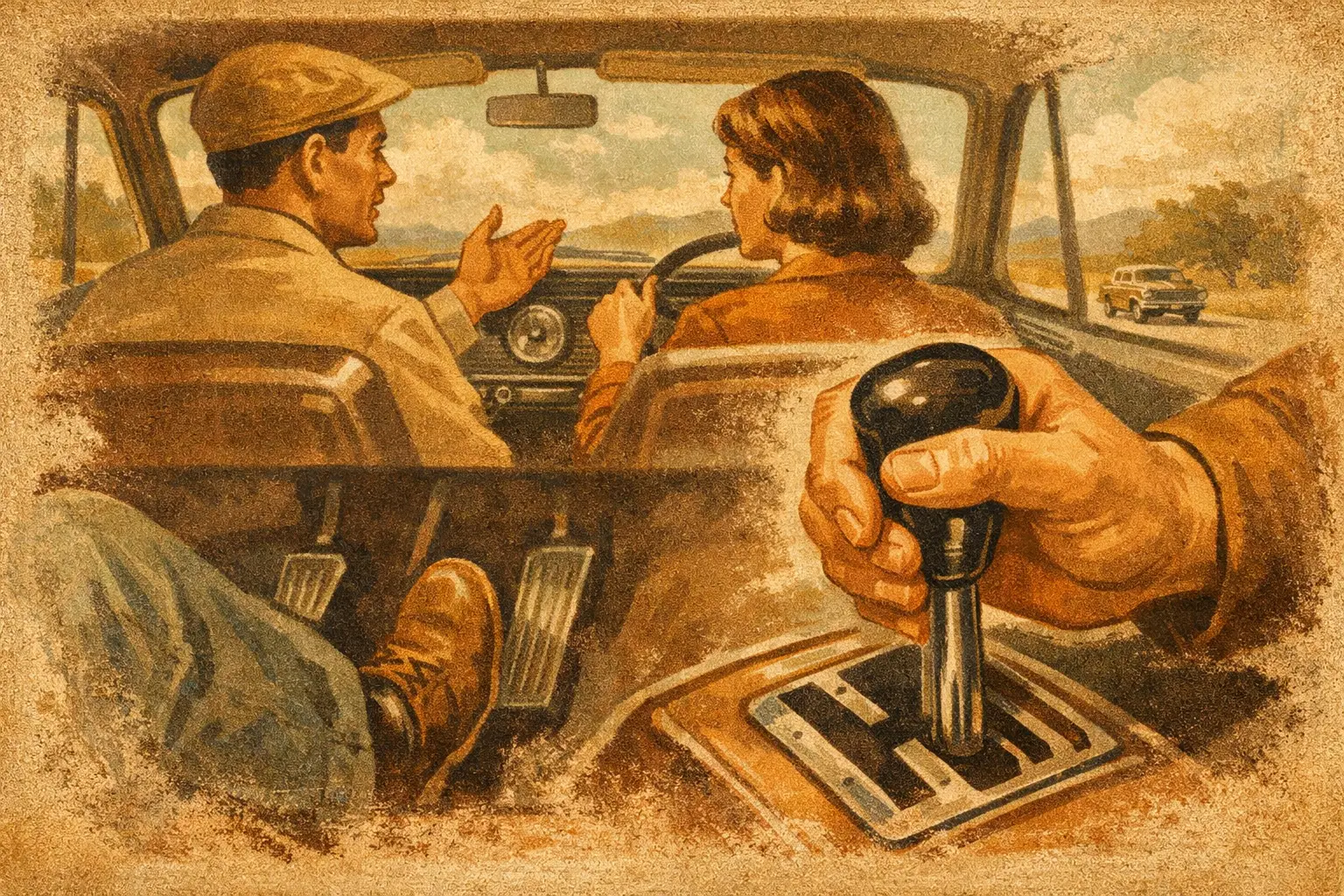
The first successful start in a manual car is memorable: the vehicle moves forward smoothly, the engine stays running, and the driver realizes that the clutch is not as mysterious as it felt five minutes earlier. Stick shift lessons replace guesswork with a calm, repeatable process, helping new and returning drivers learn how to control a manual-transmission vehicle safely.
For a teen, learning manual can build a deeper understanding of how a car responds to driver input. For an adult, it may mean preparing to drive a family vehicle, a work vehicle, or a car while traveling. Whatever the reason, the goal should not be to rush through gears. It should be to develop steady vehicle control, awareness, and good decision-making in real traffic.
What Stick Shift Lessons Should Teach
A manual transmission asks the driver to coordinate both feet and one hand while continuing to watch traffic, mirrors, pedestrians, and roadway conditions. That is why a good lesson starts in a low-pressure area, not on a busy street or steep hill.
The first skill is understanding the clutch. Students learn where the clutch begins to engage, often called the bite point, and how to release it gradually while applying light accelerator pressure. Every vehicle feels a little different. Learning to recognize that engagement point matters more than memorizing an exact foot position.
From there, instruction should move through starting, stopping, and shifting between lower gears. A patient instructor can explain what the engine sound, vehicle speed, and tachometer are communicating. The driver begins to connect the feel of the vehicle with the timing of each shift instead of relying on panic or trial and error.
Starting Without Stalling
Stalling is common when learning a manual transmission. It is not a sign that someone cannot learn. It simply means the clutch came up too quickly, the engine did not receive enough fuel, or both actions were not timed together yet.
The safest response to a stall is also a useful habit: stay calm, secure the car, restart it properly, and check the surroundings before moving again. Students who practice this response early are less likely to feel overwhelmed when a stall happens at a stop sign or red light later on.
A good instructor gives students enough repetitions to build muscle memory without turning the lesson into an exhausting cycle of starts and stops. Short, focused practice produces better results than trying to tackle every skill at once.
Shifting Smoothly and Choosing the Right Gear
Smooth shifting is about timing, not speed. Drivers learn to release the accelerator, press the clutch fully, select the next gear, and bring the clutch up progressively before returning to the accelerator. At first, these steps are deliberate. With practice, they become natural.
Choosing the right gear also affects safety. A gear that is too high can make the engine struggle and reduce responsiveness. A gear that is too low can make the engine rev unnecessarily. Stick shift lessons should help students recognize when the car needs more power for a hill, when it is ready for the next gear, and when slowing down calls for a lower gear.
Downshifting deserves careful instruction. It can help maintain control on a downhill grade and prepare the car for a turn, but it should be done smoothly and at an appropriate speed. Braking remains essential. Engine braking is a useful tool, not a replacement for safe following distance or proper brake use.
Building Manual-Transmission Skills on Real Roads
Once a student can start, stop, and shift consistently in a quiet area, the next step is applying those skills in everyday driving situations. This is where lessons become more than a mechanical exercise.
Driving in the South Bay can involve neighborhood intersections, multi-lane streets, school zones, parking lots, hills, and heavier traffic near commercial areas. Each setting places different demands on a manual driver. A learner must manage the clutch while still making complete stops, checking blind spots, yielding correctly, and scanning for people walking or biking nearby.
Traffic lights are a particularly valuable practice area. Students learn when to place the car in neutral while waiting, how to prepare for a green light without rolling backward, and how to restart calmly if traffic begins moving. On slight inclines, an instructor can introduce hill-start techniques in a controlled setting before asking the student to use them in busier conditions.
Hill Starts Require Patience, Not Pressure
Many people worry most about rolling backward on a hill. The concern is reasonable, especially with another car waiting behind them. The answer is not to practice under pressure. It is to learn a reliable method where there is room and time.
Depending on the vehicle, drivers may use the parking brake to help hold the car before moving forward, or they may practice balancing the clutch and accelerator at the engagement point. The best approach depends on the car, the slope, and the driver's experience level. An instructor should teach the method that is safest and most manageable for that student.
Drivers should never feel pushed to attempt a difficult hill start before they have basic clutch control. Confidence grows through successful repetitions, not through being thrown into a stressful situation too early.
Parking and Reversing Need Their Own Practice
Manual drivers often focus so much on forward gears that they underestimate low-speed control. Parking lots are where clutch finesse becomes especially useful. Backing out of a space, easing into a parking stall, and creeping through a crowded lot all require controlled movement and frequent observation.
Students should practice keeping the vehicle slow without riding the clutch excessively. They also need to learn when to pause, look around again, and wait for pedestrians or cross traffic. These habits matter in any vehicle, but the added coordination of a manual makes structured practice worthwhile.
Is Learning Manual Worth It?
It depends on the driver's needs. Most new vehicles sold in the United States have automatic transmissions, so manual driving is not necessary for many California drivers. A person whose only goal is to pass a DMV road test in an automatic vehicle may be better served by focusing on the vehicle they expect to drive regularly.
Still, manual training can be valuable. It may expand the kinds of vehicles a driver can operate, provide a stronger feel for speed and engine response, and make it easier to drive certain older cars or specialty vehicles. Some students simply enjoy the involvement of driving a manual car.
There is also a practical trade-off: manual lessons can require additional time because early progress depends on repetition. Students who already have basic driving experience may advance quickly. Complete beginners may benefit from first building core traffic awareness in an automatic before adding clutch and gear coordination. There is no one right sequence for every learner.
Choosing the Right Instructor and Lesson Pace
The right manual-transmission instructor is patient, clear, and attentive to safety. Look for lessons that begin at the student's current ability level rather than assuming prior experience. A returning driver who has not used a clutch for 20 years needs a different pace than a teen who has never driven before.
Ask whether the lesson includes controlled practice before traffic, real-road application after the basics are established, and feedback that identifies one or two priorities at a time. Too many corrections at once can make a nervous learner freeze up. Clear coaching helps the student understand what happened, how to fix it, and what to practice next.
South Bay Driving School approaches behind-the-wheel instruction with that paced, confidence-building mindset. For students in Torrance and nearby communities, professional guidance can make manual driving feel organized and manageable rather than intimidating.
A manual transmission rewards attention, but it does not demand perfection on day one. Start with a quiet place, a patient plan, and enough practice to let each movement become familiar. Before long, the clutch, shifter, and road will begin to work together.