
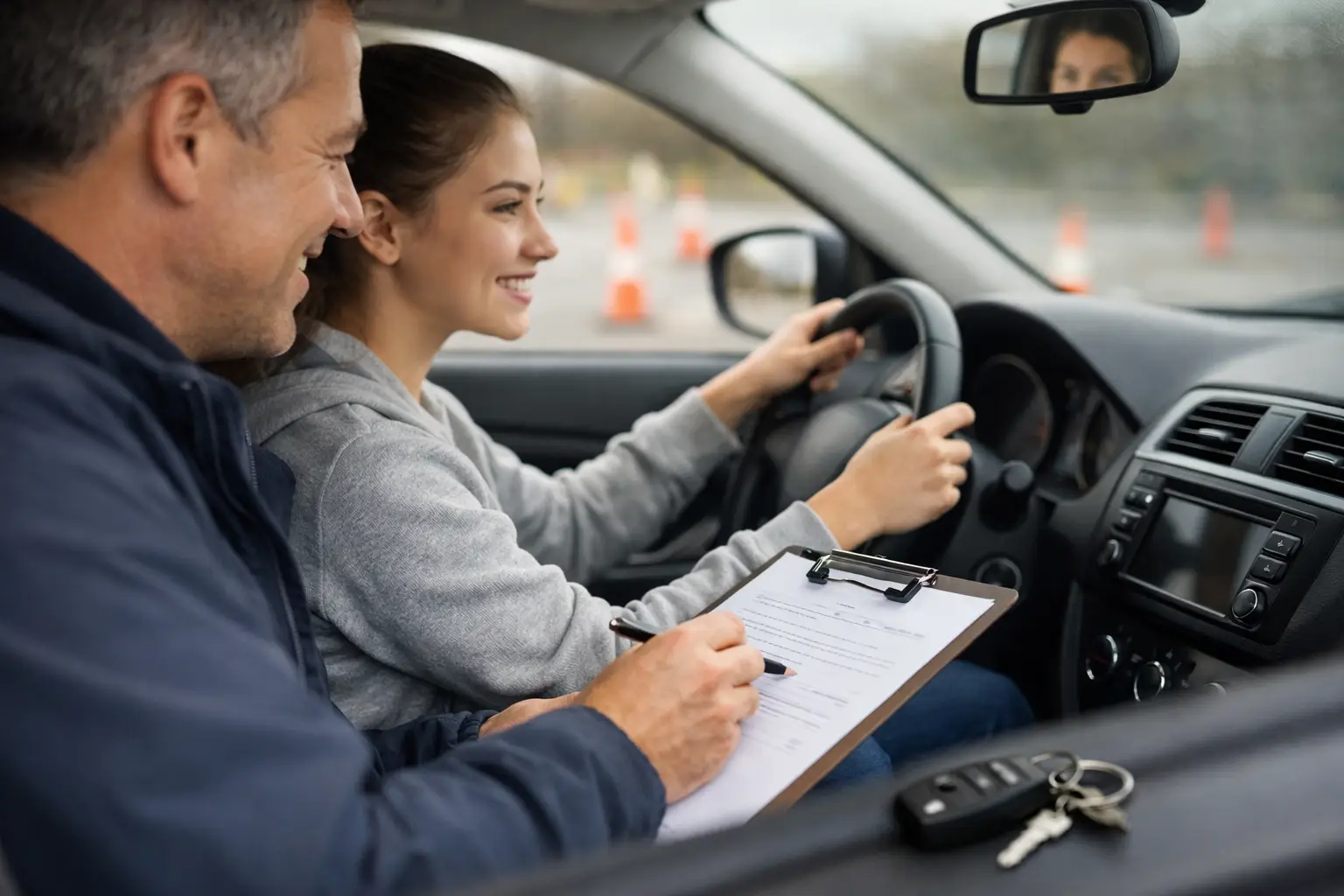
A review that says, “My instructor was nice,” can be reassuring. But when families are comparing behind the wheel driving school reviews, they need more than a pleasant first impression. The right school should help a new driver stay calm at busy intersections, make safe lane changes, understand California right-of-way rules, and arrive at the DMV road test prepared for real traffic, not just a practice route.
For a teen, adult beginner, returning driver, or concerned parent, reviews can reveal whether a school delivers that kind of support. They can also help identify the questions worth asking before lessons are booked.
What Strong Driving School Reviews Actually Tell You
The most useful reviews describe an experience, not just a rating. Look for details about how the instructor taught, how the student progressed, and whether the school communicated clearly with the family. Specific comments are usually more valuable than broad praise because they show what the service looked like in practice.
A parent may mention that an instructor explained each lesson after pickup, gave useful feedback, or helped their teen feel less nervous before the DMV test. An adult student may describe learning parallel parking, freeway merging, or defensive driving at a pace that felt manageable. These details point to instruction that is personalized rather than rushed.
It also helps to notice whether reviewers share similar concerns to your own. A student who has never driven before needs something different from a licensed adult returning after years away from the road. Someone seeking manual-transmission lessons has a different goal than a teen completing the required professional training hours. The most relevant reviews come from people with needs close to yours.
Behind the Wheel Driving School Reviews: Signs of Quality
A good review is not necessarily one that promises every student will pass on the first attempt. A responsible school cannot control every DMV test condition or every student's preparation. Instead, look for feedback that shows the school builds safe, repeatable skills.
Patient instruction for nervous learners
Many new drivers are tense during their first lessons. They may grip the wheel too tightly, brake abruptly, struggle to judge turning space, or freeze when traffic gets busy. Reviews that mention patience, clear explanations, and a calm instructor are meaningful because anxiety can interfere with learning.
Patient does not mean passive. Effective instructors correct unsafe habits promptly, explain why a decision was risky, and give the student another chance to practice the skill correctly. The goal is confidence grounded in good judgment, not confidence built on empty reassurance.
Lessons that match the student's pace
A one-size-fits-all lesson plan can leave some students overwhelmed and others underchallenged. Strong feedback often mentions that the instructor adjusted the lesson to the driver's current ability. Early lessons may focus on steering, braking, scanning, turns, and residential driving. As control improves, the student should move into more complex situations such as multi-lane roads, parking, busy intersections, and freeway driving when appropriate.
Reviewers may not use formal driving terms, but phrases such as “we worked on what I needed” or “my daughter gained confidence one step at a time” can be valuable signals. They suggest the instructor noticed the student's actual needs instead of simply filling a scheduled hour.
Clear communication with parents and students
For teen drivers, parents are part of the learning process. They need to know what professional lessons covered and what should be practiced at home. Reviews that mention easy scheduling, reliable pickup and drop-off, prompt responses, or straightforward package information often reflect a school that respects families' time.
Communication matters for adult and senior students as well. A returning driver should be able to explain their concerns without embarrassment, whether they are worried about freeway traffic, parking, night driving, or recent changes in confidence. The school should respond with a practical plan, not pressure.
Local road and DMV-test preparation
A review that mentions DMV test preparation can be helpful, but consider what that preparation means. The best preparation goes beyond memorizing a few turns near a test site. Drivers need consistent observation habits, proper lane positioning, smooth stops, safe turns, parking control, and the ability to respond to changing conditions.
For South Bay families, local experience can add real value. Traffic patterns in Torrance, Redondo Beach, Gardena, Carson, and nearby communities can vary widely between quiet residential streets and major multi-lane corridors. An instructor familiar with the area can choose practice environments that fit the learner's stage of development.
Read Reviews With a Balanced Eye
No local service with a long history will have identical feedback from every customer. People learn at different speeds, have different schedules, and bring different expectations to their lessons. One brief negative review is not automatically a reason to rule out a school, just as a page of vague five-star ratings does not tell the whole story.
Read for patterns. If multiple reviewers mention punctuality, respectful instructors, effective test preparation, and increased confidence, that is more informative than a single enthusiastic comment. On the other hand, repeated concerns about missed appointments, unclear pricing, rushed lessons, or poor communication deserve attention.
Timing matters, too. Recent reviews may better reflect current scheduling practices and staff, while long-term feedback can show whether a school has maintained a dependable reputation. Both have a place in the decision.
Be cautious with reviews focused only on passing the test. Passing is an important milestone, but safe driving is the larger outcome. A new license holder still needs sound habits for school commutes, errands, freeways, poor weather, pedestrians, cyclists, and unexpected decisions from other drivers.
Questions to Ask After Reading Reviews
Reviews should help you narrow your choices, not replace a direct conversation. Before booking, ask how lessons are paced for beginners, what is included in the package, and whether the instructor can address the student's specific goals. If the student is a minor, confirm how the school supports California's licensing process and how professional training fits with required supervised practice at home.
California teens under 18 must complete at least six hours of professional behind-the-wheel training and additional supervised driving practice with a qualified adult before becoming eligible for the provisional license. A school can provide structured instruction and DMV-focused coaching, but families should still plan time for regular practice between lessons. That combination is often where confidence becomes consistent skill.
You may also want to ask whether lessons include pickup and drop-off, how scheduling changes are handled, whether the training vehicle is provided, and how the school prepares students for a DMV drive test. For a manual-transmission learner, ask specifically about vehicle availability and how much time will be spent on clutch control before introducing more demanding traffic situations.
At South Bay Driving School, the focus is on paced instruction that meets students where they are, whether they are completing their first professional driving hours, refreshing skills after a long break, or preparing for a DMV test. More than 35 years of local teaching experience has reinforced a simple lesson: drivers learn best when they understand both what to do and why it keeps them safe.
A Review Is a Starting Point, Not the Final Decision
The school that fits your family may not be the one with the flashiest promise. It may be the one whose reviews consistently describe calm coaching, dependable service, practical feedback, and students who leave lessons feeling more capable than when they arrived.
Choose instruction that treats a driver's license as the beginning of responsibility, not the finish line. When a student has room to ask questions, practice mistakes safely, and build skills gradually, the confidence they gain is far more likely to stay with them after the road test is over.